




The PGA Tour stands as the world’s premier organization for men’s professional golf, sanctioning 39 official events in its 2026 season—including nine elevated Signature Events, the four majors, The Players Championship, and the FedEx Cup playoffs—where the planet’s top 125 players and qualifiers compete for over $550 million in official purses, plus $100 million in playoff bonuses, across North America and international venues like Japan, Mexico, and Scotland. Headquartered in the opulent TPC Sawgrass campus in Ponte Vedra Beach, Florida, it functions as a 501(c)(6) nonprofit tax-exempt entity that gained independence from the PGA of America in 1968 as the player-led Tournament Players Division, formally rebranding to PGA Tour in 1975 to focus exclusively on touring professionals rather than teaching pros. Governing a vast ecosystem, it oversees developmental circuits like the Korn Ferry Tour (top 20 money earners + 10 via Finals gain full cards), PGA Tour Americas/Latin/Canada/China for hemispheric talent, PGA Tour Champions (over-50s with $200M+ purses), and entry via PGA Tour Qualifying School (top-5 + ties earn conditional status), while enforcing strict rules on equipment, conduct, and eligibility to maintain competitive integrity.
Origins and Pioneering Development
The PGA Tour’s storied lineage traces to April 10, 1916, when retail tycoon Rodman Wanamaker assembled 35 club professionals at New York’s Taplow Club to establish the Professional Golfers’ Association of America (PGA of America), formalizing sporadic invitational tournaments like the 1899 Western Open (oldest predecessor) and 1903 North and South Open into a nascent circuit. The 1920s birthed enduring opens (Texas 1922, Canadian 1923), but structure emerged in 1929 with a tournament committee of Tommy Armour, Al Espinosa, and J.J. Patterson, followed by Bob Harlow’s 1930 role as PGA Tournament Bureau manager, who negotiated purses and schedules amid the Great Depression. Post-WWII explosion featured legends Ben Hogan (63 Tour wins, 1953 “Hogan Slam”) and Byron Nelson (11 consecutive victories in 1945), fueling growth to 30+ events by 1950; escalating revenue tensions peaked in 1968’s player revolt—orchestrated by Mac O’Grady, Gardner Dickinson, and Jack Nicklaus advocates—splitting off the autonomous Tournament Players Division under USGA executive Joseph Dey (commissioner 1969–1973), who professionalized operations. Deane Beman (1974–1994) revolutionized with TPC Network courses (Sawgrass 1980, “Island Green” icon), The Players Championship (1974, “Fifth Major”), and sponsor title deals.
Commissioners’ Eras and Explosive Expansion
Successive commissioners shaped eras: Tim Finchem (1994–2016) globalized with WGCs (1999–2022), FedEx Cup (2007), and $2B+ media rights; Jay Monahan (2017–present) navigated LIV schism, securing $12B media deal (2022–2032, CBS/NBC/ESPN+/Peacock) and Strategic Sports Group $3B investment (2024, Fenway-led minority stake). 2026 CEO Brian Rolapp (ex-NFL COO) oversees “scarcity model” rumors—potential 25-event calendar integrating LIV teams. Growth metrics: 10 events (1969) to 39 (2026), purses from $5M (1970) to $550M+, reaching 100+ countries via Zozo (Japan 2019), Genesis Scottish Open (co-sanctioned), and Olympics exemptions.
Rules, Exemptions, and Membership Tiers
Membership demands elite play: Full exempt status (top-100 prior FedExCup, majors/wins 2–7 years, lifetime for 20+ winners like Woods) grants unlimited Signature access, 12 full-field starts (min. 13 non-signature outside majors/Players/playoffs); conditional (101–125, Korn Ferry grads) via priority ranking. Sponsor exemptions: 4 PGA members/event (open events unrestricted); Tiger Woods (80+ wins) unlimited; host specials (e.g., Palmer Cup at Bay Hill). Field rules: Max 144 (single-course, down from 156 for daylight), 120–132 adjusted, 156 multi-course; cuts low-65 +10 ties post-36 holes (Signature/majors vary). Pace-of-play: 40-second shot clock, discretionary fines; Code of Conduct bans slow play, damage, media breaches (e.g., $50K fines). Equipment: USGA-conforming grooves, 14-club limit, one-driver model; measured shots for stats (Strokes Gained).
Signature Events and 2026 Schedule Blueprint
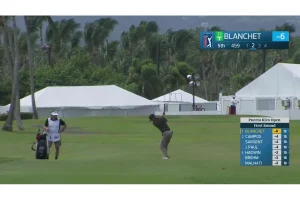
Nine $20M+ Signature Events anchor 2026 (Jan-Aug regular, Sep playoffs): The Sentry (Maui, stroke-play kickoff), AT&T Pebble Beach Pro-Am (Feb), Genesis Invitational (Riviera), Arnold Palmer Invitational (Bay Hill), RBC Heritage (Harbour Town), Wells Fargo Championship (Quail Hollow), Memorial Tournament (Muirfield Village), Travelers Championship (TPC River Highlands), plus The Players (Mar, $25M, 144-field TPC Sawgrass). Full-field (22, $7–10M), additional (6 low-purse), opposite-field (e.g., Puerto Rico Open); majors: Masters (Apr Augusta), PGA (May Aronimink), U.S. Open (Jun Shinnecock), Open (Jul Royal Portrush). Fall 5 events secure top-125; Zurich Classic (team only).
FedEx Cup: Points, Playoffs, and Evolution
FedEx Cup (2007, $100M+ bonus) awards points per finish (600 Signature winner, 500 full-field, 100 top-10/ties top-5 amateurs); majors amplified (750). Playoffs: FedEx St. Jude (top-70), BMW Championship (top-50, no-cut), Tour Championship (top-30 even-par start 2025+, $25M winner, 5-year exemption). Reforms: 2019 strokes (scrapped), 2024 Aon Next 10 (Signature auto-qualify), Fall reordering; 2026 top-100 cards (down from 125), Korn Ferry 20 cards.
CBS/NBC/ESPN+/Peacock deliver 2022–2032 $12B U.S. rights (PGA-produced world feed 2025+); Discovery $2B international. LIV saga: 2023 framework, SSG investment; 2026 “Returning Member” reinstates (e.g., Koepka paths), antitrust paused; Rolapp eyes LIV team slots in reduced calendar. Charity: $4B+ all-time ($200M/year), First Tee youth programs.
Why PGA Tour Matters
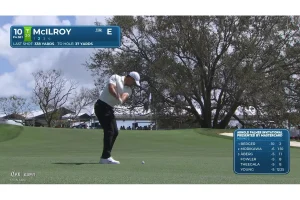
Fueling $3B+ annual revenue and $4B+ lifetime charity (3,000+ partners), the PGA Tour mints transcendent stars (Scheffler’s 2024 dominance, McIlroy’s 3 Cups), pioneers innovations like Strokes Gained analytics/FedEx playoffs/Signature scarcity, and unifies fractured golf via LIV frameworks, elite exemptions, and 2026 reforms (top-100 cards, 144-field max)—elevating purses 500%+, globalizing to 100+ nations, and safeguarding traditions amid evolution for sustained excellence and accessibility.