
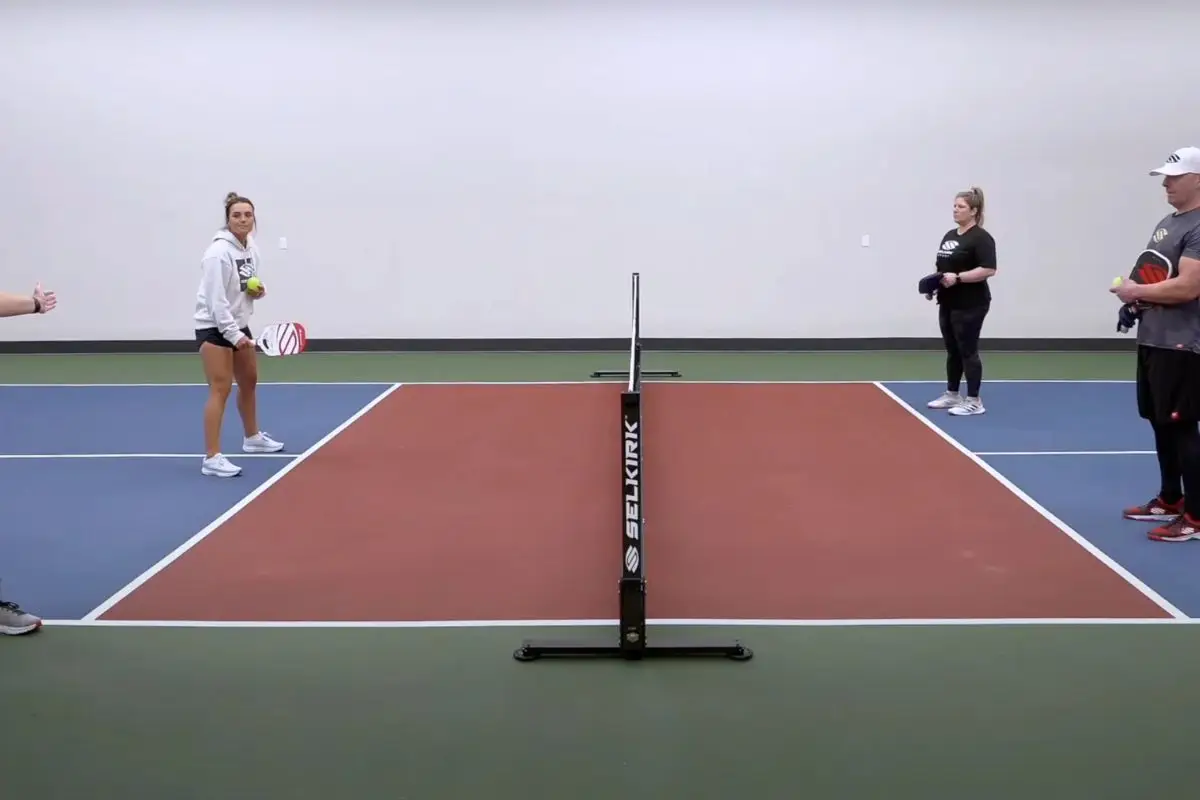
Improving Court Positioning: Players dealing with mobility challenges in pickleball can significantly improve their performance by focusing on efficient movement strategies. Techniques like smart shot placement, controlled footwork, and timely movements can help players overcome issues such as knee pain and slower reflexes, ensuring they remain competitive on the court.

Understanding the Importance of Movement in Pickleball
One of the most significant challenges for players is transitioning effectively from the baseline to the non-volley zone (NVZ). Since many points in pickleball are won at the kitchen line, staying back or getting caught in the transition zone can hinder a player’s competitiveness.
Those with mobility issues often feel stuck, unable to move up the court quickly and finding themselves out of position against more agile opponents. The key to enhancing movement lies not in speed but in efficiency.
By mastering shot placement, utilizing smart footwork, and timing their movements properly, players can hone their positioning and overall performance, regardless of their mobility level.
The Right Shot Placement: Buying Time with Returns
A common mistake among players is hitting low, flat, and fast returns of serve. While this strategy may seem beneficial, it actually reduces the time available for players to advance toward the NVZ.
A fast return allows opponents to respond quickly, often putting the returning player in an awkward position. Instead, players should focus on hitting a high, deep return.
A shot with more height provides additional time to move up the court while also keeping the opponent pinned back at the baseline. Players should aim for a 45° arc to ensure the ball clears the net comfortably and lands deep in the opponent’s court.
Finding the right balance between height and depth is crucial, as a return that is too low forces players to rush forward, while a return that is too high and short gives the opponent an easy target to attack.
Executing the Split Step for Stability and Control
After successfully making a return, the next challenge is to advance toward the NVZ without losing control. Many players mistakenly continue moving forward while hitting their next shot, leading to instability and errors.
To avoid this, players should utilize a split step. This important movement involves briefly pausing and settling into a balanced stance before making contact with the ball. Instead of rushing forward uncontrollably, the split step allows players to be in a stable position, ready to react to their opponent’s next shot.
To execute it effectively, players should time their split step to coincide with the moment their opponent makes contact with the ball. This approach prevents players from being caught off guard and helps them maintain control over their movements.
Advancing to the Kitchen Line
Players with mobility issues sometimes hesitate to move up to the kitchen line, opting to remain near the baseline or in the transition zone. However, this hesitation can be a significant disadvantage in pickleball.
Staying back allows opponents to dictate play, making it harder to defend against attacks and cover angles. Defensive shots become more frequent, reducing a player’s ability to take control of the point.
While moving up to the NVZ may require more effort, it is essential for players to advance whenever possible. If immediate access to the kitchen is not feasible, players should focus on gradual advancement.
After each shot, they should take small steps forward while maintaining balance. This continuous movement toward the optimal position can significantly improve their chances of winning rallies.
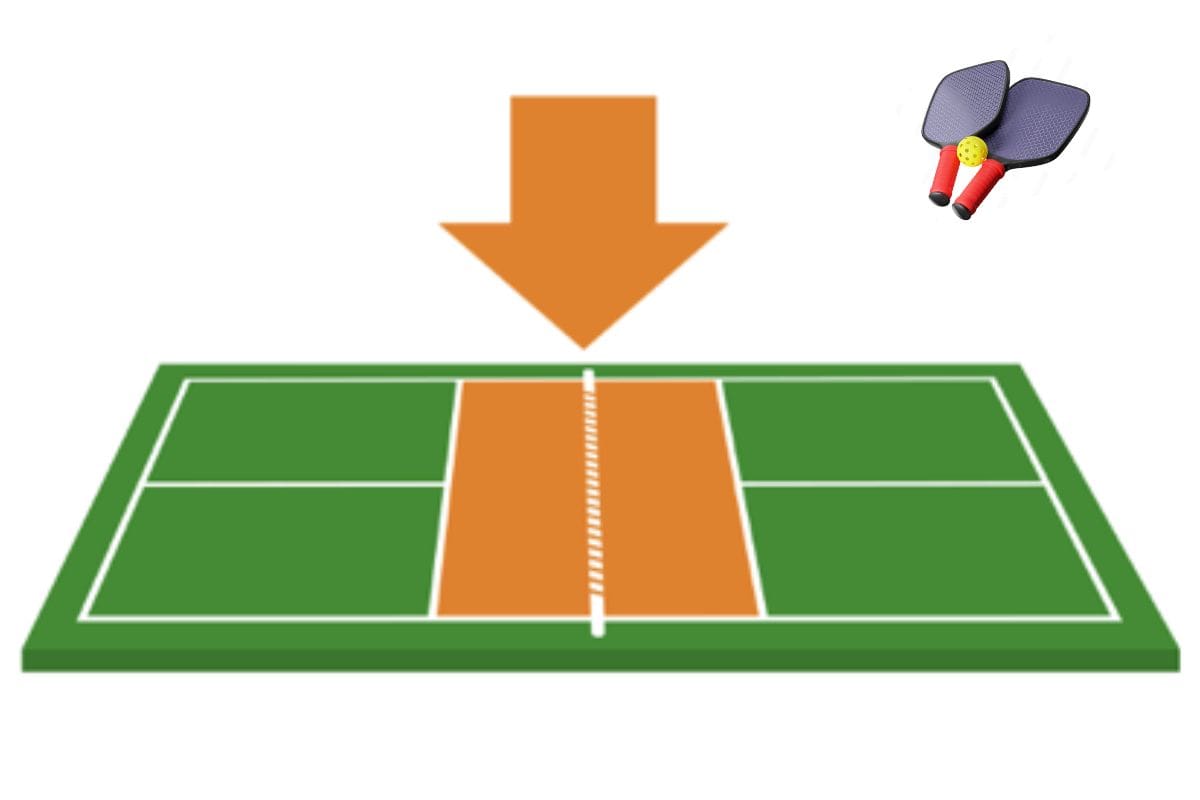
Mastering the Block Volley: Defending Against Fast Shots
One of the major challenges faced by pickleball players with mobility issues is defending against fast shots while advancing. Instead of attempting to return these shots with aggressive swings—often resulting in errors—a more effective technique is the block volley.
This controlled, soft shot absorbs the opponent’s power rather than resisting it. The goal is to reset the point by keeping the ball low and landing it in the kitchen, making it difficult for the opponent to continue their offensive.
To execute a block volley successfully, pickleball players should keep their paddle out in front with a stable grip and let the ball rebound off with minimal motion. Most block volleys are executed with the backhand, which provides greater stability for handling fast shots.
By employing a block volley rather than a rushed swing, pickleball players gain control of the rally and create opportunities to move forward while limiting the opponent’s ability to dictate play.
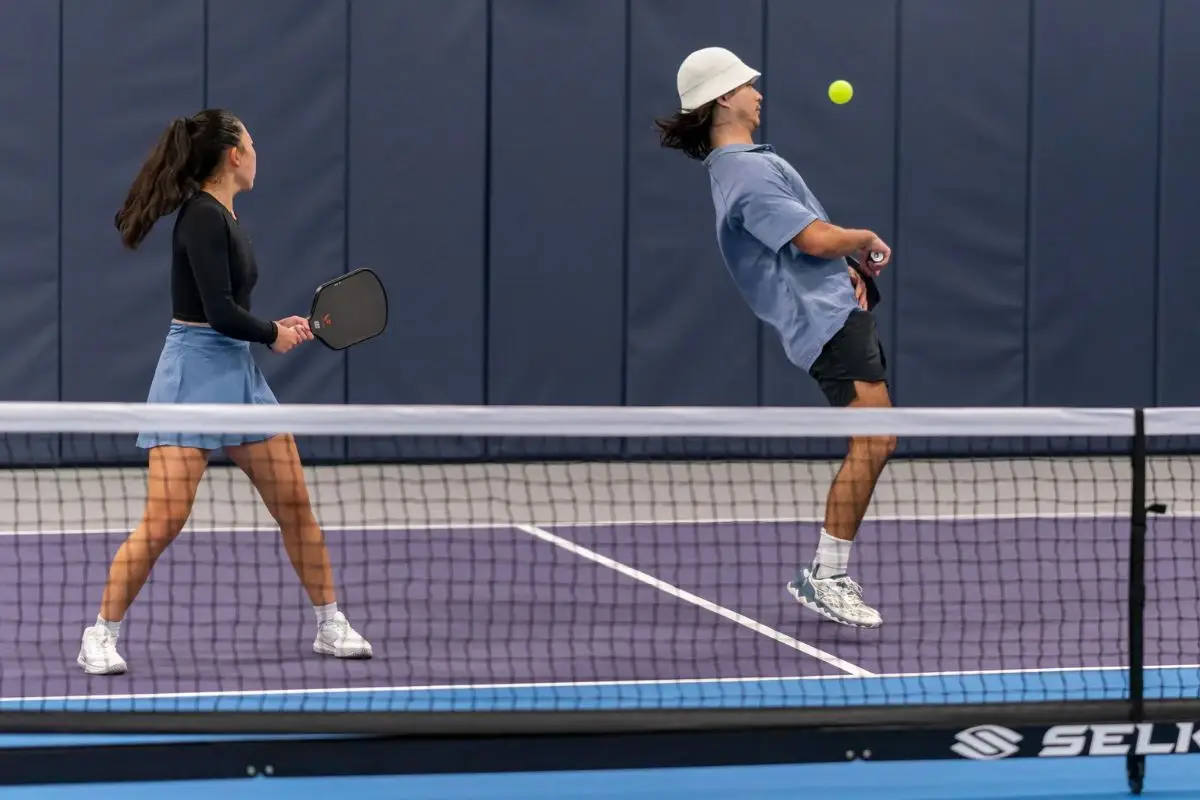
Strategies for Improved Court Positioning
Improving movement in pickleball is not solely about speed; it requires strategic adjustments. By making small yet effective changes—such as using a high return to buy time, incorporating a split step for stability, and mastering the block volley for control—players can enhance their positioning and effectiveness on the pickleball court.
Key takeaways include that a well-placed return of serve provides the necessary time to advance, a split step ensures stability before making a pickleball shot, and a block volley helps neutralize attacks, allowing for continued movement toward the NVZ.
Players who focus on moving efficiently rather than quickly will always have a competitive advantage. These pickleball techniques enable any player, regardless of age or mobility level, to stay engaged and effective in the game.
News in Brief: Improving Court Positioning
Players facing mobility challenges in pickleball can improve their game by adopting efficient movement strategies. Techniques such as high returns, split steps, and block volleys enhance positioning and performance on the pickleball court, allowing players of all ages and abilities to remain competitive.
ALSO READ: Kyle Koszuta Teaches the Third Shot Drop: A Game-Changer for Pickleball Players