
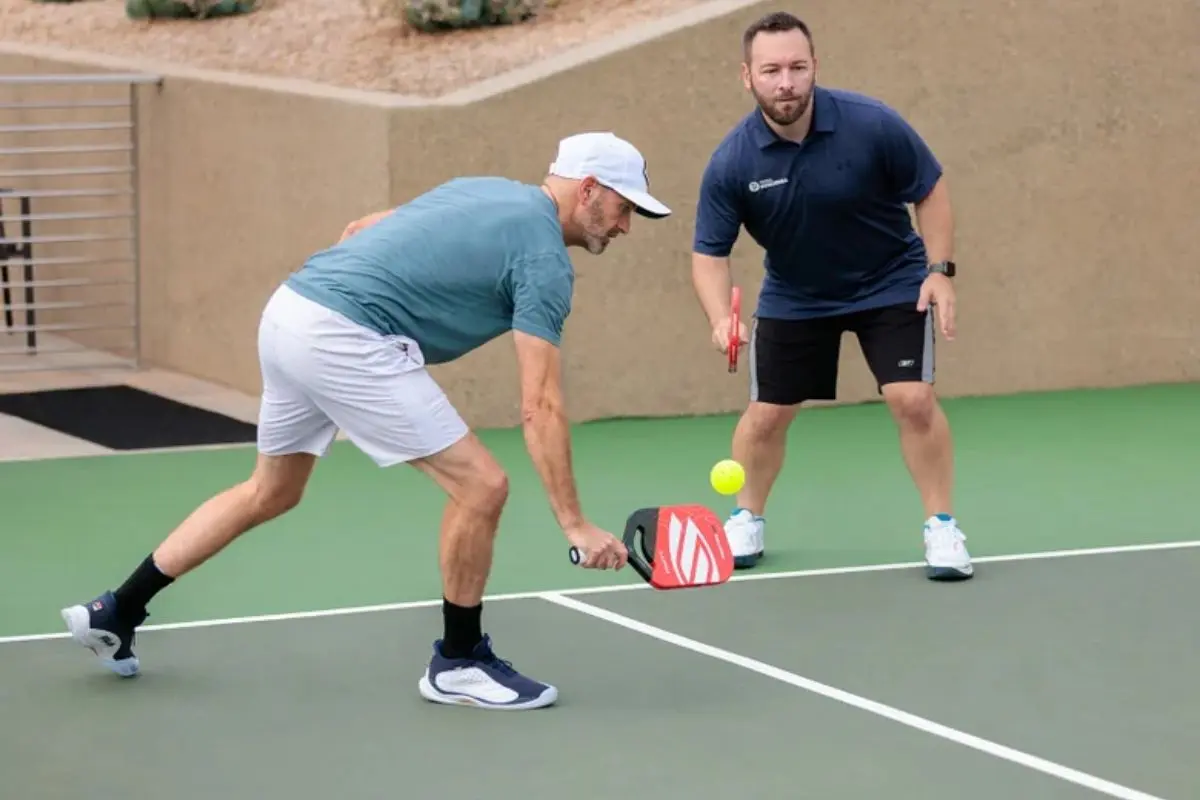
Master the Third-Shot Drop: Many pickleball players spend hours perfecting their third-shot drop, only to find that opponents still attack it with ease. While landing the ball in the kitchen is important, what happens after it lands determines whether your shot is truly effective. A well-placed drop should stay low, unattackable, and force your opponent into a weak reply. If your drops are consistently getting crushed, here’s why—and how to fix them.
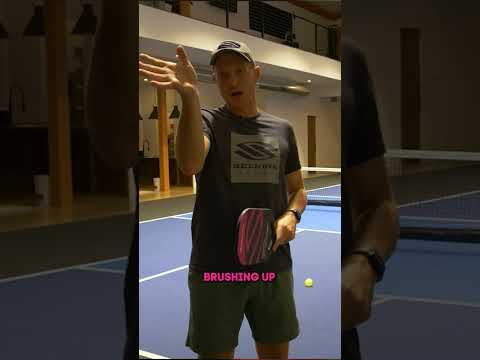
The Pickleball Drop Shot Is Too High
If your drop bounces at or above net height, your opponent has a perfect opportunity to step in and attack. A successful drop shot should stay low after bouncing, forcing opponents to hit upward instead of swinging down aggressively.
How to Keep the Drop Low
- Use topspin – A flat or underspin drop often sits up after bouncing. Adding topspin forces the ball to dip and stay low after crossing the net.
- Adjust your grip pressure – Holding the pickleball paddle too tightly creates excess pop on the ball. Aim for a light grip (around 3 out of 10) to maintain control.
- Find the right contact point – Hitting the ball too early (while it’s still rising) increases shot height. Instead, wait for it to peak and start descending before making contact.
- Shorten your backswing – A long backswing generates unnecessary power, making it harder to control height. Keep movements compact and controlled.
Not Giving Enough Space
If you feel cramped or jammed when hitting your third-shot drop, it’s likely affecting your ability to get under the ball properly. Without enough space, your shot will either pop up too high or drop into the net.
How to Improve Positioning
- Use small adjustment steps – Instead of lunging or stretching, take quick shuffle steps to position yourself correctly.
- Keep the ball in front of you – The ideal contact point is in front of your body, near your hips.
- Bend your knees – Instead of lowering only your paddle, lower your entire body so your eyes are level with the ball before making contact.
Aiming for the Wrong Spot
A good drop shot does more than just clear the net—it forces your opponent into a difficult position. Even a technically sound shot can be easily attacked if placed incorrectly.
Where to Aim the Drop Shot
- At your opponent’s feet – The best drops force opponents to hit upwards, limiting their attack options.
- Down the middle – Middle shots have a higher margin for error and can create confusion between opponents.
- To their weaker side – If your opponent has a shaky backhand, target it. Most players are less aggressive on that side.
- Cross-court – Cross-court drops travel a longer distance, giving you more control while keeping the ball low.
Not Adjusting for Different Returns
Not all third-shot drops should be played the same way. The type of return you receive dictates how you should approach your drop shot.
How to Adjust Based on the Return
- Slow, floating return – Use a topspin drop – If the return sits up, go for a more aggressive drop.
- Deep, fast return – Play a safe, controlled drop – Don’t force topspin when dealing with a heavy return. A well-placed soft drop is the smarter choice.
- Short return – Drive instead of dropping – If the return is weak and sitting up, attacking with a third-shot drive may be the better option.
How to Turn the Drop Shot Into a Weapon
To make your drops truly effective, focus on more than just getting the ball over the net.
- Keep your drops low – Use topspin, control your grip, and wait for the right contact point.
- Create space – Use proper footwork and keep the ball in front of you.
- Aim strategically – Target your opponent’s feet, the middle, or their weaker side.
- Adapt to different returns – Avoid using the same shot for every situation.
By making these adjustments, you’ll stop feeding opponents easy attack opportunities. Instead, they’ll struggle with dipping, unattackable drop shots—giving you the upper hand in the rally.
News in Brief: Master the Third-Shot Drop
A third-shot drop should do more than land in the kitchen—it should stay low and difficult to attack. Common mistakes include hitting the ball too high, poor positioning, incorrect shot placement, and failing to adjust to different returns. By using topspin, smart footwork, and strategic aiming, players can turn their drop shot into a powerful tool.
ALSO READ: Master the Third-Shot Drop in Pickleball: Unlock Your Hidden Potential