
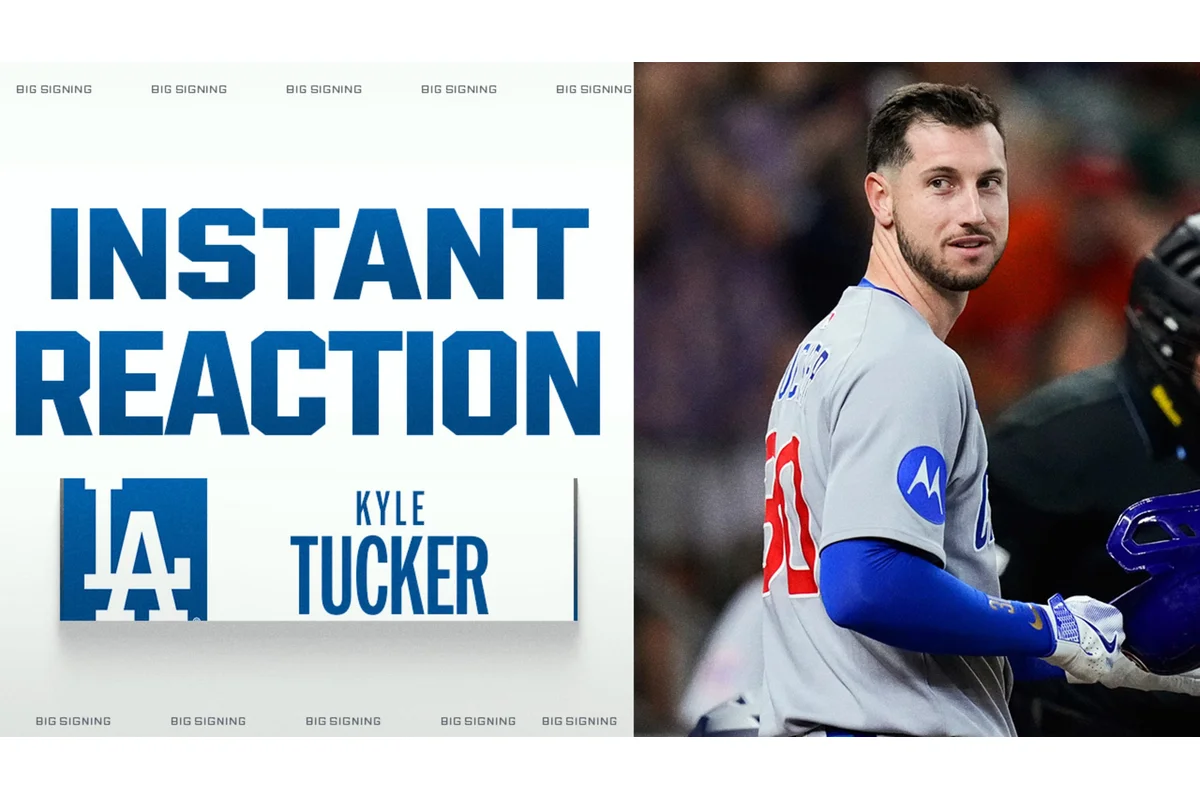
Los Angeles Dodgers stunned baseball fans by signing outfielder Kyle Tucker to a four-year contract worth $240 million, featuring opt-out clauses after the second and third seasons. This blockbuster deal, announced amid a bustling offseason, intensifies the Dodgers’ pursuit of a third consecutive World Series title, further reinforcing their dominance in the MLB landscape.
Kyle Tucker Dodgers signing has already sent ripples throughout the league, frustrating rival fanbases as yet another star player commits to the reigning champions. The deal not only demonstrates the Dodgers’ financial power but also highlights their strategic commitment to maintaining a championship-caliber roster.
Dodgers Effectively Address Critical Team Needs With Top Free Agents
After initially suggesting no major acquisitions were necessary, Dodgers manager Dave Roberts and president of baseball operations Andrew Friedman took decisive action, acquiring two of the best free agents available. The Dodgers landed closer Edwin Díaz on a three-year contract carrying the highest average annual value (AAV) ever for a reliever, followed by securing Kyle Tucker, the premier outfielder on the market.
The deal for Tucker is historically notable, offering the highest AAV ever for an outfielder—surpassing Mets slugger Juan Soto—and ranking as the second-highest salary overall after Shohei Ohtani, one of Tucker’s new Dodgers teammates. When factoring deferred payments, Tucker’s contract sets a new benchmark for present-day value in MLB contracts.
Despite already operating under the highest luxury tax penalties, the Dodgers’ “Ohtani economy” enables them to continue investing heavily in elite talent. These investments reinforce the Dodgers’ intention to not only compete but to set a standard as the first team aiming for a three-peat since the 1998-2000 Yankees.
Adding Díaz and Tucker, both signed despite having qualifying offers attached, will cause the Dodgers to forfeit multiple high picks in the 2026 amateur draft, a cost Friedman is willing to absorb to build a roster primed for sustained success.
Mets Grapple With Lost Opportunity and Roster Challenges
The New York Mets faced renewed disappointment after Kyle Tucker chose the Dodgers over them, especially following early offseason moves that dismantled key parts of their core. President of baseball operations David Stearns oversaw the departures of fan favorites Pete Alonso, Brandon Nimmo, and Edwin Díaz, deepening the void in fan enthusiasm and team strength.
Mets owner Steve Cohen had previously teased potential moves with a cryptic social media post stating,
“Let me know when you see smoke”
– Steve Cohen, Mets Owner – but Tucker ultimately declined their offer.
With Nimmo’s trade leaving an outfield gap, the Mets are now refocusing efforts on signing free agent Cody Bellinger, whose ability to play both left field and first base fits their needs. Furthermore, pitching remains a priority after an 83-win season that fell short of playoff qualification. The Mets are contemplating adding left-hander Framber Valdez, regarded as the top pitcher available this offseason, to close rotation weaknesses.
As the front office navigates this turbulent period, the ongoing distractions may hinder clarity in player acquisitions and strategy execution.
Blue Jays Face Another Setback in Star Pursuit
Toronto Blue Jays fans find themselves absorbing yet another painful loss in their pursuit of marquee talent, with Kyle Tucker opting for the Dodgers instead of joining their roster. This marks the latest disappointment after losing out on Shohei Ohtani two years ago and struggling in the previous World Series against the Dodgers.
The Blue Jays had been considered strong contenders to land Tucker, which would have secured their outfield’s future alongside George Springer and Daulton Varsho, both approaching the final year of their contracts. Missing out on Tucker represents a significant blow to their offseason plans.
Despite this setback, the Blue Jays have made notable strides by signing free agents Dylan Cease, Kazuma Okamoto, Cody Ponce, and Tyler Rogers, positioning themselves as top spenders and strong challengers for the AL East title. They still have a usable outfield with Addison Barger, Varsho, Anthony Santander, and Nathan Lukes, providing depth for their campaign.
Looking forward, Toronto may shift focus toward re-signing key infielder Bo Bichette, channeling some of the resources that would have been used for Tucker into securing their infield core as the offseason progresses.
Implications of the Tucker Deal on MLB Labor Relations and Collective Bargaining
Kyle Tucker’s high-value contract with the Dodgers has reignited discussions about an impending MLB labor dispute. The current Collective Bargaining Agreement expires on December 1, giving rise to fears of another lockout and work stoppage similar to the 2021 shutdown that froze free agency and trades.
Owners are pushing hard for a salary cap, citing growing payroll disparities highlighted by the Dodgers’ relentless acquisitions of top stars. They argue that smaller-market teams struggle to compete financially against the Dodgers’ escalating payroll.
Fan sentiment appears to be shifting toward owner support given the Dodgers’ financial dominance, although the players’ union has indicated readiness to resist such limitations, threatening potential canceled games in the 2027 season if no agreement is reached.
The Dodgers themselves remain singularly focused on winning. Their financial commitment is evidenced by nearly $170 million paid in luxury taxes in 2025, breaking records and marking their sixth straight season paying at the highest penalty tier. These luxury tax payments are redistributed to other clubs, somewhat balancing competitive inequities.
Even with a salary cap looming, the Dodgers’ current success reflects long-term strategies—including deft salary deferrals and strong player development—that give them structural advantages unlikely to be undone by new restrictions. Nonetheless, the signing of Tucker is sure to amplify the intensity of collective bargaining discussions and the potential for a contentious labor fight.
Looking Ahead for MLB Offseason and Competitive Balance
The Dodgers’ acquisition of Kyle Tucker solidifies their position as the most formidable team heading into the next MLB season and shapes the competitive narrative for all 30 franchises. Their willingness to absorb heavy financial penalties underscores a relentless pursuit of dominance that other teams struggle to match.
In response, franchises like the Mets and Blue Jays must adjust strategies, relying on secondary targets like Cody Bellinger and Framber Valdez or internal development to remain competitive. The evolving labor landscape threatens to complicate future free agency and player movement, making this offseason’s developments critical to the league’s direction.
As the MLB prepares for potential lockouts and contract negotiations, the emphasis on financial fairness and competitive balance will remain at the forefront, with the Dodgers’ blockbuster signing serving as a catalyst for reshaping the sport’s economic landscape.
Let me know when you see smoke
— Steven Cohen (@StevenACohen2) January 15, 2026
