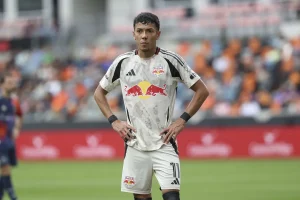
Chicago Fire FC Overview
Chicago Fire Football Club, commonly known as Chicago Fire FC, is an American professional soccer club based in Chicago, Illinois. The club competes in Major League Soccer (MLS) as a member of the Eastern Conference and plays its home matches at Soldier Field, which it shares with the Chicago Bears of the National Football League. Founded on October 8, 1997, the team was named in memory of the Great Chicago Fire of 1871, with its official founding date marking the 126th anniversary of that historic event.
The club’s identity is built on a distinctive red, blue, gold, and white color palette and a Dalmatian mascot named Sparky. Owned and chaired by Joe Mansueto, Chicago Fire FC has captured one MLS Cup and four Lamar Hunt U.S. Open Cup titles, establishing itself as one of the league’s most storied franchises. The organization also operates the Chicago Fire Development Academy, the Chicago Fire Juniors youth program, and the Chicago Fire Foundation, the club’s charitable arm.
Founding and Organizational Origins
Chicago Fire FC was founded on October 8, 1997, in a founding ceremony held at Navy Pier. The club’s name pays tribute to the Great Chicago Fire of 1871, with the team choosing that date to mark the event’s 126th anniversary. From its inception, the organization tapped into the diverse ethnic makeup of Chicago, recruiting Polish players such as Piotr Nowak, Jerzy Podbrożny, and Roman Kosecki, the Mexican international Jorge Campos, and the Czech defender Luboš Kubík.
The team’s original visual identity was developed privately with the help of Adrenalin, Inc., a sports branding agency from Denver, after the club declined an initial proposal from Nike to use a turquoise, black, and green identity called the Chicago Rhythm. The original crest was inspired by the Cross of Saint Florian and featured a stylized “C” surrounded by six stars referencing the Flag of Chicago. Early kits resembled a Chicago firefighter’s coat, with broad horizontal stripes across the torso and sleeves.
Under its first head coach, Bob Bradley, the club built a competitive foundation by blending international signings with American players such as Zach Thornton, Chris Armas, and C.J. Brown. The original general manager, Peter Wilt, also worked to establish a timeless image that evoked both classic American sports and European soccer traditions.
Growth Into Major League Soccer Competition
Chicago Fire FC began MLS play in 1998 as one of the league’s first expansion teams. In its debut season, the club achieved an extraordinary result by completing the double, capturing both the MLS Cup with a victory over D.C. United and the U.S. Open Cup with a win against the Columbus Crew. The championship run cemented the Fire as one of the league’s preeminent clubs from the outset.
The early roster combined established international stars with emerging American talent, creating a balanced and competitive squad. Players such as DaMarcus Beasley developed into key contributors, while veterans like Hristo Stoichkov added international experience. The organization also invested in long-term growth by establishing youth pathways, including the Chicago Fire Development Academy and the Chicago Fire Juniors program, ensuring a pipeline of homegrown talent for years to come.
Chicago Fire FC Competitive Journey
Across more than two decades of competition, Chicago Fire FC has experienced championship highs, prolonged stretches of postseason absence, and ambitious rebuilds. The club’s trajectory has included a foundational double in 1998, sustained Open Cup success through 2006, and a modern era marked by ownership changes, stadium transitions, and a complete rebrand in 2019.
Early Seasons and Development (1997–2000)
The Fire’s first competitive years were defined by immediate success. After capturing the 1998 MLS Cup and U.S. Open Cup double, the club continued its momentum by winning the 2000 U.S. Open Cup over the Miami Fusion and reaching the 2000 MLS Cup final, where it fell to the Kansas City Wizards. Under Bob Bradley’s leadership, the team built a reputation for disciplined defending and clinical finishing.
During this period, the club’s identity was also shaped by the emergence of American players such as DaMarcus Beasley and the continued influence of Piotr Nowak. The early commercial partnerships, including kit deals with Nike, helped establish the team’s visual presence in MLS.
Breakthrough in MLS (1998–2009)
The Fire’s first major breakthrough came in 1998 with the historic double. Just five years later, the club added the 2003 MLS Supporters’ Shield, recognizing the best regular-season record in the league, alongside another U.S. Open Cup title. The 2003 campaign also marked the team’s return to the renovated Soldier Field midway through the season after a temporary stint in Naperville.
Following the 2006 U.S. Open Cup victory, the Fire moved into their own soccer-specific stadium in Bridgeview. However, on-field results grew inconsistent, and the team missed the playoffs for the first time in 2004. The signing of Cuauhtémoc Blanco as a Designated Player in 2007 injected new energy, and the club reached the Eastern Conference Final that year. Despite continued playoff appearances through 2009, the Fire were unable to add another MLS Cup to their trophy case.
Modern Program and Current Direction (2010–Present)
The modern era has been defined by significant organizational change. After several coaching transitions and missed postseasons, the club sold a 49 percent ownership stake to Joe Mansueto in 2018, with Mansueto assuming full ownership in 2019. That same year, the Fire negotiated a $65.5 million buyout of their Bridgeview lease and announced a return to Soldier Field for the 2020 season.
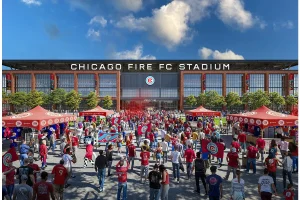
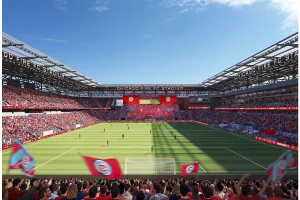
In November 2019, the club unveiled a comprehensive rebrand, changing its name to Chicago Fire FC, introducing new colors, and debuting the “Fire Crown” crest. The organization also restructured its front office, naming Georg Heitz as sporting director and Raphaël Wicky as head coach. In June 2025, owner Joe Mansueto announced plans for a privately funded, soccer-specific McDonald’s Park along the Chicago River as part of The 78 mixed-use development, signaling a long-term commitment to the club’s downtown future.
Philosophy and Competitive Strengths
Chicago Fire FC has historically prioritized defensive organization, disciplined midfield structure, and the development of American players alongside impactful international signings. The club’s identity emphasizes competitiveness in the U.S. Open Cup, where its four titles rank among the most in MLS history.
Key Milestones and Major Moments
The Fire’s most iconic moments include the 1998 double, the 2003 Supporters’ Shield, the 2006 U.S. Open Cup victory at their new Bridgeview stadium, the 2007 signing of Cuauhtémoc Blanco, and the 2017 acquisition of Bastian Schweinsteiger from Manchester United. The 2019 rebrand and the announced McDonald’s Park project represent the most significant organizational milestones of the modern era.
Chicago Fire FC Achievements and Results
Chicago Fire FC has won one MLS Cup, four Lamar Hunt U.S. Open Cup championships, and one MLS Supporters’ Shield, making it one of the most decorated clubs in early MLS history. The team has also made multiple Eastern Conference Final appearances and developed numerous players who went on to represent the United States at the international level.
U.S. Open Cup Achievements
The Fire have captured the Lamar Hunt U.S. Open Cup four times, in 1998, 2000, 2003, and 2006. The 1998 title came just one week after the MLS Cup victory, completing the historic double, while the 2006 championship was won in the club’s first season at Toyota Park. These successes place Chicago among the most successful clubs in the tournament’s modern era.
Conference Achievements
Chicago has reached the Eastern Conference Final on multiple occasions, including in 2003, 2007, and 2008. The club’s frequent playoff matchups with the New England Revolution defined much of the early 2000s, with the two sides meeting eight times in ten seasons from 2000 to 2009. The Fire’s rivalry with the Columbus Crew also produced several memorable postseason contests.
Divisional Achievements
The Fire captured the MLS Supporters’ Shield in 2003, recognizing the league’s best regular-season record. The club has also consistently ranked among the Eastern Conference’s most competitive sides, finishing second in the conference in 2009 and securing multiple playoff berths throughout the 2000s.
Series Achievements
Beyond domestic play, Chicago Fire FC has competed in international competitions, including the CONCACAF Champions League. The club’s development system has produced numerous players who have gone on to represent the United States men’s national team, including DaMarcus Beasley, Carlos Bocanegra, and Chris Armas, contributing to the broader growth of American soccer.