




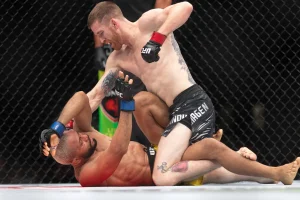
The Ultimate Fighting Championship (UFC) is the leading professional organization in Mixed Martial Arts (MMA) and represents the highest level of global competition in the sport. Founded on November 12, 1993, the organization has evolved from a controversial tournament-style event into a multi-billion-dollar international sports enterprise. The promotion stages more than 40 major events annually, including numbered pay-per-view cards and weekly fight shows, attracting millions of viewers across more than 170 countries.
Headquartered in Las Vegas, Nevada, the UFC operates under TKO Group Holdings, the sports and entertainment company formed in 2023 following the merger between Endeavor Group Holdings and World Wrestling Entertainment (WWE). The organization employs hundreds of staff members and manages a roster of fighters competing in 12 men’s divisions and four women’s divisions.
Since 2001, the promotion has been led by Dana White, who has served as president and later chief executive officer. The UFC’s modernization and growth began when entrepreneurs Frank Fertitta III and Lorenzo Fertitta acquired the struggling organization for approximately $2 million, later transforming it into one of the most valuable sports properties in the world.
Origins of the UFC (1993–2000)
The first UFC event took place on November 12, 1993, at McNichols Sports Arena in Denver, Colorado. The concept was developed by promoter Art Davie, who envisioned a competition designed to determine which martial arts discipline was most effective in real combat.
UFC 1: The Beginning
The inaugural event, titled UFC 1: The Beginning, featured an eight-man single-elimination tournament with minimal rules. Fighters representing various martial arts disciplines—including boxing, wrestling, Brazilian jiu-jitsu, kickboxing, and karate—competed in bouts without weight classes, timed rounds, or mandatory gloves.
Brazilian jiu-jitsu practitioner Royce Gracie won the tournament by submitting three opponents in one night, demonstrating the effectiveness of grappling techniques. The event generated approximately 86,000 pay-per-view purchases and attracted 2,600 spectators in attendance.
During this early period, only a limited number of actions were prohibited. Biting, eye-gouging, and small-joint manipulation were banned, while other techniques—such as head strikes on the ground—remained legal. The lack of comprehensive regulation led to widespread criticism.
Political Opposition and Regulatory Pressure
By the late 1990s, the sport faced mounting scrutiny from regulators and politicians. In 1996 and 1997, U.S. Senator John McCain described the events as “human cockfighting,” prompting numerous states to prohibit the competition. As a result, UFC broadcasts were removed from major television providers and pay-per-view distributors.
By 2000, the promotion’s parent company Semaphore Entertainment Group (SEG) faced financial collapse. Despite occasional successful events, the UFC’s future remained uncertain.
The Zuffa Era and the Unified Rules (2001–Present)
In 2001, the Fertitta brothers purchased the UFC through their newly created company Zuffa LLC. The acquisition marked the beginning of a major restructuring effort aimed at legitimizing the sport and gaining approval from athletic commissions.
Adoption of the Unified Rules
Regulatory progress began when the New Jersey State Athletic Control Board approved a standardized framework known as the Unified Rules of Mixed Martial Arts. These rules were later adopted nationwide by the Association of Boxing Commissions.
The Unified Rules established:
• Weight classes for fighters
• Mandatory gloves and protective equipment
• Timed rounds and scoring criteria
• Lists of illegal techniques
• Authority for referees and medical staff
The reforms helped transform MMA from an underground spectacle into a sanctioned professional sport.
Competition Structure and Rules
The Octagon
All UFC fights take place inside the Octagon, an eight-sided cage measuring approximately 30 feet in diameter with a fence height of about five to six feet. The structure is designed to ensure fighter safety while allowing continuous action.
Equipment
Competitors wear 4–6 ounce open-finger gloves, mouthguards, and approved protective gear. Male fighters compete bare-chested, while female athletes wear sports tops and shorts.
Fight Format
Standard bouts consist of:
• Three rounds of five minutes each for non-title fights
• Five rounds of five minutes each for championship fights and main events
• One-minute rest periods between rounds
Judging System
UFC fights use the 10-point must scoring system, similar to professional boxing.
Typical scores include:
• 10–9 round – clear but competitive advantage
• 10–8 round – overwhelming dominance
• 10–7 round – extremely rare, near-fight-ending dominance
Judges evaluate fighters based on:
- Effective striking
- Effective grappling
- Aggression
- Octagon control
Methods of Victory
A fighter may win by:
• Knockout (KO)
• Technical knockout (TKO)
• Submission
• Doctor stoppage
• Disqualification
• Retirement
• Judges’ decision (unanimous, split, or majority)
• Draw or no contest
Illegal Techniques
Prohibited actions include:
• Eye pokes
• Groin strikes
• Small-joint manipulation
• Headbutts
• Throat strikes
• Stomping a grounded opponent
Referees can deduct points or stop fights if these fouls occur.
Weight Divisions
Men’s Divisions
The UFC currently operates eight primary male divisions:
| Division | Weight Limit |
|---|---|
| Heavyweight | 206–265 lb |
| Light Heavyweight | 186–205 lb |
| Middleweight | 171–185 lb |
| Welterweight | 156–170 lb |
| Lightweight | 146–155 lb |
| Featherweight | 136–145 lb |
| Bantamweight | 126–135 lb |
| Flyweight | 116–125 lb |
Women’s Divisions
| Division | Weight Limit |
|---|---|
| Strawweight | Up to 115 lb |
| Flyweight | 116–125 lb |
| Bantamweight | 126–135 lb |
| Featherweight | 136–145 lb |
Women were first introduced to the promotion in 2012, largely due to the popularity of fighters such as Ronda Rousey, who became one of the sport’s earliest global stars.
Event Structure
The UFC organizes several types of events throughout the year.
Numbered Pay-Per-View Events
These premium events typically feature championship bouts and the promotion’s most prominent fighters. Pay-per-view cards often include 12–15 fights and generate significant revenue.
Fight Night Events
These cards are broadcast on television or streaming platforms and usually highlight rising contenders or regional markets.
Development Programs
The UFC also operates several developmental competitions, including:
• Dana White’s Contender Series, a program where prospects compete for UFC contracts
• Road to UFC, a tournament series designed to develop fighters from Asia
These programs help identify emerging talent from around the world.
UFC Event Winners (Chronological)
1993
| Event | Date | Winner |
|---|---|---|
| UFC 1: The Beginning | Nov 12, 1993 | Royce Gracie |
1994
| Event | Date | Winner |
|---|---|---|
| UFC 2: No Way Out | Mar 11, 1994 | Royce Gracie |
| UFC 3: The American Dream | Sep 9, 1994 | Steve Jennum |
| UFC 4: Revenge of the Warriors | Dec 16, 1994 | Royce Gracie |
1995
| Event | Date | Winner |
|---|---|---|
| UFC 5: Return of the Beast | Apr 7, 1995 | Dan Severn |
| UFC 6: Clash of the Titans | Jul 14, 1995 | Oleg Taktarov |
| UFC 7: The Brawl in Buffalo | Sep 8, 1995 | Marco Ruas |
| UFC 8: David vs Goliath | Feb 16, 1996 | Don Frye |
1996
| Event | Date | Winner |
|---|---|---|
| UFC 9: Motor City Madness | May 17, 1996 | Dan Severn |
| UFC 10: The Tournament | Jul 12, 1996 | Mark Coleman |
| UFC 11: The Proving Ground | Sep 20, 1996 | Mark Coleman |
| UFC 12: Judgement Day | Feb 7, 1997 | Jerry Bohlander (LW) / Mark Coleman (HW) |
1997
| Event | Date | Winner |
|---|---|---|
| UFC 13: The Ultimate Force | May 30, 1997 | Randy Couture |
| UFC 14: Showdown | Jul 27, 1997 | Mark Kerr |
| UFC 15: Collision Course | Oct 17, 1997 | Mark Kerr |
1998
| Event | Date | Winner |
|---|---|---|
| UFC 16: Battle in the Bayou | Mar 13, 1998 | Pat Miletich |
| UFC 17: Redemption | May 15, 1998 | Dan Henderson |
| UFC Brazil | Oct 16, 1998 | Pedro Rizzo |
1999
| Event | Date | Winner |
|---|---|---|
| UFC 18 | Jan 8, 1999 | Pedro Rizzo |
| UFC 19 | Mar 5, 1999 | Maurice Smith |
| UFC 20 | May 7, 1999 | Bas Rutten |
| UFC 21 | Jul 16, 1999 | Maurice Smith |
| UFC 22 | Sep 24, 1999 | Tito Ortiz |
| UFC 23 | Nov 19, 1999 | Kevin Randleman |
Transition to Modern UFC Events (2000–Present)
After UFC 23, the organization abandoned tournament-style events. Beginning in 2000, cards were structured around individual bouts and championship fights, meaning each event typically has one main-event winner rather than a tournament champion.
Examples of notable modern event winners:
| Event | Year | Main Event Winner |
|---|---|---|
| UFC 30 | 2001 | Randy Couture |
| UFC 40 | 2002 | Tito Ortiz |
| UFC 52 | 2005 | Chuck Liddell |
| UFC 66 | 2006 | Chuck Liddell |
| UFC 100 | 2009 | Brock Lesnar |
| UFC 129 | 2011 | Georges St‑Pierre |
| UFC 194 | 2015 | Conor McGregor |
| UFC 229 | 2018 | Khabib Nurmagomedov |
| UFC 285 | 2023 | Jon Jones |
| UFC 300 | 2024 | Alex Pereira |
| UFC 314 | 2025 | Tom Aspinall |
Scale of UFC Fight Results
From 1993 to 2026, the promotion has produced:
-
900+ UFC events
-
10,000+ professional fight results
-
700+ contracted fighters
-
Events in 170+ countries
Current UFC Champions (March 2026)
Men’s Champions
| Division | Champion |
|---|---|
| Heavyweight | Tom Aspinall |
| Light Heavyweight | Alex Pereira |
| Middleweight | Khamzat Chimaev |
| Welterweight | Islam Makhachev |
| Lightweight | Ilia Topuria |
| Featherweight | Alexander Volkanovski |
| Bantamweight | Petr Yan |
| Flyweight | Joshua Van |
Women’s Champions
| Division | Champion |
|---|---|
| Strawweight | Mackenzie Dern |
| Flyweight | Valentina Shevchenko |
| Bantamweight | Kayla Harrison |
| Featherweight | Vacant |
Notable Records
Several fighters hold major records in UFC history.
• Jon Jones holds the record for most title defenses in UFC championship history.
• Anderson Silva holds the longest championship reign, lasting 2,457 days as middleweight champion.
• Fighters such as Conor McGregor, Daniel Cormier, and Amanda Nunes became champions in two different divisions.
Global Impact
Over three decades, the UFC has transformed mixed martial arts from a niche spectacle into a mainstream professional sport. The promotion has hosted more than 900 events, generated over one billion pay-per-view purchases, and built a global fan base spanning multiple continents.
High-profile athletes such as Conor McGregor, Ronda Rousey, and Jon Jones helped expand the sport’s visibility, while international fighters have broadened its reach across Europe, Asia, Africa, and Latin America.
Today, the UFC stands as the dominant organization in professional mixed martial arts, shaping the sport’s rules, global expansion, and commercial success.