




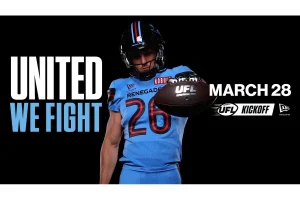
The United Football League (UFL) operates as the primary professional spring football league in the United States, providing a competitive platform during the months between the conclusion of the National Football League (NFL) season and the beginning of training camps. The league officially launched on March 30, 2024, following the merger of two rival spring football leagues: the XFL and the United States Football League (USFL).
The consolidation created a streamlined professional league consisting of eight franchises, primarily located across the Midwest and Southern United States. The UFL season runs from late March through mid-June, featuring a 10-game regular season, conference playoffs, and a championship game held annually at **The Dome at America’s Center in St. Louis.
The league is overseen by Russ Brandon, who serves as president and chief executive officer, while football operations are directed by former professional fullback Daryl Johnston. Ownership is shared among media and investment partners including Fox Sports, RedBird Capital Partners, and Impact Football Partners, a group led by Dany Garcia and Dwayne Johnson. The combined investment backing the league exceeds $140 million, reflecting a long-term strategy aimed at stabilizing spring professional football.
Formation Through the XFL–USFL Merger
The origins of the UFL lie in the financial and operational challenges faced by two competing spring football leagues.
The modern XFL, revived in 2023 after an earlier pandemic-related shutdown in 2020, was acquired by an investment group led by Dwayne Johnson and RedBird Capital in 2022. Meanwhile, Fox Sports had relaunched the USFL in 2022 with a centralized hub model that reduced operational costs but limited local fan engagement.
Despite moderate television success—each league averaged roughly 600,000 viewers per broadcast—operating both organizations simultaneously created financial strain. Industry estimates suggested combined operating losses exceeding $60 million annually.
On December 27, 2023, executives from both leagues announced a merger agreement. The announcement was made publicly on Fox NFL Sunday and confirmed that the two competitions would consolidate into a single entity beginning with the 2024 season.
The merger allowed the new league to eliminate redundant teams, retain top players, and unify media partnerships across Fox and ESPN broadcasting platforms.
The Inaugural 2024 Season
The first UFL games were played on March 30, 2024, opening with a nationally televised tripleheader broadcast across Fox and ESPN networks.
The first weekend produced three notable results:
-
St. Louis Battlehawks defeated the DC Defenders, 18–12.
-
San Antonio Brahmas defeated the Houston Roughnecks, 27–15.
-
Arlington Renegades defeated the Orlando Guardians, 27–14.
Throughout the inaugural campaign, the Birmingham Stallions emerged as the league’s dominant team. The Stallions advanced through the playoffs and won the first UFL Championship Game, defeating the Brahmas 25–0 at The Dome at America’s Center before a crowd of approximately 25,000 spectators.
Quarterback Adrian Martinez was named the game’s Most Valuable Player, highlighting a defense-focused performance that produced the league’s first championship shutout.
League Structure and Teams
The UFL is divided into two conferences, each containing four teams. The conferences reflect the heritage of the former XFL and USFL organizations.
XFL Conference
-
St. Louis Battlehawks
-
Stadium: The Dome at America’s Center
-
Head Coach: Anthony Becht
-
-
DC Defenders
-
Stadium: Audi Field
-
Head Coach: Reggie Barlow
-
-
-
Stadium: Rice Stadium
-
Head Coach: Curtis Johnson
-
-
San Antonio Brahmas
-
Stadium: Alamodome
-
Head Coach: Wade Phillips
-
USFL Conference
-
Birmingham Stallions
-
Stadium: Protective Stadium
-
Head Coach: Skip Holtz
-
-
Pittsburgh Maulers
-
Stadium: Acrisure Stadium
-
-
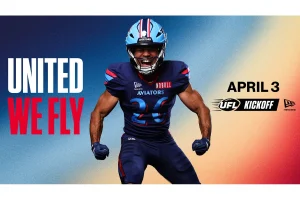
Columbus Aviators (2026 expansion)
-
Stadium: Ohio Stadium
-
-
Louisville Kings (2026 expansion)
-
Stadium: L&N Federal Credit Union Stadium
-
Another expansion franchise, the Orlando Storm, is scheduled to begin play in 2026 at Camping World Stadium.
Rosters and Player Salaries
Each UFL franchise carries a roster structured to mirror NFL developmental systems.
Typical roster configuration includes:
-
50 active players
-
Additional inactive reserves
-
Balanced offensive and defensive personnel
-
Specialists including kickers, punters, and long snappers
Player salaries range from $5,500 to $11,000 per week, with guaranteed seasonal increases. Teams operate under salary budgets of approximately $24 million, allowing competitive compensation while maintaining financial sustainability.
The league also functions as a talent pipeline for the NFL, with several players signing NFL contracts after successful seasons.
Innovative Playing Rules
The UFL has introduced several rule modifications designed to increase scoring, enhance player safety, and maintain faster gameplay.
Conversion System
After touchdowns, teams may attempt conversions worth:
-
1 point from the 2-yard line
-
2 points from the 5-yard line
-
3 points from the 10-yard line
This system increases comeback potential late in games.
Four-Point Field Goal
Kicks attempted from 60 yards or longer are worth four points, encouraging long-distance kicking strategies.
Overtime Format
Instead of traditional overtime drives, the league uses a best-of-three two-point conversion shootout from the 15-yard line.
Kickoff Placement
Kickoffs occur from the 20-yard line, increasing the likelihood of returns compared with the NFL’s 35-yard kickoff spot.
Additional Rules
-
The “tush push” quarterback sneak formation was banned beginning in 2026.
-
Receivers only require one foot in bounds for completed catches.
-
Teams cannot punt when inside their own 50-yard line, encouraging aggressive play.
Season Format
The UFL season structure includes:
-
10 regular season games (five home, five away)
-
Conference standings determining playoff qualification
-
Top two teams in each conference advancing to semifinals
-
Winners meeting in the UFL Championship Game
The championship is permanently hosted in St. Louis, which has consistently produced the league’s highest attendance figures.
UFL Championship History
| Season | Champion | Runner-Up | Score |
|---|---|---|---|
| 2024 | Birmingham Stallions | San Antonio Brahmas | 25–0 |
| 2025 | DC Defenders | Michigan Panthers | 58–34 |
In the 2025 championship, quarterback Jordan Ta’amu produced 412 total yards and four touchdowns, leading one of the highest-scoring title games in modern spring football history.
Broadcast and Audience Growth
All games are broadcast through a multi-network partnership including:
-
Fox
-
Fox Sports 1
-
ESPN
Digital streaming is available through the Fox Sports app and Tubi platform. Television ratings frequently exceed one million viewers, with championship games approaching two million viewers.
Live attendance has also grown steadily. The St. Louis Battlehawks regularly attract crowds exceeding 40,000 fans, making the franchise the league’s most successful local market.
Why UFL Matters?
The UFL represents the most stable spring football venture in decades. Previous leagues—including the original USFL of the 1980s, the Alliance of American Football, and earlier versions of the XFL—struggled to maintain financial stability.
By merging operations, securing major television contracts, and maintaining moderate payroll structures, the UFL has created a sustainable model for professional football outside the traditional NFL season.
The league’s development pathway has already produced multiple NFL signings, demonstrating its role as a secondary professional ecosystem for athletes, coaches, and officials.
With planned expansion markets and continued television growth, the UFL aims to establish a permanent presence in the North American sports calendar between March and June, extending professional football’s annual visibility beyond the traditional fall and winter months.