
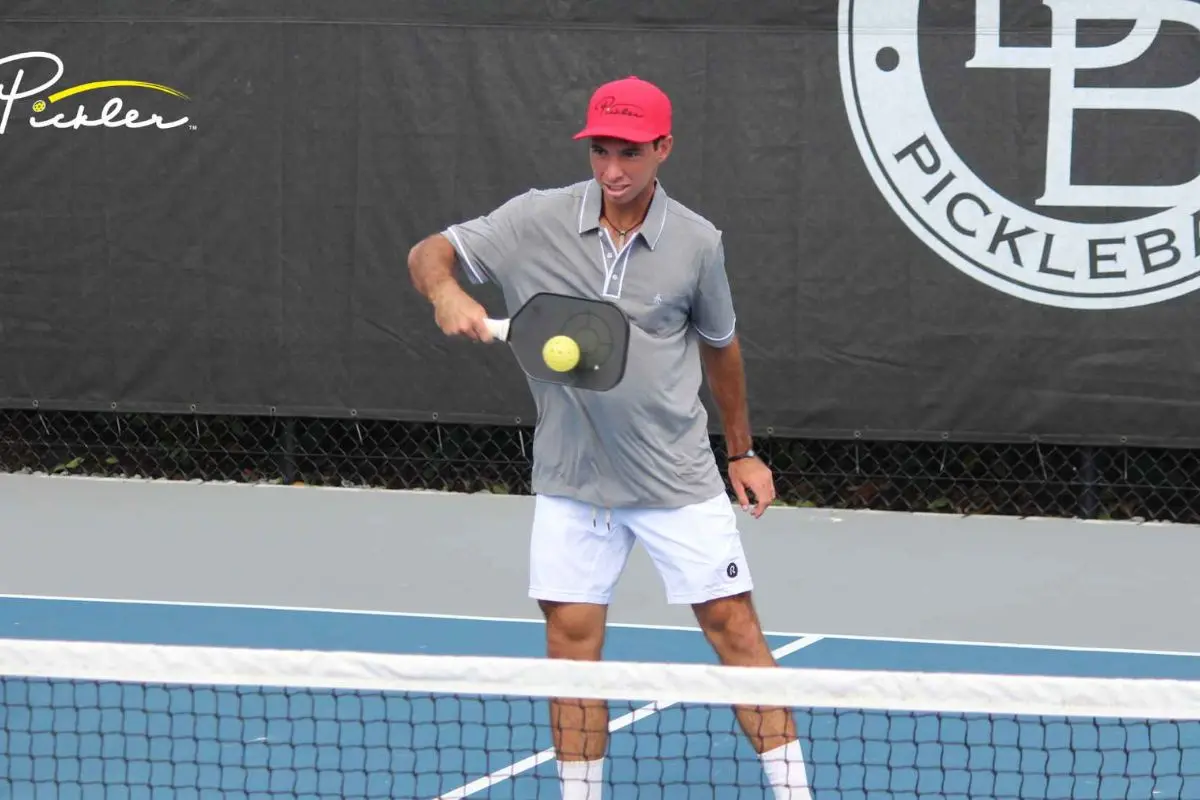
Master the Block in Pickleball: Blocking in pickleball is a skill that often gets overlooked, especially among beginners. However, mastering this defensive shot can be a game-changer, providing players with the ability to neutralize aggressive attacks and regain control during fast-paced rallies. By incorporating blocking into their play, players can frustrate their opponents and improve their chances of winning matches. This article breaks down the essentials of pickleball blocking, offering tips and drills to help players refine their technique.
Pickleball Techniques for a Successful Block
Blocking in pickleball requires a delicate balance of precision and control. One of the most important aspects of an effective block is maintaining a loose grip on the paddle. A grip that is too tight will result in a transfer of power from the ball to the opponent, making it easier for them to counterattack. Instead, players should aim for a relaxed grip, around a 3 or 4 on a scale of 1 to 10, where 1 is a very loose hold and 10 is an overly tight grip. This will allow the paddle to absorb the ball’s power and redirect it with minimal follow-through.
Another critical pickleball technique is to eliminate a big follow-through. Unlike a counterattack, where follow-through is essential, the block is about absorbing the ball and returning it softly to the kitchen. The goal is to avoid sending the ball too high or too far, which can lead to a counterattack. Instead, players should focus on keeping their follow-through minimal while aiming to place the ball at their opponent’s feet, ideally in an unattackable position.

Common Mistakes and How to Avoid Them
A common mistake players make while learning the block is misunderstanding paddle positioning. Many beginners think that blocking requires a flat paddle face. However, this often leads to the ball dropping into the net. The key is to slightly open the paddle face, allowing for a loft on the ball. By positioning the paddle face upward, players can ensure that the ball clears the net and lands in the kitchen, setting up a more effective defensive play.
It’s also important to adjust the amount of follow-through based on the speed of the incoming ball. When the ball is coming in quickly, less follow-through is required. Conversely, when facing slower speeds, players can afford to add a bit more pace to their block. Understanding these adjustments will allow players to better handle various types of attacks and stay in control during rallies.
Blocking Drills to Perfect Your Technique
Practicing blocking is essential for improving this shot. Several drills can help players fine-tune their technique and build the necessary muscle memory to execute a successful block under pressure.
- Double Hit Volley Drill: This drill involves catching the ball on the paddle, letting it bounce, and then volleying it back. The goal is to develop a feel for the ball and get accustomed to the timing of a block. Players should aim to see how many successful volleys they can achieve in a row and then try to beat their record.
- Human Wall Drill: In this drill, players work with a partner at the kitchen line. The partner is responsible for speeding up the ball, while the player must focus solely on blocking the ball back into the kitchen. This drill helps players practice controlling the paddle face and blocking efficiently during fast exchanges at the net.
- Banger Drill: Aimed at players who face aggressive opponents who like to drive the ball from the baseline, this drill involves feeding a partner at the baseline with fast balls. The player practices blocking these shots into the kitchen, forcing their opponent to move up to the net and engage in a more controlled exchange. This drill is particularly useful for players who struggle against “bangers” who rely on powerful shots.
Benefits of Mastering the Block
The block is a highly effective defensive shot in pickleball players who perfect this technique can expect to see significant improvements in their game. By learning how to neutralize fast or aggressive shots, players can prevent opponents from scoring easy points and shift the momentum in their favor. The ability to absorb and redirect power without a large follow-through makes it one of the most strategic shots in pickleball.
Blocking also allows players to regain control in situations where they might otherwise be overwhelmed by an opponent’s pace. Mastering this defensive maneuver is crucial for players looking to take their game to the next level and compete at higher skill levels.
News in Brief: Master the Block in Pickleball
Pickleball blocking is an underrated yet highly effective defensive shot that every player should develop. By practicing the right pickleball techniques and drills, players can learn to handle fast-paced attacks and redirect them back into the kitchen, frustrating opponents and maintaining control of the game. The blocking technique can make the difference between losing a point and winning a match, so it’s essential to incorporate it into regular practice sessions. With time, patience, and dedication, players will find that the block is a powerful tool in their pickleball arsenal.