

Axel Sandin-Pellikka, the Detroit Red Wings’ promising rookie defenseman, has impressed since arriving from Sweden last spring and being selected 17th overall in the 2023 NHL Draft. In 63 NHL appearances this season, he has contributed 19 points with six goals and 13 assists, despite limited time on the primary power play group. However, recent shifts in the team lineup, including the addition of Justin Faulk, suggest that the organization should consider sending Sandin-Pellikka to the AHL to further develop.
With Faulk’s dependable presence and heavy ice time now part of the roster, Sandin-Pellikka is increasingly squeezed out of key roles. Faulk’s debut on March 8 against New Jersey, a 3-0 victory for Detroit, saw Sandin-Pellikka losing his spot, signaling a potential reassignment ahead.
Decline in Playing Time Highlights Challenges for Sandin-Pellikka
Early in the season, Sandin-Pellikka logged significant minutes, often skating over 17 minutes per game and surpassing 20 minutes on nine occasions in the first 32 games. His power play involvement was notable too, averaging about 1:33 per game in October and just under two minutes per game through December. December in particular was a high point, with Sandin-Pellikka scoring nine points, including four on the power play over 15 games.
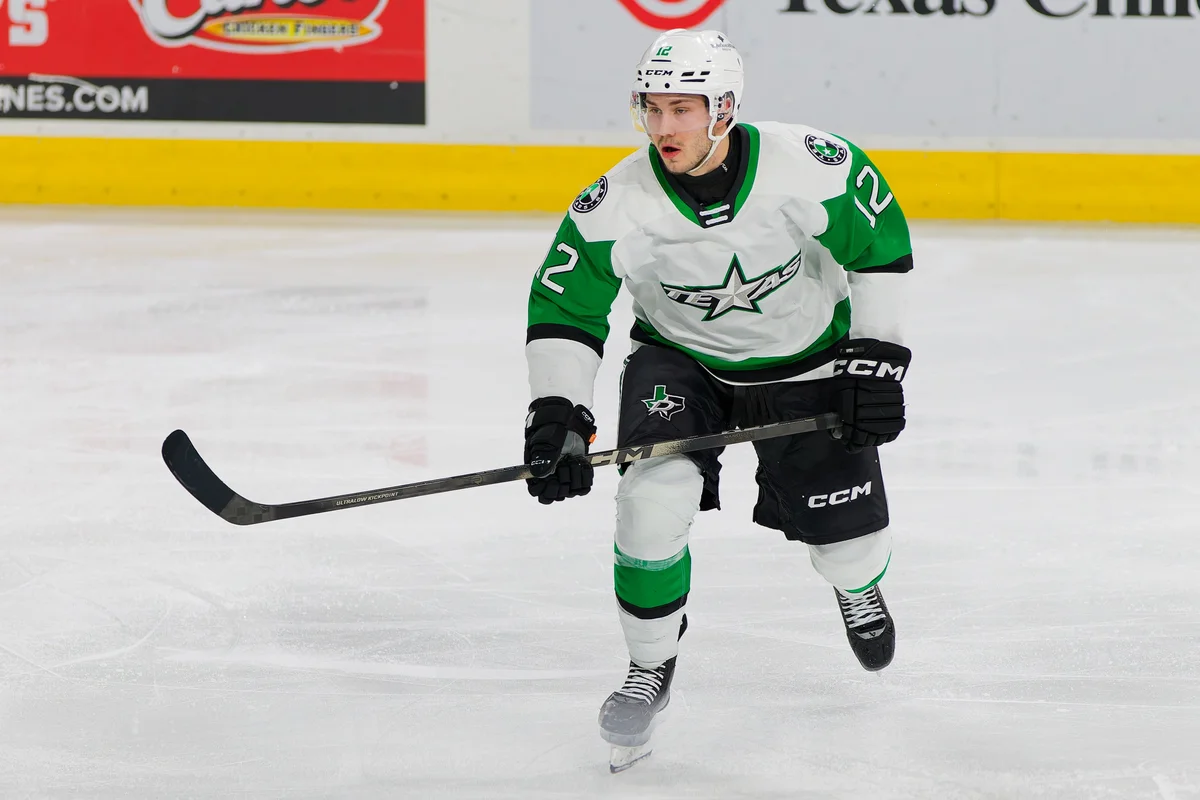
Despite this strong start, Sandin-Pellikka’s performance has cooled off since January. Over 22 games in 2026, he has tallied just four points and his average time on ice has dropped sharply—from nearly 19 minutes in November to slightly over 12 minutes in March. For instance, his average time on ice (ATOI) changed month-by-month as follows:
October (12 games): 18:43 minutes
November (14 games): 19:05 minutes
December (15 games): 16:01 minutes
January (15 games): 13:36 minutes
February (4 games): 13:44 minutes
March (3 games): 12:16 minutes
This reduced ice time partly reflects head coach Todd McLellan’s hesitancy to trust Sandin-Pellikka in critical late-game situations where maintaining tight leads is essential. The tendency has been to bench him during close contests, indicating that despite his offensive skills, he is not yet relied upon defensively in key moments.
With the playoffs approaching, coaches cannot avoid exposing young players to high-pressure matchups. McLellan’s current approach appears to be limiting Sandin-Pellikka’s involvement to prevent risky defensive mistakes, which suggests the team might benefit from giving him space to improve away from the NHL spotlight.
Why Time in the AHL Could Be Beneficial for Sandin-Pellikka
Sandin-Pellikka earned his place on the Red Wings with his ability to move the puck and provide offensive spark from the blue line. Although these talents have shown flashes of consistency, he has yet to secure a role on the top power play unit, which continues to struggle to score. The presence of Justin Faulk as the second power play’s quarterback means Sandin-Pellikka’s opportunities to influence the game are diminishing.
His power play production has stalled recently: after seven points in the first 39 games, he has managed only one power play point in the last 24 contests despite receiving two to three minutes on the man advantage per game. This signals that while the offensive potential exists, other aspects of his game need refinement for him to contribute regularly and effectively at the NHL level.
Advantages of Assigning Sandin-Pellikka to the Grand Rapids Griffins
The trade sending Justin Holl away from Grand Rapids has opened up space on the Griffins’ defensive roster. Sandin-Pellikka’s decreasing ice time in Detroit, along with competition from players like Johansson and Bernard-Docker for third-pairing minutes, makes the AHL a practical next step.
In Grand Rapids, Sandin-Pellikka would assume a leading role, playing top minutes and managing the team’s main power play. Here, he could log over 20 minutes per game, maintaining physical and mental preparedness for the demanding North American hockey schedule. This environment would also boost his conditioning, ensuring he is ready to step back into the Red Wings lineup promptly if injuries strike among the top six defensemen.
Even considering challenges faced by teammates like Travis Hamonic when called upon, Sandin-Pellikka would remain Detroit’s seventh defenseman, deeply familiar with the system and able to serve as an immediate replacement in tough NHL situations.
Long-Term Outlook and Importance of Immediate Development
Axel Sandin-Pellikka has clear potential to emerge as a dynamic offensive defenseman if he can shore up defensive shortcomings. However, the Red Wings cannot afford extended patience with his current inconsistencies amid a tight playoff race. A stint with the Grand Rapids Griffins offers the optimal path for sharpening his game and gaining confidence.
By stepping away from the NHL grind temporarily, Sandin-Pellikka stands to refine critical parts of his play, return stronger, and eventually fulfill the expectations of a 17th overall pick. This move could shape the trajectory of his NHL career and provide Detroit with a more reliable, well-rounded defenseman in the near future.
