

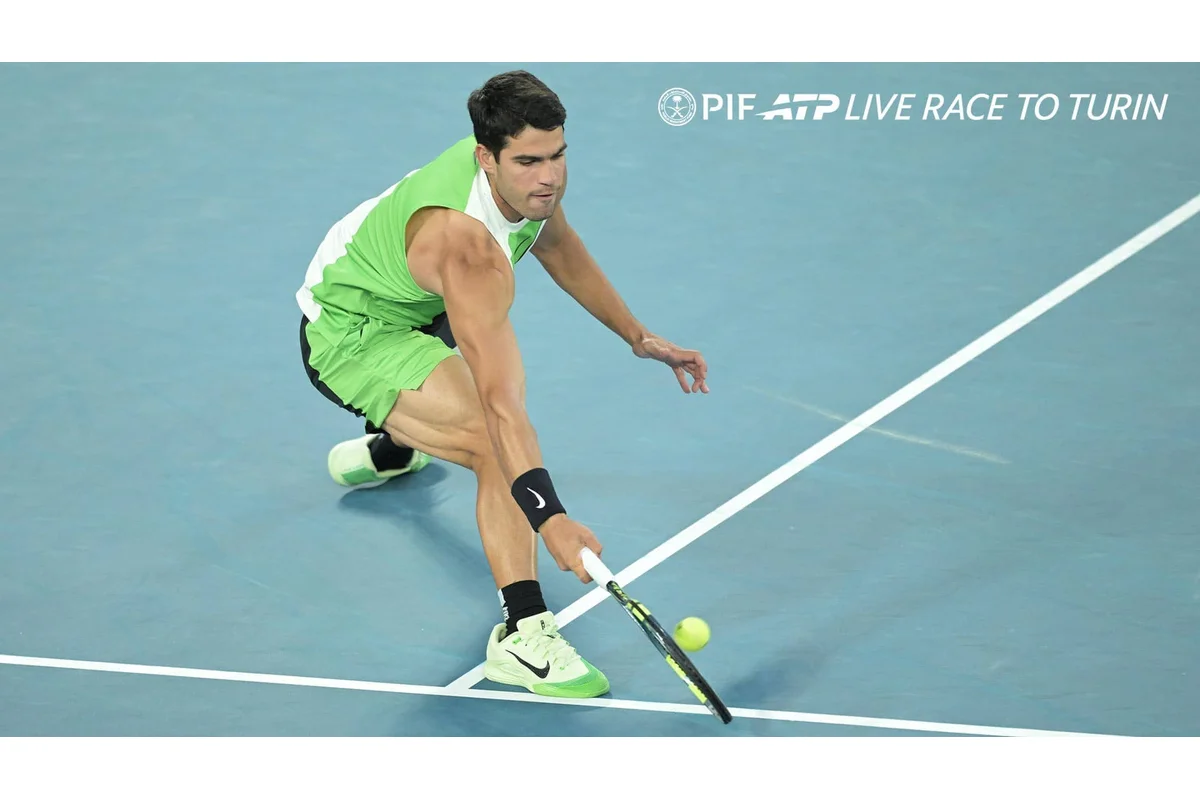
Carlos Alcaraz secured his seventh Grand Slam title with a four-set victory over Novak Djokovic in the 2026 Australian Open final, making him the youngest player in the Open Era to complete a Career Grand Slam and capture seven major titles. Roger Federer’s former coach Ivan Ljubicic suggested that achieving seven Grand Slams today may be easier compared to past eras, particularly because the current goalpost is much higher than before.
Alcaraz Breaks Records While Redefining the Grand Slam Milestone
The 22-year-old Carlos Alcaraz surpassed Bjorn Borg’s previous record by winning his seventh major a year earlier than Borg did at the age of 23. By completing the Career Grand Slam at 22, Alcaraz also broke Rafael Nadal’s record, who had reached this achievement at 24 after beating Novak Djokovic in the 2010 US Open final. Alcaraz has become only the sixth man in history to claim all the major titles, joining legendary players such as Rod Laver, Andre Agassi, Federer, Nadal, and Djokovic.
Before the 2026 season, Alcaraz had never reached the semifinals of the Australian Open, highlighting his rapid rise in the tennis world.
Ivan Ljubicic Discusses the Changing Mental Landscape in Winning Grand Slams
In an interview with Sky Italia, Ivan Ljubicic explained that the mental approach to winning seven major titles has evolved. During the era of Federer, Nadal, and Djokovic, the standard was to surpass Pete Sampras’ record of 14 Grand Slam titles, setting a clear target for the elite players. Today, Djokovic’s pursuit of 24 titles has shifted the benchmark considerably upward.
“What Federer, Djokovic, and Nadal have achieved, winning 20 or more Grand Slams, might make it easier today to win seven at 22. Back then, Pete Sampras was the reference point, so when he reached 14, we said to ourselves, ‘I have to do it.’ Now the goal is different; the target is 25, so it’s still far off. From a mental point of view, you tell yourself, ‘Okay, 7 is not an incredible number because I have to reach 25.’”
— Ivan Ljubicic, former coach of Roger Federer
He further emphasized that the contemporary mindset makes winning seven Grand Slams less daunting than in Bjorn Borg’s time, who won his seven titles at a very young age, while having a lower target to aim for mentally.
“It would be very different to win 7 with the goal of reaching 10. In my opinion, mentally it’s easier to win seven Grand Slams now, compared to Borg, who won seven when he was very young.”
— Ivan Ljubicic
Impact of Physical Strain: Alcaraz’s Withdrawal from Rotterdam Open
Prior to his victory over Djokovic in the Australian Open final, Alcaraz endured the longest semifinal match in Rotterdam Open history, lasting five hours and 27 minutes against Alexander Zverev. Despite having a two-set lead and battling illness and cramps, the World No.1 prevailed in the marathon encounter.
Richard Krajicek, director of the Rotterdam Open, recalled the physical toll the match took on Alcaraz and foresaw his eventual withdrawal from the ATP 500 indoor hard court event due to exhaustion.
“So Monday morning, I got the message from his agent, and yeah. I was a little bit expecting it, but I wish I was sleeping for one more hour because I didn’t want to see that message! But it was not a big surprise. It is unbelievably draining, and having the cramps and then still coming back two days later, even though it was a relatively easy final physically compared to the semis, and it was only 15 degrees.”
— Richard Krajicek, Rotterdam Open tournament director
Alcaraz had previously won his first indoor hardcourt title in Rotterdam against Alex de Minaur last year. Along with Alcaraz, Alexander Zverev also withdrew from the upcoming tournament. Their replacements are Giovanni Mpetshi Perricard and Jesper de Jong respectively. The Rotterdam Open is scheduled to begin on February 9, with the final set for February 15.
Significance of Alcaraz’s Achievements and Future Outlook
Alcaraz’s accomplishment of a seventh Grand Slam title at such a young age places him among tennis greats and sets a new standard for the next generation. Ljubicic’s comments highlight how evolving benchmarks affect athletes’ motivations and mental strategies. This shift in goals—from surpassing Sampras’s 14 majors to chasing Djokovic’s tally approaching 25—may ease pressure on emerging stars while simultaneously raising the level of excellence required.
The physical demands revealed in Alcaraz’s Rotterdam experience also underscore the challenges of maintaining peak performance throughout demanding seasons. As the tennis calendar progresses, monitoring Alcaraz’s health and form will be crucial in determining whether he can sustain this unprecedented momentum.
