
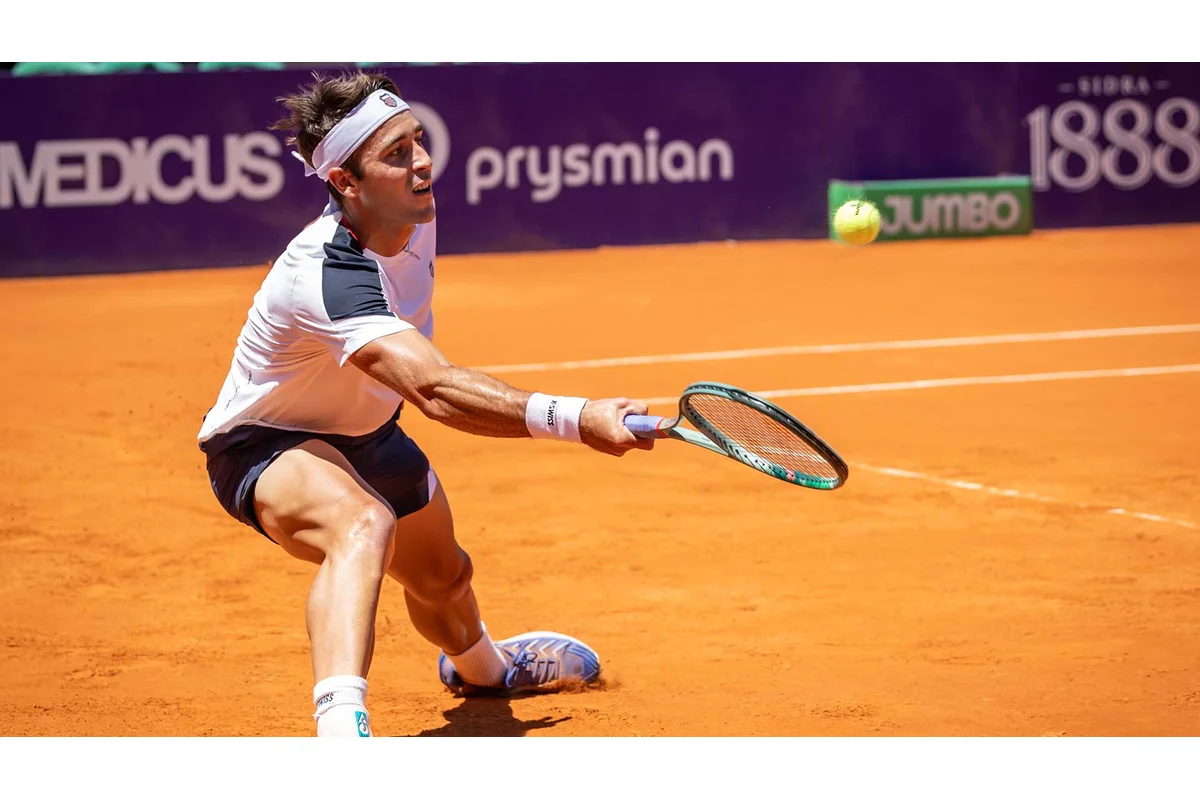
On Thursday at 4:30 pm, Tomas Martin Etcheverry and Vilius Gaubas will face off for the first time in their careers during the second round of the Rio Open at Quadra Guga Kuerten. This match holds particular interest as fans and analysts weigh the chances of each player, with a focus on the Tomas Martin Etcheverry prediction for this critical encounter.
Analyzing Match Predictions and Betting Odds
Tennis Tonic favors Tomas Martin Etcheverry to secure a straight-sets victory over Vilius Gaubas. Early betting odds also reflect this sentiment, placing Etcheverry as the favorite with odds of 1.285, while Gaubas is considered the underdog at 3.62. These figures underline expectations for an assertive performance by Etcheverry at this stage.
Live streaming options are available for this event, though limited by geographic restrictions and betting account requirements. For viewers, platforms such as bet365 offer coverage contingent on having a funded account or recent betting activity. Additionally, Challenger TV provides free streaming for some associated events, though the Rio Open broadcast primarily serves top-tier tennis competitions like the ATP and WTA tours.
First-Ever Encounter: Head-to-Head Background
Since this is the initial main-tour meeting between Tomas Martin Etcheverry and Vilius Gaubas, no prior head-to-head statistics exist. This lack of historical data adds an element of unpredictability to the matchup, intensifying the focus on current form and recent performances.
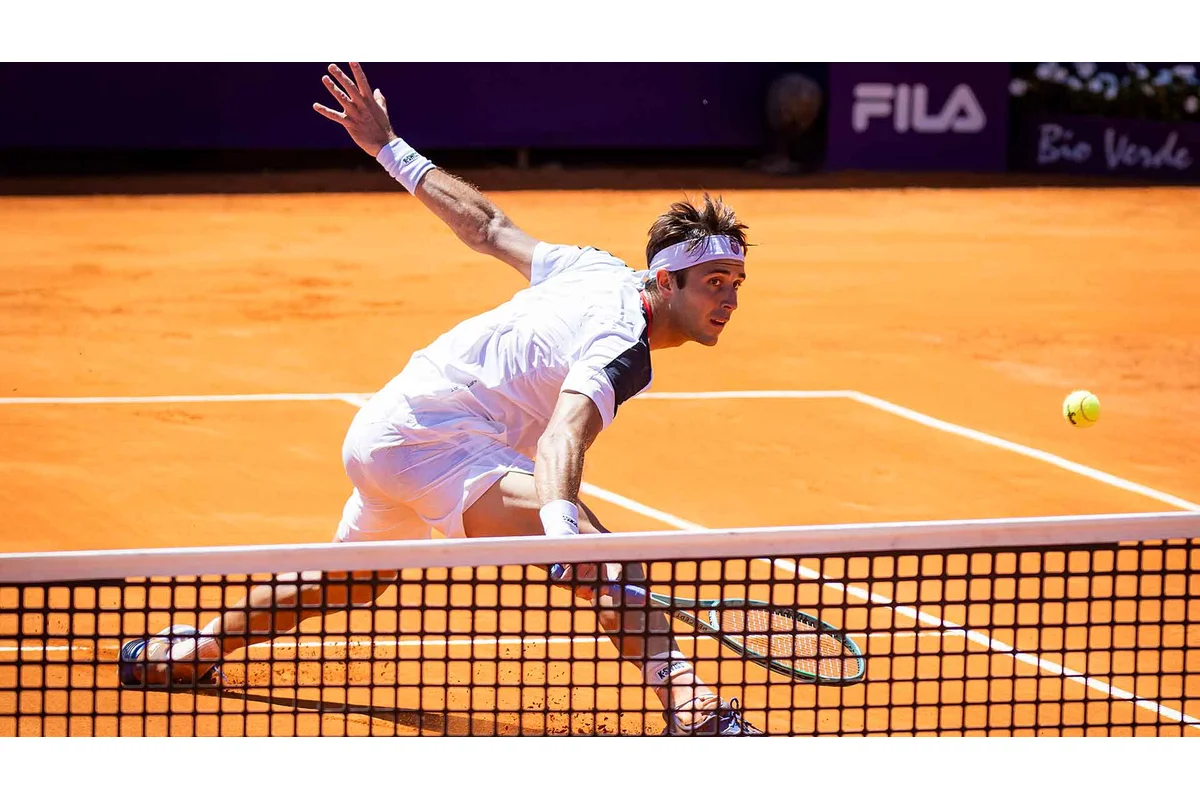
Profile and Recent Performance: Tomas Martin Etcheverry
Currently ranked world number 51, the Argentine player advanced to the second round after a demanding win over Francisco Comesana in three sets (3-6, 6-3, 6-4). Displaying resilience, Etcheverry recovered from an initial set loss by intensifying his aggression, recording 39 winners across the match. Although etching fewer total points (80) compared to Comesana, he excelled in clutch moments, demonstrating a keen focus on pivotal points.
Etcheverry’s serving statistics underscore his efficiency, with six aces and only two double faults. He successfully won 72% of points on his first serve and 63% on his second, though he conceded one service break. His break point conversion rate stood at 40%, having broken twice out of five opportunities. These figures highlight his balanced approach on serve and return, vital on clay courts where service holds are challenging.
Over the past decade, Etcheverry maintains a solid career match win rate of 61% (373-234). His 2026 record includes a strong showing on clay with a 4-1 win-loss tally and an overall season record of 7-4. His prior best result this year was reaching the semifinals in Buenos Aires, signaling steady progress on his favored surface.
Background and Form: Vilius Gaubas
Ranked 126th in the world, Lithuanian Vilius Gaubas earned his spot in the second round by defeating Andrea Pellegrino, Francesco Passaro, and Luis Queiroz Miguel in earlier rounds. His latest victory came against Queiroz Miguel in a three-set battle (6-3, 2-6, 6-2) where, similar to Etcheverry, he scored fewer total points (79 compared to Queiroz Miguel’s 85), again pointing to strong performances in key moments.
Gaubas’s service was a mixed bag in that match; unlike Etcheverry, he failed to register any aces and committed two double faults. He lost his serve twice but managed to save one break point. His first serve percentage was 76%, yielding 59% point wins, while the second serve garnered 63% point wins. He converted 30% of his break points with three breaks from ten opportunities, showing resilience despite some difficulties holding serve.
His best 2026 result was reaching the semifinal stage at the Oeiras 1 Challenger, and he holds a 10-3 win-loss record for the year, remaining unbeaten (3-0) on clay courts. This marks a promising ascent, though Gaubas lacks previous experience in the Rio Open, setting the stage for a debut performance under pressure.
Comparing Match Dynamics at the Rio Open
In terms of match volume at the tournament so far, Gaubas has competed in three matches beginning in the qualification rounds, compared to Etcheverry’s direct entry into the main draw and solitary match played. Both players dropped one set during play; however, Gaubas navigated seven sets overall, while Etcheverry contested four sets, reflecting the longer journey Gaubas took to reach the current round.
Gaubas has recorded 110 winners (49% of his total points), compared to Etcheverry’s 39 winners, also accounting for 49%. Interestingly, the Lithuanian has demonstrated a greater volume of winners due in part to more playing time, but both maintain similar aggressiveness relative to their points won.
Serving Strengths and Break Point Efficiency
Etcheverry’s six aces contrast with Gaubas’s 14, averaging 4.7 per match, indicating a stronger serve presence from Gaubas. Both players show proficiency on their first serves—Etcheverry winning 72% of those points and Gaubas winning 67%. However, Etcheverry is more effective on his second serve at 63%, compared to Gaubas’s 52%. This difference may prove decisive in tight service games.
Regarding crucial points, Etcheverry has converted 40% of his break point chances, having broken twice while conceding his serve only once. He has also saved 75% of break points faced. Gaubas has been more active breaking opponents nine times at a 41% conversion rate but lost his serve four times, saving 76% of the break points against him. These statistics illustrate the resilience and attacking strengths each player brings to critical moments.
Broader Context of the Rio Open and Upcoming Matches
The Rio Open continues to showcase emerging and established talents, with players like Matteo Berrettini, Dusan Lajovic, and Alejandro Tabilo also involved in competitive second-round matches. Tomas Martin Etcheverry’s encounter with Vilius Gaubas stands out due to their contrasting season journeys and styles, setting up a compelling test on clay.
Both athletes have shown tactical aggression and mental toughness this season, but the match will likely hinge on who better controls pivotal points and maintains serve under pressure. Observers will watch closely whether Etcheverry can harness his experience and consistency against the youthful vigor and stronger serving statistics of Gaubas.
Given their records and performance indicators, the clash between Etcheverry and Gaubas is poised to be an intense, carefully contested battle that could shape their trajectory for the remainder of the Rio Open and clay-court season.
