
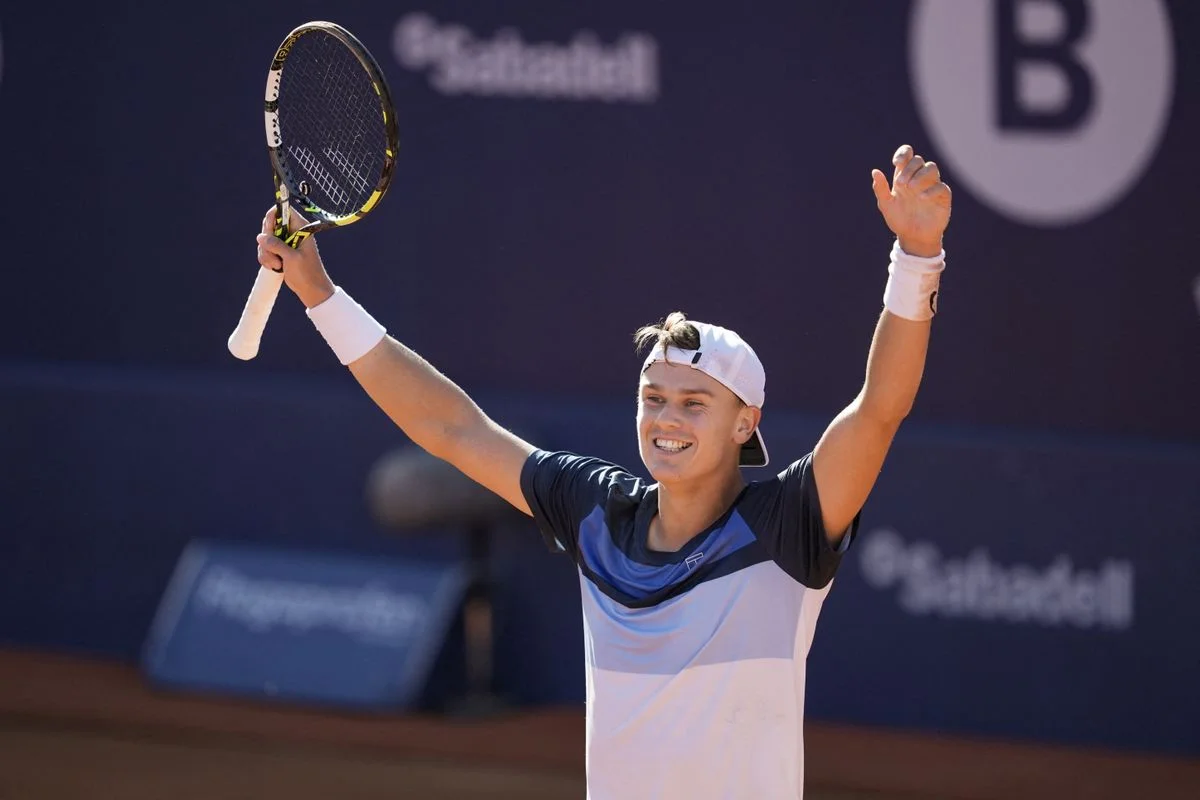
Holger Rune, the Danish tennis player currently recovering in Qatar, is facing distress as conflict intensifies in the Middle East. Rune, who is undergoing rehabilitation for an Achilles injury at the Aspetar sports hospital in Doha, has been unable to leave the city due to escalating violence and flight cancellations caused by regional hostilities.
The 22-year-old former world No. 4 and his team had planned to fly from Doha to Los Angeles on Sunday morning, but the closure of Qatar’s airspace following military strikes has left them stranded. Tensions escalated after the United States and Israel coordinated air strikes on locations in Iran, which was swiftly followed by Iranian attacks targeting U.S. bases in several Gulf countries, including Qatar.
Details of Holger Rune’s Experience Amid Conflict
Aneke Rune, Holger’s mother and manager, shared their harrowing experience in Doha during an interview with TV2 Sport. She described enduring a restless night marked by loud explosions and fireballs lighting up the sky, leaving them frightened and anxious. Despite the support from hotel staff, they struggled with fear amid the uncertainty and visible signs of conflict surrounding them.
“It’s been a wild night. We didn’t get much sleep,”
Aneke Rune said.
“It all seems more brutal at night with the fireballs in the sky and repeated explosions.
“We spent a lot of time at the reception, and they are super sweet, so in the end we went to our rooms and slept.
“But Holger was really scared last night. There’s a lot of brutal news and pictures of attacks all around us.”
Aneke Rune
Impact on Tennis and Regional Travel
The broader turmoil is affecting not only Holger Rune but other international sports figures and travelers in the region. Qatar, along with neighboring countries such as Kuwait, Bahrain, and the United Arab Emirates, has shut down its airspace, disrupting flights and forcing players like Daniil Medvedev, Andrey Rublev, and Karen Khachanov to reconsider travel plans ahead of major tournaments.
This situation highlights the increasing uncertainty facing athletes working or traveling in regions of geopolitical instability, underscoring the challenges to their training schedules and mental well-being.
