
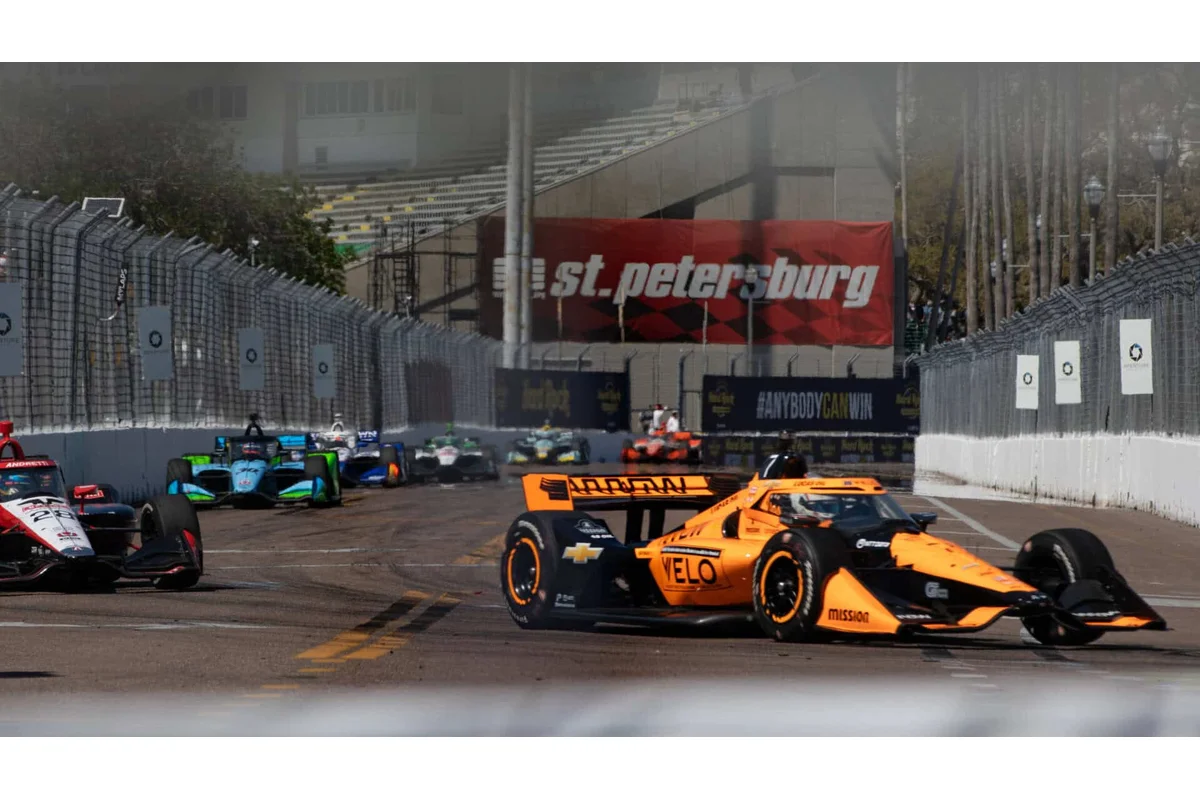
The NTT IndyCar series has unveiled advanced carbon fiber safety flaps designed to reduce the risk of cars becoming airborne during the Indianapolis 500, addressing a critical safety concern in the legendary race. Set to debut at the upcoming open test session on April 28-29, this innovation targets crashes caused by high-speed spins on the 2.5-mile oval track, aiming to enhance driver safety through better aerodynamic control.
Design and Functionality of the New Safety Flaps
These thoughtfully engineered flaps are installed just ahead of the rear wheels and span nearly the width of the tires. Equipped with a front hinge, they deploy when a car spins at high speed, lifting up to disrupt airflow and prevent vehicles from lifting off the ground. Tino Belli, IndyCar’s Director of Aerodynamic Development Engineering, highlighted the collaborative effort behind this technology:
Dallara is a tremendous partner and have joined us to closely examine spins that have occurred over the last few years at IMS.
Computational fluid dynamics tests have demonstrated that these flaps reduce the likelihood of cars becoming airborne by nearly nine percent during 180-degree spins, marking a significant step forward in managing primary crash risks, especially at superspeedway events. Belli further noted,
We are always evaluating safety and believe this is an effectual development for a superspeedway.
Background on Indy 500 Airborne Crashes and Safety Challenges
The Indianapolis Motor Speedway has a history marked by dramatic and sometimes frightening airborne crashes, where vehicles collide with barriers at unstable angles. One of the most memorable incidents was Colton Herta’s crash in the previous year, where his car flipped after hitting the wall in Turn 2, underscoring the high stakes of racing on this demanding circuit.
Additional Brake System Upgrades Complement Safety Measures
Alongside the flaps, IndyCar has approved a new brake system developed with Performance Friction Corporation (PFC Brakes) to provide more consistent and responsive braking. This advancement is especially important when drivers decelerate rapidly after exiting Turn 4 to enter the pit lane, a situation that has proven perilous. Last year’s brake failure involving Rinus VeeKay resulted in a severe crash during pit entry, damaging his car and ending his prospects for a strong finish.
Implications for the Indianapolis 500 and Future Safety Innovations
By implementing both the aerodynamic flaps and improved braking technology, the IndyCar series aims to make the Indianapolis 500 safer for drivers and spectators. As speeds often exceed 230 miles per hour on this historic track, these advancements represent a proactive approach to preventing airborne accidents and enhancing control during critical moments. With the test sessions underway and these safety upgrades now mandatory, the motorsport community will be closely watching how these innovations affect race dynamics and driver security in coming events.
