
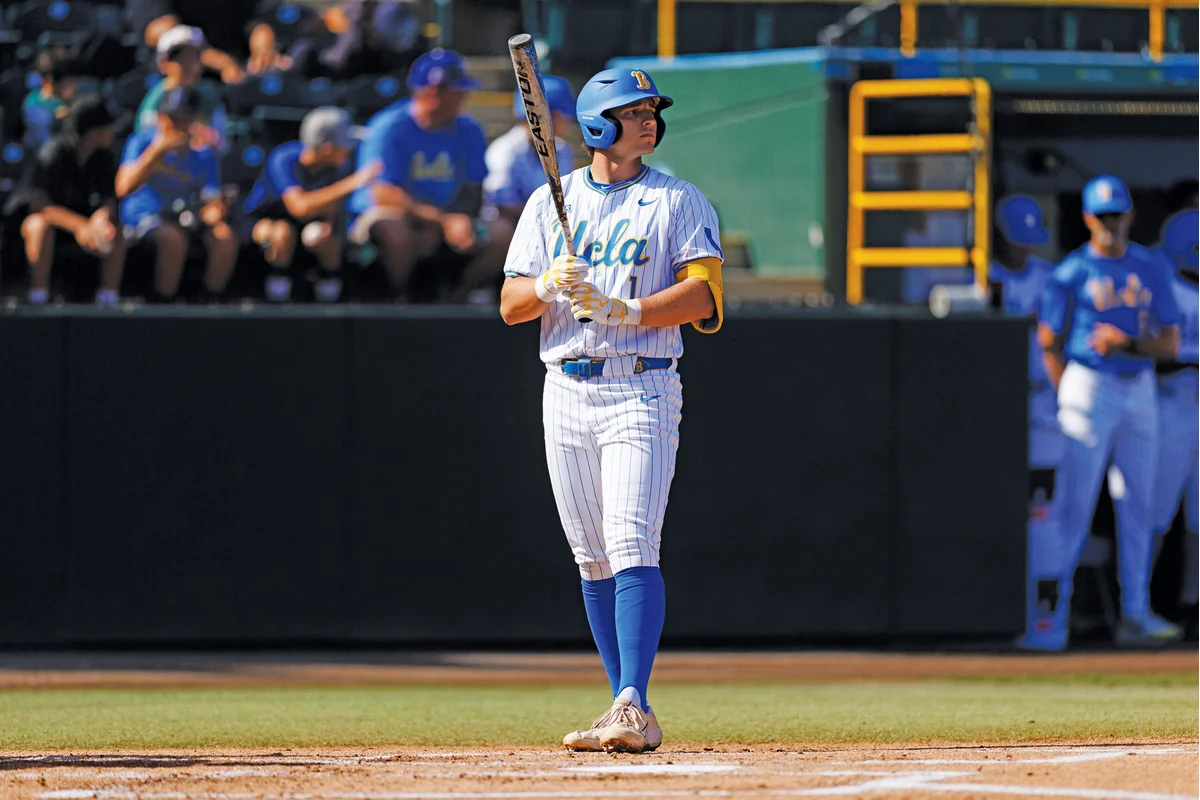
As the 2026 MLB draft approaches, each Top 25 college baseball team features notable stars, but beyond the spotlight lies a group of draft sleepers whose roles, development paths, and specific traits could make them valuable picks. Although these players aren’t preseason headliners, their opportunities and unique skills position them to influence draft outcomes significantly. These 2026 MLB draft sleepers represent potential surprise contributors poised to shift team evaluations as the season progresses.
Cal Randall’s Bullpen Poise and Pitching Arsenal
Cal Randall is anticipated to continue his role in the bullpen in 2026, following a sophomore campaign that produced a 3.08 ERA along with 31 strikeouts over 26.1 innings. Despite limited workload growth amid a deep roster, Randall’s strength lies in his pitching traits—particularly his well-extended arm and flat delivery that support a mid-90s fastball with effective run through the upper strike zone. His changeup stands out as an authentic separating pitch with notable fade and tumble. Added deception comes from his high leg kick and crossfire, delivering the ball from a three-quarter release point. These attributes contribute to top 10-round draft interest in Randall.
Garcia’s Transfer to LSU Enhances Bullpen Prospects
Ranking 38th on Baseball America’s top 100 transfer list, Garcia is expected to settle into LSU’s bullpen after transferring from Oregon. His fastball, generally sitting between 91-93 mph and peaking at 95 mph in game action, benefits from exceptional vertical break and solid extension, making it effective beyond its velocity. Leaning heavily on this pitch—nearly 70 percent of his offerings in 2025—Garcia achieved a 25 percent strikeout rate. His curveball adds further swing-and-miss ability with strong spin rates, while a developing changeup offers usable depth. With improvements in command and pitch selection, Garcia could become a significant late-inning presence and a potential top 10-round choice.
Webb’s Transition from The Citadel to Mississippi State Reflects Growth Potential
Webb’s surface numbers from The Citadel – a 4.04 ERA complemented by a 23.6% strikeout rate over 55.2 innings – mask underlying attributes that intrigue scouts. Demonstrating the stamina to handle starting duties and raw skills adaptable to relief roles, Webb’s fastball stands out with mid-90s velocity, sharp cut-ride movement, nearly 6.5 feet of extension, and a very flat delivery that disrupts hitters’ timing. He pairs this with an above-average sweeping breaking ball that generated almost a 40% whiff rate in tracked games. Under coach Brian O’Connor, Webb is poised to contribute from the bullpen, and tighter control combined with consistent performance against SEC hitters could significantly elevate his draft stock.
Advincula’s Offensive Consistency Strengthens Draft Position
Though overshadowed by louder draft names on the Cal roster, Advincula presents a compelling profile of his own. He posted a .342/.410/.506 slash line with 25 extra-base hits, 33 RBIs, and 13 stolen bases, fueled by a compact, efficient swing designed to spray line drives across the field. With minimal wasted motion, his repeatable contact skill enhances his offensive value. Additionally, strong defensive abilities at shortstop deepen his overall appeal. His production in the competitive ACC league places him within reach of a top three-round selection.
Guevara’s Offensive Refinement Spurs Auburn Confidence
After a freshman season that didn’t fully represent his bat, Guevara responded to Auburn’s confidence by hitting .331/.388/.556, including five home runs and 11 doubles as a sophomore. His value derives from exceptional bat-to-ball skills and consistent barrel control, favoring line-drive power over lofted hits. As an above-average table-setter, his impact is subtle and contact-driven, with added strength potentially unlocking more noticeable power and advancing his draft stock.
Jackson’s Power-Speed Combo Gathers Momentum at Georgia
Jackson transferred from Wofford ahead of 2025 and brought a compelling blend of raw power and speed to Georgia’s lineup. Slashing .240/.365/.612, he recorded 14 home runs and 12 stolen bases, showcasing significant extra-base potential. His power presents itself on hard, well-angled contact, but a degree of passivity limited his production, as he often let hittable pitches pass without swinging. Georgia’s spring focus on refining his swing decisions and encouraging controlled aggression aligns with coach Wes Johnson’s belief that Jackson could reach a 20-home run and 20-steal season if he balances patience and assertiveness.
Hull’s Transfer to North Carolina Brings Exciting Power-Speed Profile
Arriving at North Carolina, Hull carries a dynamic power-speed duality supported by impressive size and athleticism. After stealing 42 bases at George Mason, he demonstrates above-average running ability that enhances his value on the bases and supports a potential center field role. Offensively, Hull pairs strong, firm contact with exceptional strength, leading to high hard-hit and barrel percentages, although much of his batted ball tends to stay on flatter trajectories. His consistent and aggressive approach avoids overpursuit, and if his batted-ball angles increase, his power ceiling could rise quickly.
Burns Positioned in High-Leverage Texas Bullpen Role
Burns begins spring positioned for Texas’ most critical bullpen innings, with the potential to leap ahead of many relievers in the draft. After transferring from Arizona State, he overwhelmed hitters when his velocity was at its peak. His fastball averaged 95.1 mph, reaching a high of 100 mph, and combined elite velocity with carry that created powerful swing-and-miss effects. A sharp mid-80s slider and a low-80s fading changeup complete his arsenal. Maintaining his bullpen role with these traits intact could make Burns the top reliever selected in July’s draft.
Thomas’ Velocity and Extension Enhance Draft Outlook
Thomas entered the 2025 season at Hawaii despite limited prior accomplishments due to injury setbacks but immediately impressed with arm strength. He posted a 3.60 ERA with 37 strikeouts and just six walks over 25 innings, dominating the West Coast League during the summer before transferring to TCU. His fastball sits in the low 90s but features elite extension, a flat delivery, and over 20 inches of vertical movement, creating deceptive carry at the top of the strike zone. Reports indicate velocity improvements, and if his breaking balls become sharper with extended use, Thomas stands a strong chance to earn early draft consideration.
Stewart’s Senior Season Offers Chance to Rekindle Draft Interest
Heading into his final collegiate season at Arkansas, Stewart aims to rebuild his draft momentum after a quieter junior year. Known for generating powerful exit velocities and lifting quality contact, he consistently targets the pull side with a long, impact-driven left-handed swing. However, his aggressive approach expands the strike zone and depresses contact rates for a power hitter. Improved plate discipline could allow Stewart’s bat to regain draft relevance, especially through strong SEC performance.
Johnson Emerges as Coastal Carolina’s Dependable Left-Hander
Johnson quietly developed into one of Coastal Carolina’s most reliable arms last season, posting a 2.82 ERA with 55 strikeouts over 38.1 innings during the team’s College World Series run. His value lies more in pitch quality and control than pure velocity. His fastball, generally around 92 mph and touching 95 mph, creates swings and misses thanks to carry, spin, and location at the top of the zone. His slider is a true difference-maker, showcasing multiple shapes and offering a premium weapon against both righty and lefty hitters. Maintaining a starting role and health in 2026 could elevate Johnson to early draft rounds.
Stokes’ High-Potential Sidearm Delivery Draws Scout Attention
Standing 6-foot-6 and 225 pounds, Stokes is a sidearm pitcher whose unique delivery and pitch mix attract significant scouting interest. Over 24 relief appearances for Oregon, he relied on a two-pitch arsenal that generates exceptional swing-and-miss rates. His mid-80s slider is particularly effective, creating a 58% whiff rate and contributing to an overall 49% miss rate through late bite and deception from his arm slot. His fastball has reached 99 mph and complements his breaking pitch well. Questions about his role and consistency in strike-throwing remain, but Florida State’s need for rotation depth gives Stokes an opportunity to showcase his talents further.
Rhudy’s Rare Fastball Command Fuels Volunteer Bullpen Role
Rhudy has drawn multiple evaluations because of his unusual fastball, which defies radar expectations due to elite spin rates, unconventional release points, and exceptional carry, making it extremely difficult for hitters to track. While reliant on this pitch, he supplements it with a secondary slider that generates additional swings and misses. Rhudy is expected to play a central reliever role for Tennessee Volunteers in 2026.
Tiroly’s Acceleration from Rider to Virginia Highlights Offensive Skill
After a standout sophomore season at Rider, Tiroly transferred to Virginia boasting a .377/.481/.749 slash line with 18 home runs, combining power with refined plate discipline. His bat speed and optimal swing mechanics consistently produce high exit velocities. His approach balances assertiveness and zone control effectively, limiting chase pitches. The remaining developmental area lies in increasing lift on his hardest contact, and even modest gains in batted-ball launch angle against ACC pitching could move him into early draft rounds.
Kleinschmit’s Reliable Starting Role at Oregon State Underscores Consistency
Though stretching the sleeper label, Kleinschmit is set to repeat as Oregon State’s No. 2 starter after establishing himself as a dependable arm last spring. He posted a 3.56 ERA with 113 strikeouts over 91 innings, pairing performance with a pitching profile focused on feel and pitch shape rather than velocity. His fastball hovers around 90 mph, touching 94, enhanced by carry, movement, and a flat entry angle. The sweeper consistently misses bats, working well with the heater, while a changeup rounds out a solid three-pitch mix. Continuing to refine command and pitch sequencing could raise his standing in Baseball America’s Top 100 draft rankings.
Pacella’s Bat Shines Amid SEC Competition at Ole Miss
Recognized recently as one of the nation’s most underrated outfielders, Pacella transitioned from Illinois State to Ole Miss and hit .355/.429/.714, including 20 home runs and 19 doubles. His power focuses on strong contact to the air, largely to the pull side. While his aggressive approach boosts impact, it results in below-average contact rates due to an expanded strike zone. If Pacella reduces swings missing the ball and maintains his power against high-level SEC pitching, his draft profile remains highly attractive.
Whitcomb’s Disciplined Approach Bolsters Vanderbilt Prospects
Whitcomb moved to Vanderbilt following a robust offensive season at Tennessee Tech, hitting .360/.485/.649 with 18 home runs. His power is expressed through lifted trajectories on contact, even though much of his pull-side contact remained more modest in launch angle. His challenge going forward is turning increased aggression into consistent damage, as he sometimes hesitated on pitch opportunities. Enhanced assertiveness versus SEC competition could substantially enhance his draft value.
Slanker’s Emergence as a Left-Handed Power Threat at Louisville
Slanker enters Louisville after a breakout sophomore campaign at Ohio, hitting .302/.422/.720 with 21 home runs while displaying excellent plate discipline, walking more often than striking out. He pairs impactful contact with strong exit velocities, especially on elevated hits, fitting well as a middle-of-the-order left-handed power hitter. Continuing to translate this production against stronger pitching will enhance his draft target status.
Johnson’s Raw Ability Balances Draft Sleep Potential
Even with uneven results last spring — including a 5.57 ERA and inconsistent command — Johnson remains a player worth monitoring due to his rare physical traits. Standing 6-foot-6 and 260 pounds, his fastball can reach the high 90s with an intimidating arsenal. If he stabilizes strike-throwing, his profile could transform rapidly, establishing him as a true sleeper in the draft class.
Titsworth’s Unique Low-Release Delivery Offers Draft Upside
Titsworth’s release point, just over four feet from the ground, makes him one of the most unusual arms in the 2026 class. Last season with Clemson, he recorded a 4.28 ERA with 50 strikeouts over 54.2 innings, mainly in relief. His fastball demonstrates heavy run from the low slot, complemented by a fading changeup and a tighter slider. Recent offseason mechanical improvements targeting strike control, along with a shift toward starting, could generate meaningful draft momentum.
Montesa’s Control and Three-Pitch Mix Impress at Division II Level
Montesa dominated Division II competition with a 1.99 ERA, 105 strikeouts, and just 24 walks over 72.1 innings. His success is driven by pitchability rather than overpowering velocity. His fastball sits in the low 90s, occasionally touching 94, playing best when elevated with life through the strike zone. The curveball provides late, deep bite, and the split-change shows fade and tumble as a consistent strikeout pitch. This mix, combined with a track record of command, makes Montesa a low-risk prospect to monitor as he faces higher competition.
McNeillie’s Growth Hinges on Command at Florida
McNeillie enters his junior year at Florida as a high-variance pitcher whose draft trajectory depends heavily on improved command. When in sync, his fastball can be a weapon, sitting in the mid-90s and touching 98 mph, with significant carry and spin. His slider offers a reliable secondary swing-and-miss option, while his changeup features separation and movement. If his strike-throwing stabilizes through extended innings, McNeillie could elevate his draft status significantly.
Russo’s Offensive Engine Powers Southern Miss Lineup
While not considered a sleeper within Southern Miss, Russo occupies a less certain draft status. As a junior, he slashed .290/.407/.563, launched 18 home runs, and maintained a 51% hard-hit rate. Though his approach involves expanding the strike zone, he consistently makes above-average contact for a power hitter. Sustaining this production during his senior year on a contending team could open the door to deeper draft discussions.
Jacome’s High Contact Ability May Unlock Offensive Boost
Jacome’s value relies heavily on his excellent bat-to-ball skill rather than raw power. In his final season at South Florida, he hit over .300 and posted zone contact rates of 89.5% and overall contact at 83.8%, both well above average. His power numbers remain light, putting premium importance on hitting quality. At East Carolina, a focus on producing more line drives could elevate his offensive profile and draft consideration.
Menendez’s Injury-Hampered Career Still Promises Draft Potential
Menendez faced injuries that limited him to 23.1 relief innings over two seasons at Florida. Despite this, scouts remain intrigued by his unique high-release delivery, mid-to-high 90s fastball velocity when healthy, and a downer curveball that misses bats effectively. Now at Miami, sustained health and consistent performance could help him regain draft relevance, leveraging his arm strength and deceptive delivery angle.
Anticipated Impact and Future Outlook of 2026 MLB Draft Sleepers
These 2026 MLB draft sleepers collectively represent a cadre of players poised to alter draft landscapes across Top 25 teams. Their roles range from promising bullpen arms and emerging starters to disciplined hitters with growing power. As these athletes develop, overcome challenges, and seize opportunities in this high-stakes collegiate environment, their draft stock may rise substantially. Scouts and teams will closely monitor how these players perform against top-tier competition and refine their skills, suggesting that several could emerge as key contributors on draft day.
