
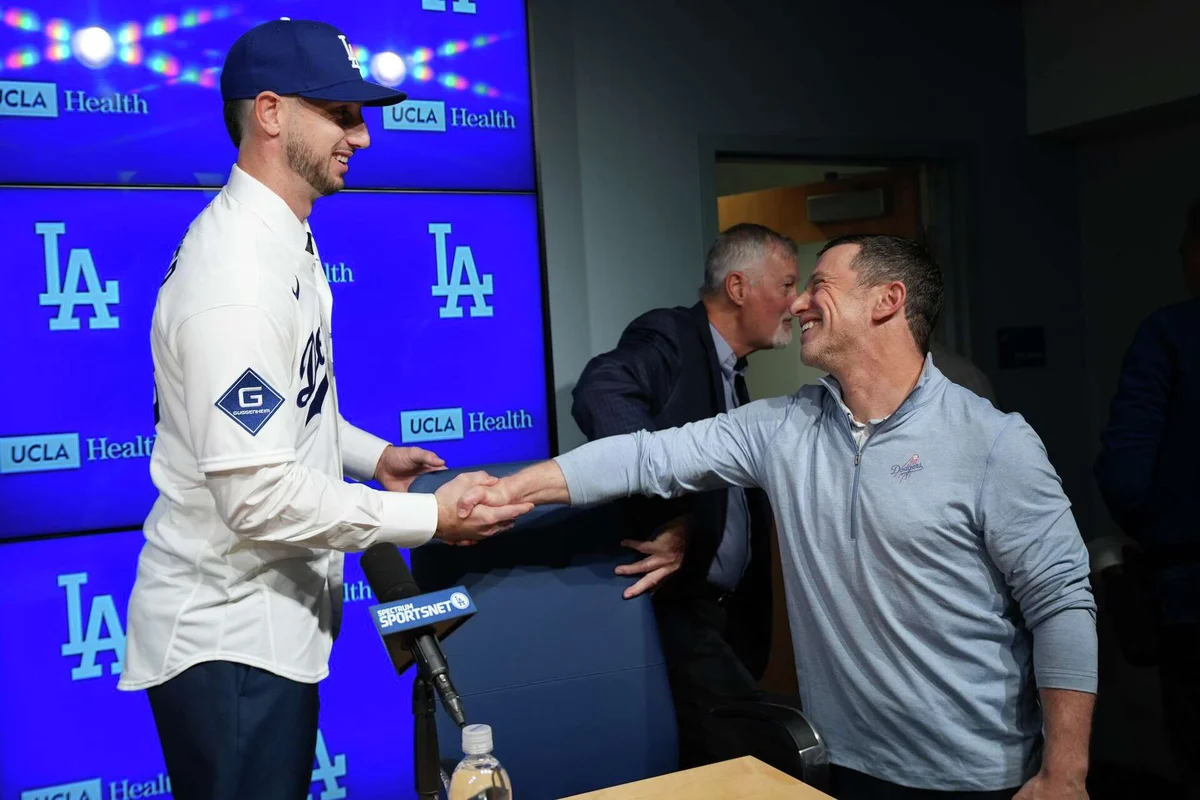
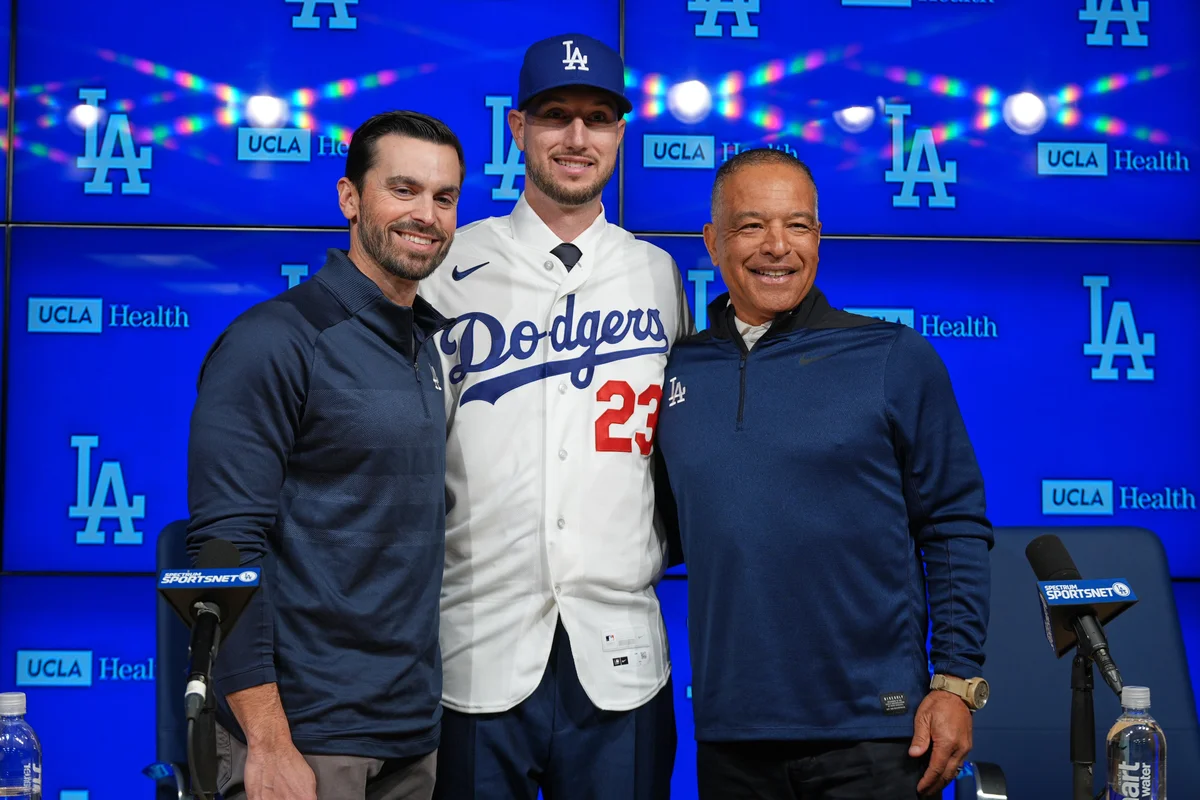
The Los Angeles Dodgers secured Kyle Tucker with a four-year, $240 million contract, significantly strengthening their already powerful roster. Although the Dodgers, fresh off consecutive World Series victories, did not strictly need Tucker, adding a star outfielder at a position of relative weakness was an opportunity they could not pass up. The scarcity of comparable talent in upcoming free agent classes made locking in Tucker essential to maintain their dominance in the years ahead.
Free Agent Classes in Coming Years Lack Impactful Position Players
An examination of the key upcoming free agency classes highlights why Kyle Tucker’s value stands out. While the 2026 class includes notable names like Ronald Acuña Jr. and Bo Bichette, many top players are likely to remain with their current teams thanks to club options, limiting availability. For instance, Acuña’s $17 million club option is almost certain to be exercised by the Atlanta Braves, and Yandy Diaz appears similarly locked in with Tampa Bay.
This leaves Bo Bichette and Jazz Chisholm Jr. as the most promising free agents in 2026. However, Bichette’s recent high-value short-term deal with the New York Mets may prevent him from entering the open market, and although both players possess talent, neither matches the star-level impact of Tucker or other recent high-profile free agents like Shohei Ohtani and Juan Soto.
The 2027 free agent class appears more promising at first glance, featuring names such as Kyle Tucker, Freddie Freeman, and Cody Bellinger. Yet Acuña and Tucker may opt to remain under club options or contract extensions, with Tucker unlikely to forgo guaranteed earnings in 2028 and 2029. Freddie Freeman will be 38 by the time he hits free agency, diminishing the likelihood of superstar production, and other players like William Contreras and Adley Rutschman have yet to demonstrate consistent excellence.
In summary, these future classes lack the distinctive star power that Kyle Tucker offers, reinforcing the Dodgers’ urgency in signing him early.
Big MLB Clubs That Failed to Secure Kyle Tucker
Despite the steep price tag, several teams missed opportunities to acquire Kyle Tucker, potentially altering their championship trajectories. The Dodgers exploited a vacuum in the market that others either ignored or could not fill.
New York Mets’ Attempt Falls Short
The New York Mets pursued Tucker aggressively, reportedly offering a four-year, $220 million contract with no deferred payments, exceeding the Dodgers’ upfront cash commitment. Still, Tucker declined their offer. Whether an improved bid would have succeeded is unclear, especially since Tucker’s willingness to entertain further Mets negotiations remains unknown. With Steve Cohen’s deep financial resources, the Mets could have continued their pursuit but subsequently redirected efforts toward signing Bo Bichette, Luis Robert Jr., and Freddy Peralta. Although these additions have merit, Tucker’s elite status would have made him a critical complement to stars Juan Soto and Francisco Lindor.
Toronto Blue Jays’ Long-Term Offer Misses Mark
The Toronto Blue Jays demonstrated interest by proposing what was reported as a 10-year, $350 million deal. However, their reluctance to match a higher average annual value, especially anything surpassing Vladimir Guerrero Jr.’s $35.7 million per year, weakened their bid’s appeal. As a result, Tucker chose to join the Dodgers — a team that defeated the Blue Jays in the most recent World Series — a decision that could continue to hinder Toronto’s championship hopes moving forward.
New York Yankees Overlook a Vital Addition
The New York Yankees never seriously pursued Tucker, despite their ample financial capacity under Hal Steinbrenner’s ownership. While the Yankees retained Cody Bellinger with a five-year, $162.5 million contract, Tucker’s higher cost was deemed prohibitive. However, the outfielder’s caliber aligns perfectly as a co-star alongside Aaron Judge, providing the lineup reinforcement necessary for a World Series bid. Ignoring the chance to sign a proven superstar like Tucker may prolong the Yankees’ championship drought, which has persisted since 2009.
Chicago Cubs Lose Momentum After Kyle Tucker’s Departure
The Chicago Cubs occupy a different tier financially, yet their decision to trade for Kyle Tucker without committing long-term raised questions. Although the Cubs made significant moves by acquiring Edward Cabrera and signing Alex Bregman, these transactions do not compensate for losing an MVP-caliber performer. Tucker’s health and peak form coincided with the Cubs’ appearance as legitimate contenders, and his absence could foreshadow a decline in offensive production and dashed World Series ambitions.
Why Losing Tucker Matters for These Teams
Kyle Tucker’s signing with the Dodgers not only boosts L.A.’s chances for a historic three-peat but also intensifies pressure on rival teams to improve relative to an increasingly stacked Dodgers roster. For franchises like the Mets, Blue Jays, Yankees, and Cubs, failing to secure Tucker raises questions about strategy and investment priorities, especially amid the lackluster talent anticipated in forthcoming free agency classes. The Dodgers’ bold move exploits a market gap, ensuring they remain the team to beat.
As the MLB landscape evolves, the significance of acquiring true star talent like Tucker cannot be overstated. Other teams’ hesitation or inability to meet the Dodgers’ offer could lead to prolonged competitive imbalances. Watching how these franchises respond in future seasons, both in free agency and player development, will be crucial in determining if they can close the gap or face continued frustration in dethroning Los Angeles.
