
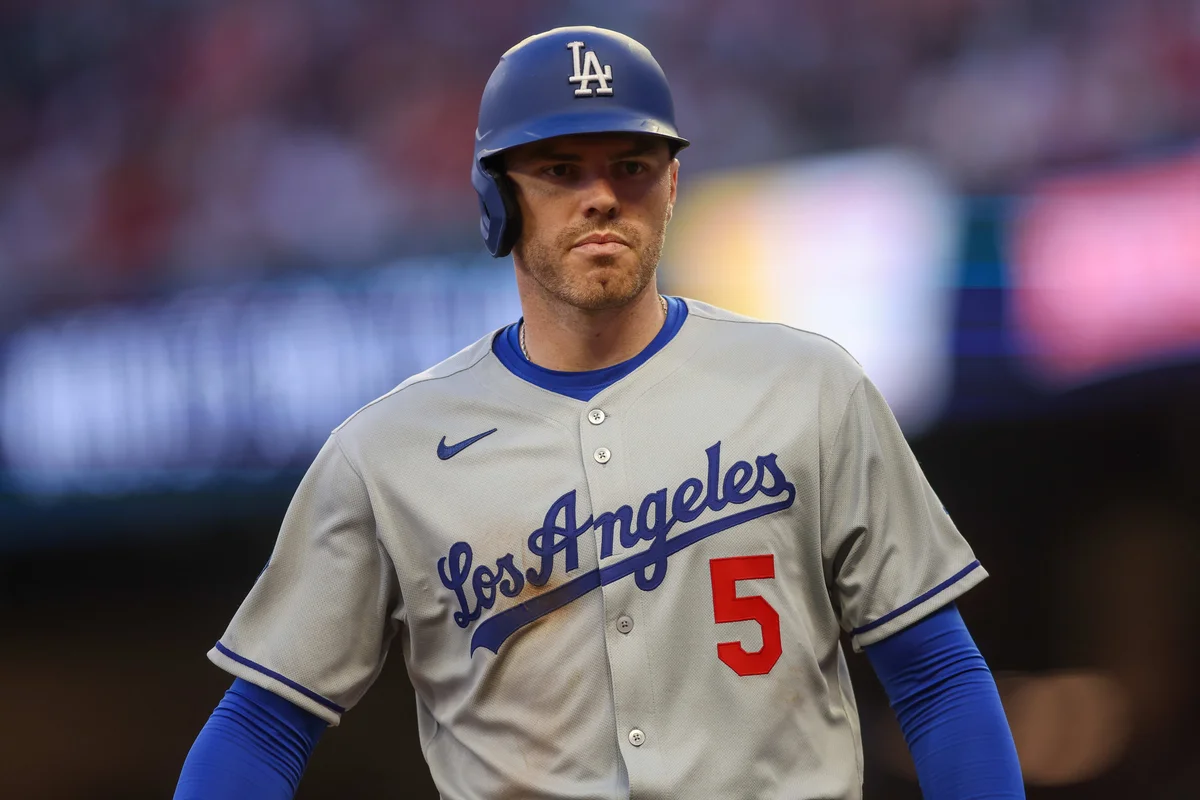
As spring training approaches and fantasy baseball drafts begin to ramp up, evaluating Freddie Freeman fantasy rankings is critical for 2026. With a crowded and competitive first base landscape, understanding Freeman’s place among this deep pool helps fantasy managers decide if he remains a top choice at the position.
Depth and Dynamics of First Base for the 2026 Fantasy Season
First base boasts the deepest talent pool of any infield position going into 2026, with 17 players providing at least $10 in value according to Fangraphs’ Player Rater last season. Alongside seasoned stars like Freddie Freeman, Matt Olson, Bryce Harper, Vladimir Guerrero Jr., and Pete Alonso, several emerging talents have made their mark, including Nick Kurtz, Vinnie Pasquantino, Michael Busch, and Tyler Soderstrom. Additionally, players such as Rafael Devers and Willson Contreras have acquired first base eligibility, adding valuable versatility to the position pool.
Other names to watch include Christian Walker, who is rebounding after a rough year, Spencer Torkelson, capitalizing on a second opportunity, and Ben Rice, poised to earn starting duties for the Yankees after Paul Goldschmidt’s departure. Despite the abundance of power hitters, fantasy drafters might find waiting until the middle rounds to pick a first baseman could yield significant value, given the overall depth at the position.
Examining the Premier First Base Candidates and Their 2026 Outlooks
1. Vladimir Guerrero Jr. – Toronto Blue Jays
Vladimir Guerrero Jr. enters the 2026 season as a highly skilled hitter, though he ranked fifth among first basemen last year, trailing Pete Alonso, Josh Naylor, Nick Kurtz, and Rafael Devers. The biggest hurdle to his fantasy ceiling has been his power, which saw a dip with a batting average of .292 and a fly ball rate below 33%. Guerrero Jr. is expected to maintain a strong batting average near .300, deliver roughly 25 home runs, and surpass 90 runs and RBIs in Toronto’s potent lineup. However, his contributions in stolen bases remain minimal, and his moderate power production requires drafters to supplement power elsewhere on their rosters.
2026 projection: 602 AB, 104 R, 30 HR, 101 RBI, 7 SB, 35 2B, 1 3B, .304/.388/.515
2. Nick Kurtz – Oakland Athletics
Nick Kurtz, the fourth overall pick in the 2024 MLB Draft, made an aggressive leap to Triple-A and soon proved he belonged in the majors by delivering strong power numbers in 2025. Over the first 28 MLB games, he was modest (.245/.315/.447), but after June 1, he exploded with a .304/.403/.669 slash line, 31 home runs, and 71 RBIs, despite striking out roughly 30% of the time. At 22 years old, Kurtz’s offensive upside remains exciting, bolstered by his disciplined approach that limits chasing pitches outside the strike zone. Another season at hitter-friendly Sacramento should provide a solid environment for continued development.
2026 projection: 555 AB, 103 R, 41 HR, 99 RBI, 4 SB, 32 2B, 2 3B, .270/.370/.557
3. Pete Alonso – Baltimore Orioles
Pete Alonso enjoyed a career-best season in 2025, setting highs in batting average, plate appearances, and barrel rate while maintaining his streak of six consecutive seasons with at least 34 home runs. Alonso’s refined, all-fields hitting strategy helped offset some power declines and is expected to flourish at Camden Yards. Baltimore’s lineup, though bereft of a Juan Soto-type presence, offers depth that could support Alonso in matching or exceeding his previous production, including 40 home runs and over 110 RBIs, possibly preventing batting average regression and enhancing run totals.
2026 projection: 594 AB, 92 R, 40 HR, 119 RBI, 2 SB, 30 2B, 1 3B, .261/.340/.517
4. Bryce Harper – Philadelphia Phillies
At age 33, Bryce Harper shows signs of a gradual decline after batting average and OPS steadily fell over the last three seasons, with his 2025 OPS reaching its lowest since 2016 at .844. Although Harper’s barrel and line drive rates have dipped, he remains productive with projected outputs around a .270 batting average, 30 home runs, and 12 stolen bases. Despite some increased swing-and-miss rates and diminished raw power, his contribution in a strong Phillies lineup remains valuable if not elite, but fantasy owners are cautioned against drafting him too early.
2026 projection: 533 AB, 88 R, 30 HR, 84 RBI, 12 SB, 31 2B, 1 3B, .270/.366/.501
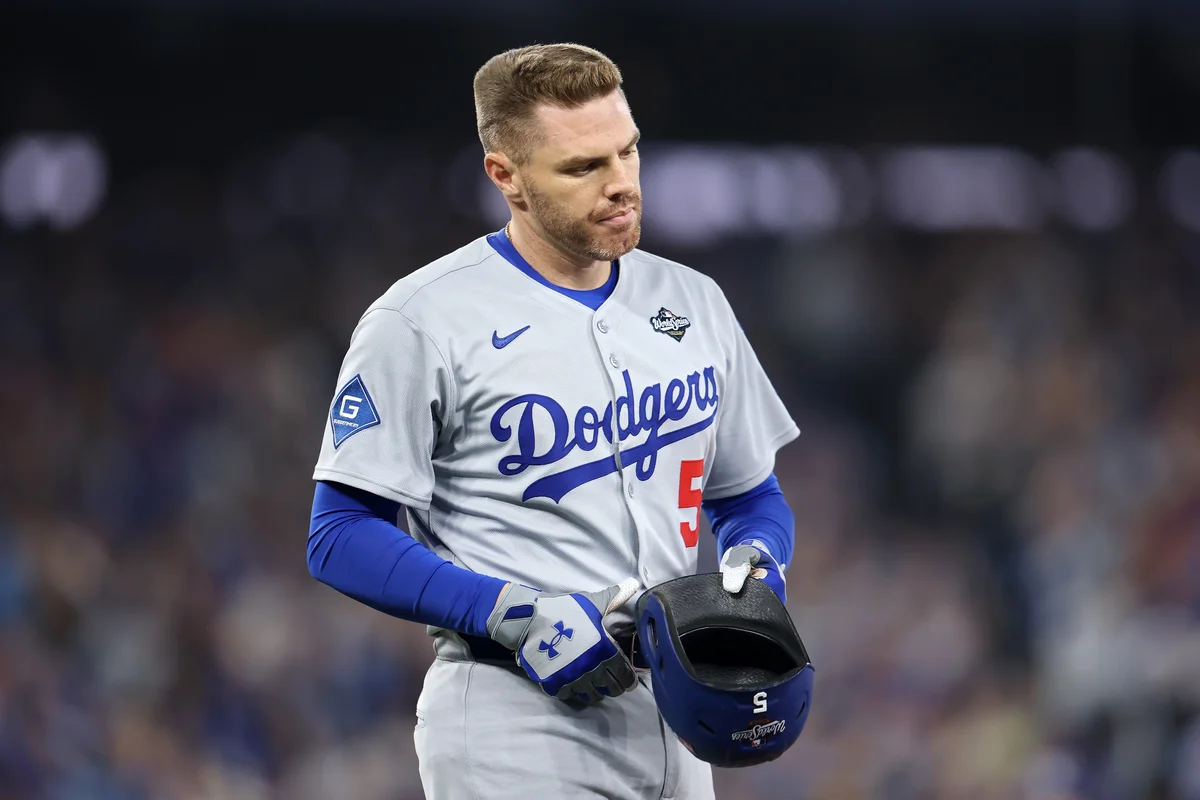
5. Freddie Freeman – Los Angeles Dodgers
Freddie Freeman remains a steadfast fantasy asset despite his advancing age of 36. His 2025 season displayed consistency comparable to Vladimir Guerrero Jr. but often at a lower draft cost. Freeman has played at least 147 games in seven consecutive non-COVID seasons and has maintained nine straight years with a batting average above .282 and 20+ home runs annually. His 2025 barrel and maximum exit velocity metrics were among his best since 2016, signaling sustained raw power. Drafting concerns about an impending decline appear premature; Freeman is likely to remain a middle-of-the-order force in possibly the strongest MLB lineup, delivering reliable fantasy value.
2026 projection: 572 AB, 89 R, 24 HR, 91 RBI, 6 SB, 34 2B, 1 3B, .281/.368/.470
6. Matt Olson – Atlanta Braves
Matt Olson’s current consensus ranking might undervalue his potential. Though his home run totals haven’t surpassed 30 in three years, Olson reported his second-best exit velocity and second-highest barrel rate since 2019 in 2025. Adjustments like a slightly reduced fly ball rate and fewer outside-zone swings have improved his contact quality and plate discipline. While projections suggest modest batting averages and power, Olson’s consistency, combined with an improved Braves lineup, may yield 30 homers, 90+ runs, and RBIs, presenting a compelling draft target even without stolen base upside.
2026 projection: 588 AB, 95 R, 31 HR, 89 RBI, 1 SB, 32 2B, 1 3B, .248/.351/.464
7. Rafael Devers – San Francisco Giants
Rafael Devers now qualifies at first base, his likely primary position for 2026, but his move to hitter-unfriendly Oracle Park introduces uncertainty. Known for opposite field hitting that favored Boston’s Green Monster, Devers initially struggled in San Francisco, with a .236/.347/.460 slash line, a high strikeout rate of 29.4%, and increased pull rate at 45%. Despite solid hard contact that supports power numbers, questions linger whether Devers can adapt his approach enough to maintain his career .276 batting average in a more challenging ballpark.
2026 projection: 574 AB, 86 R, 28 HR, 88 RBI, 2 SB, 30 2B, 1 3B, .256/.348/.458
8. Josh Naylor – Seattle Mariners
Josh Naylor experienced a rollercoaster 2025 season, rebounding from a power spike in 2024 by improving his batting average and vastly increasing his stolen bases to a surprising 19 in only 54 Mariners games. Yet, key metrics such as barrel rate dropped to a career low, and many contact and plate discipline rates remained static, suggesting a poor fit for sustaining a .290+ average or stolen base totals. Regression seems likely, yet Naylor’s blend of power and speed could still place him among the top ten first basemen in fantasy value.
2026 projection: 568 AB, 73 R, 24 HR, 91 RBI, 14 SB, 30 2B, 0 3B, .259/.321/.438
9. Vinnie Pasquantino – Kansas City Royals
Vinnie Pasquantino demonstrated newfound power in 2025, paralleling his strong contact and plate discipline skills. Despite minimal approach changes, subtle adjustments such as increased early-count aggression, elevated launch angle, and a higher pull air percentage boosted his barrel and home run per fly ball rates significantly. These improvements suggest a reasonable expectation for around 25 home runs in 2026, anchored by a solid batting average and a role in a lineup capable of providing ample run production and RBI opportunities.
2026 projection: 598 AB, 81 R, 30 HR, 96 RBI, 1 SB, 30 2B, 1 3B, .264/.324/.468
10. Tyler Soderstrom – Oakland Athletics
Tyler Soderstrom started 2025 with an impressive burst, notably nine home runs in April, and maintained solid production through the second half with improved plate discipline metrics such as better contact and reduced swinging strike rates. While a slight uptick in fly ball rate would benefit his power, his current bat speed and approach predict a reliable power output possibly in the high 20s in home runs. Another year with Sacramento should allow him to sustain or enhance his production, positioning him as a promising middle-round first base option.
2026 projection: 544 AB, 79 R, 28 HR, 89 RBI, 6 SB, 28 2B, 1 3B, .267/.339/.476
11. Ben Rice – New York Yankees
Ben Rice has already begun to emerge as the Yankees’ mainfirst baseman, despite perceptions that his full breakout was yet to come. In 2025, among 145 batting title qualifiers, Rice ranked impressively in barrel rate (15th), hard-hit rate (7th), xSLG (.557), and xwOBA (.394), with a strikeout rate under 19%. However, he has shown vulnerability against left-handed pitching, posting lower averages and higher strikeout rates, indicating he may be platooned in 2026. Against right-handed pitchers, Rice’s ceiling is high, and his reduced catching responsibilities improve his health prospects and playing time.
2026 projection: 487 AB, 78 R, 28 HR, 81 RBI, 4 SB, 24 2B, 2 3B, .265/.351/.495
12. Michael Busch – Chicago Cubs
Michael Busch’s second season as a full-time starter was a step forward, combining 34 home runs and 90 RBIs with improved plate discipline, notably a reduced strikeout rate and increased contact. Enhanced fly ball and pull rates contributed to a higher barrel percentage and hard-hit rate, unlocking more consistent power. His balanced approach alongside moderate swinging strike rates suggests Busch can reliably post a batting average around .250 paired with solid power, making him a stable later-round selection at first base.
2026 projection: 518 AB, 78 R, 27 HR, 81 RBI, 3 SB, 26 2B, 3 3B, .251/.339/.469
13. Yandy Diaz – Tampa Bay Rays
Yandy Diaz reached a career milestone by hitting 25 home runs in 2025, though power gains coincided with spending time in the minor league ballpark before returning to Tropicana Field. His consistent barrel and exit velocity metrics suggest his power surge was not a major transformation, especially with decreased fly ball and pull rates. Diaz is likely to sustain a high batting average around .300 with respectable runs scored but should not be counted on for significant home run upside beyond 20, limiting his overall fantasy ceiling.
2026 projection: 573 AB, 81 R, 19 HR, 75 RBI, 2 SB, 31 2B, 1 3B, .283/.361/.440
14. Sal Stewart – Cincinnati Reds
Despite the addition of Eugenio Suarez, Sal Stewart maintains strong fantasy appeal as a first baseman. His 2025 minor and Triple-A performances featured a .309/.383/.524 slash line with 20 home runs, 80 RBIs, and 17 stolen bases, backed by elite exit velocities and a solid contact profile. Versatility in the infield positions and opportunity in Cincinnati’s lineup make Stewart a legitimate contender for everyday playing time and middle-of-the-order production, though consistent playing time remains a variable.
2026 projection: 553 AB, 79 R, 28 HR, 87 RBI, 8 SB, 29 2B, 1 3B, .271/.333/.479
15. Salvador Perez – Kansas City Royals
Coming off a down year at age 35, Salvador Perez’s performance seems like more of an anomaly than a decline. He showed improved exit velocity and a career-high barrel rate of 14.7%, though a drop in home run conversion rate and .251 BABIP suggests luck was not on his side. Perez’s expanded designated hitter role should aid in preserving his health, and adjustments to the Royals’ ballpark may add extra home runs. Owing to these factors, he could be the top value pick among catchers entering 2026.
2026 projection: 567 AB, 62 R, 32 HR, 95 RBI, 0 SB, 24 2B, 0 3B, .245/.292/.457
16. Willson Contreras – Boston Red Sox
Although aging at 33, Willson Contreras offers steady and dependable production as a late-round first base candidate. He has maintained solid OPS+ between 123 and 138 over recent seasons. Contreras possesses an exceptional bat speed, matching top percentile marks, and his career 41% pull rate pairs well with Fenway Park’s hitter-friendly environment. The Red Sox anticipate using him in the clean-up spot, projecting him to deliver 25 home runs with a .270 batting average and strong counting stats, anchored by his consistent offensive skills.
2026 projection: 519 AB, 79 R, 25 HR, 87 RBI, 4 SB, 28 2B, 1 3B, .258/.349/.461
17. Spencer Torkelson – Detroit Tigers
After a challenging 2024 relegation to the minors, Spencer Torkelson rebounded in 2025 due to teammate injuries, hitting .240/.333/.456 with 31 home runs and 78 RBIs over 155 games. He improved plate discipline by reducing chase and swing rates, leading to better contact quality. Although his batting average remains a challenge and max exit velocities lag behind many power hitters, his approach—airing 72% of balls in play—supports consistent power around 25 home runs. Expectations for his batting average hover closer to .220, but he remains a source of power in fantasy rosters.
2026 projection: 535 AB, 74 R, 26 HR, 81 RBI, 2 SB, 28 2B, 1 3B, .234/.321/.436
18. Jonathan Aranda – Tampa Bay Rays
Jonathan Aranda exceeded sleeper expectations in 2025, producing a .316/.393/.489 slash with 14 home runs in 106 games. However, his limited opportunities against left-handed pitching may restrict playing time in 2026. Despite a 13% barrel rate and quality contact, Aranda’s 27% fly ball rate limits home run upside, with projections anticipating closer to 15-20 homers in a hybrid infield role. His speed is limited, potentially marginalizing his fantasy impact but retaining value in deeper leagues.
2026 projection: 521 AB, 72 R, 20 HR, 75 RBI, 1 SB, 27 2B, 1 3B, .263/.341/.434
19. Christian Walker – Houston Astros
Christian Walker’s 2025 likely marked the start of a decline curve, posting his poorest offense metrics since becoming a full-time starter. He struggled significantly against four-seam fastballs, managing just a .215 average and 32% strikeout rate, signaling decreased bat speed or reaction time. Nonetheless, his power remains intact, with a roughly 13% barrel rate and 27 home runs. A strong post-All-Star break OPS of .799 shows his continued impact potential, especially given his air-ball-heavy batted ball profile and favorable home run park. Although his batting average may dwindle further, he offers a valuable power source within an effective lineup.
2026 projection: 531 AB, 71 R, 28 HR, 78 RBI, 2 SB, 22 2B, 1 3B, .230/.311/.433
20. Alec Burleson – St. Louis Cardinals
Alec Burleson appears poised for a full-time move to first base with Willson Contreras traded to Boston. In 291 games over two seasons, he has compiled a .279/.328/.439 slash with 39 home runs, 147 RBIs, and 14 stolen bases. Though Burleson’s raw power levels are modest, he compensates with increased bat speed and a nearly 6% rise in fly ball rate, helping to sustain his power numbers near 20 homers. His consistent approach and quality contact should support a solid batting average with double-digit steals, though a rebuilding Cardinals lineup and benching against left-handed pitching may limit counting stats and plate appearances. Burleson remains a viable mixed- league starter for first base and an attractive corner infielder in all formats.
2026 projection: 576 AB, 74 R, 22 HR, 83 RBI, 5 SB, 30 2B, 1 3B, .280/.332/.450
Freddie Freeman’s Place and What to Expect for 2026
Freddie Freeman stands out as one of the most reliable first basemen available for fantasy drafts heading into 2026. While some managers may worry that his age will catch up with him, his impressive consistency and high-level production suggest otherwise. Operating within the Los Angeles Dodgers’ potent lineup only enhances his value, particularly given his consistent playing time and the durability he has demonstrated over the past seven seasons.
Freeman’s combination of batting average, power, and run production continues to be valuable, especially compared to costlier peers with more variable upside. In a season where the first base position is arguably deeper than ever, he remains a solid pick who can anchor a fantasy team’s corner infield spot effectively. As the season unfolds, monitoring Freeman’s performance alongside emerging talents will be key for those managing first base within their fantasy rosters.
