
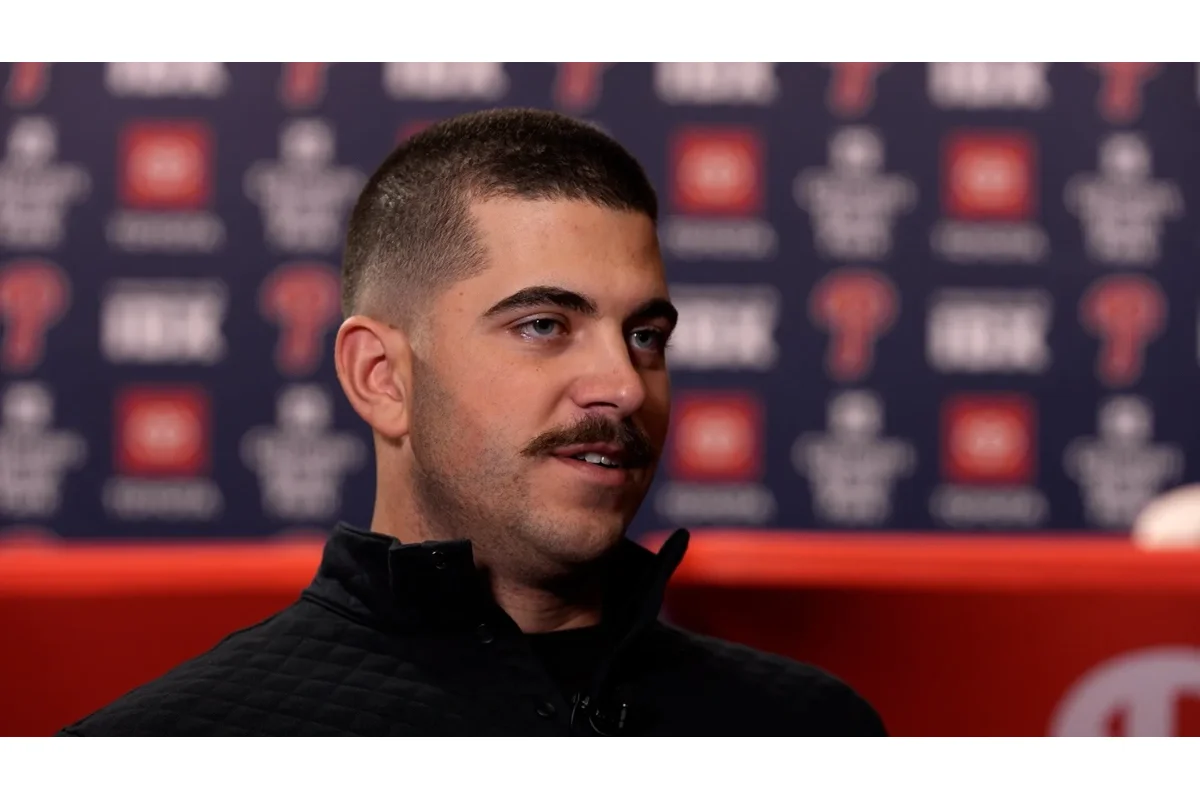
CLEARWATER, Fla. — Zack Wheeler is currently in the late stages of rehabilitation from venous thoracic outlet syndrome, an injury that sidelined him for the 2025 postseason. The 35-year-old Phillies ace has not pitched in a game since August 15 and acknowledges he will not be ready for Opening Day. His objective is to resume pitching shortly after the season begins.
Wheeler recently participated in the Phillies’ first official spring training workout for pitchers and catchers, where he played catch and is allowed to throw on flat ground from a distance of 90 feet four times a week. The next step in his rehab is to extend that distance to 105 feet, with a strong emphasis on maintaining a consistent arm path.
Wheeler’s Approach to Gradual Return
Discussing his recovery timeline, Wheeler said,
“One of my goals is to come back as soon as I can, but at the same time, just kind of checking off those boxes to make sure that arm is strong enough to move back further or get off the mound or stuff like that,”
sharing his focus on a cautious and measured comeback. He added,
“I’m missing Opening Day, so there’s no need to kind of rush back and try to come back a week after that type of thing. You want to be back, but you also don’t want to rush it at the same time.”
Wheeler’s Transformation Into a Phillies Ace
Since signing his first five-year deal with the Phillies in December 2019, Wheeler has evolved from a promising but injury-plagued pitcher with the New York Mets into a team leader recognized as an ace. Over nearly 1,000 innings with Philadelphia, he holds a 2.91 ERA and has secured two top-two finishes in the National League’s Cy Young Award voting over the last six years. His postseason performance has been noteworthy, and he has anchored a pitching staff often regarded as one of the best in baseball since his arrival.

Recovering from Surgery and Facing Uncertainty
Wheeler’s recent surgery involved the removal of a blood clot from his right throwing shoulder, specifically via removal of his first rib—a procedure done in September. Though he is happy with his rehab progression, Wheeler remains uncertain about how his pitching skills will hold up when he returns to the mound. Reflecting on this, he said,
“We’ll worry about that when it comes,”
and acknowledged the psychological challenge:
“You just have that mindset that you’ll be the same person as you were before you got injured. Any athlete is going to have that.”
Wheeler is no stranger to long recoveries, having missed two full seasons (2015 and 2016) due to Tommy John surgery. However, thoracic outlet syndrome remains less predictable. While other major league pitchers who have faced this condition have offered advice, Wheeler prefers to focus on his own experience, stating,
“I feel like everybody goes through different injuries differently,”
and
“So I didn’t want to be like ‘Oh this guy felt this at a certain time,’ and that’s in my head when I’m coming up to that marker or something like that.”
Personal Insight on Surgery and Career Plans
The rib extracted during surgery was given to Wheeler by his doctor in a bag and currently hangs in his closet as an unusual keepsake. Wheeler described this moment as, “pretty gross.”
Looking ahead, Wheeler has been open about his intention to retire once his current three-year, $126 million extension expires at the end of 2027, despite the setback caused by his injury. He remains committed to his contract and to competing at a high level with the Phillies through the coming years. He said,
“Just kind of see how it goes over the next couple of years, and just go from there,”
and emphasized,
“It really hasn’t been a thought in my head like this surgery would make me stop or anything. Obviously, I have a contract to fulfill. I want to be here and I want to pitch. I love competing, especially with this group of guys in this city. We’ve been chasing after a World Series over the past four or five years, and we all want to get one. It’s my goal to get back and try to help us get one.”
What Wheeler’s Return Means for the Phillies
Zack Wheeler’s return is critical for the Philadelphia Phillies as they aim to maintain one of baseball’s strongest pitching rotations and pursue their long-sought World Series title. His experience and leadership are vital components of the team’s competitive strategy. Although the timeline remains tentative, the cautious approach to his rehab balances Wheeler’s eagerness to compete with the need to preserve his long-term health and effectiveness on the mound. The coming weeks of the spring training period will be telling as he progresses to throwing from longer distances and eventually returns to game action.
