
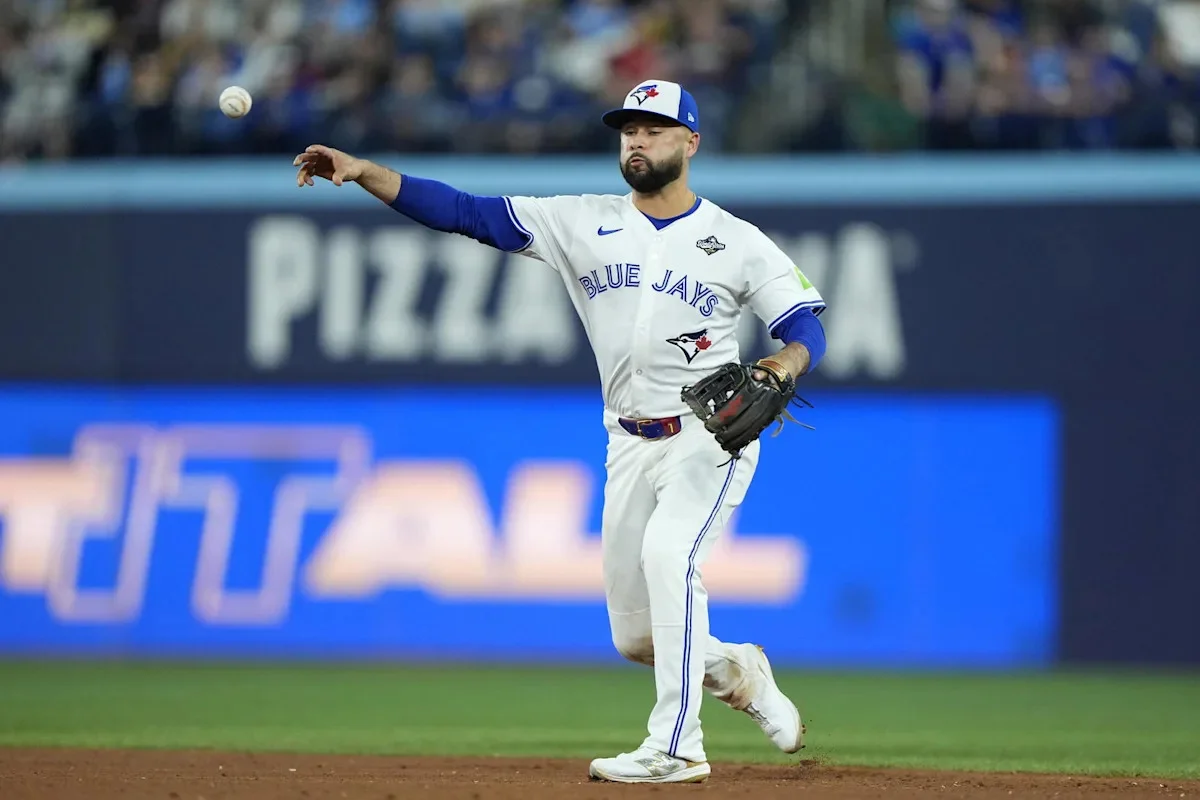
Four months after the Toronto Blue Jays fell to the Los Angeles Dodgers in a tense Game 7 of the World Series, Isiah Kiner-Falefa reopened a wound for Blue Jays fans by blaming others for his controversial lead at third base. His failed attempt to score the winning run with the score tied at four all has sparked continued debate, especially as Kiner-Falefa recently defended his actions after signing with the Boston Red Sox this offseason.
Kiner-Falefa’s Explanation of His Positioning in Game 7
In a recent interview, Kiner-Falefa described his mindset during the critical play, saying he was focused on disrupting a potential double play rather than getting a large lead.
“Off the bat I was trying to break up the double play,”
he said according to The Athletic. He believed the ground ball was headed to second base with a throw going home, so his plan was to slide aggressively to interrupt the play.
With Ernie Clement ready to bat, Kiner-Falefa aimed to give one of the Blue Jays’ top hitters a chance to win the game.
“My initial read was to just go and slide and try to break it up,”
he added. Though he did not notice Dodgers second baseman Miguel Rojas‘s trip at the time, his instinct was purely to break up the double play and help the team’s best hitter take the plate.
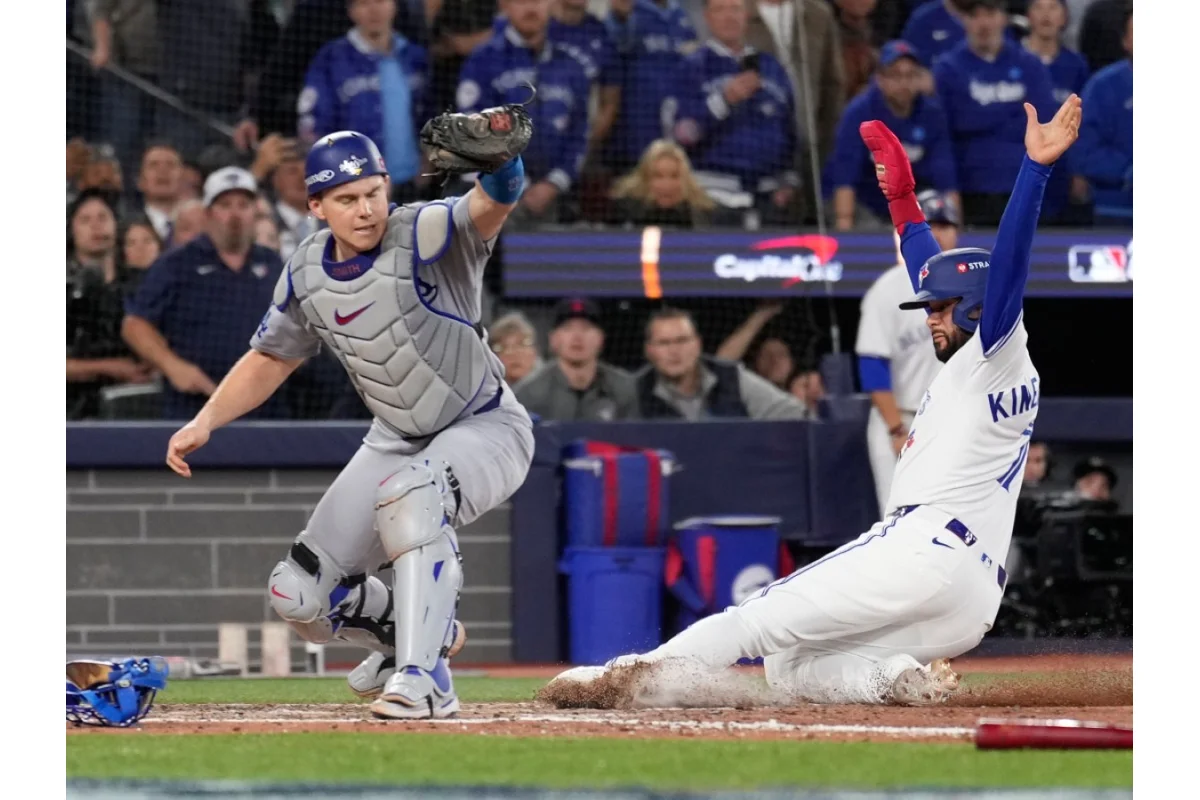
Despite this justification, his final statement about wanting to move forward from that moment to focus on Boston has stirred further frustration among Toronto fans, who see that play as a defining error that cost the Jays their first World Series title in decades.
Kiner-Falefa Attributes His Lead to Team Instructions and Coaching
Adding to the controversy, Kiner-Falefa suggested that the Blue Jays’ coaching staff and organization influenced his decision to take a shorter lead at third base.
“If I could do it over, I definitely would have gotten a couple of steps out,”
he said,
“But you have to do what the organization wants and that’s kind of been the thing there, with runners in that situation, they would always keep the runner close.”
This implies his lead was constrained by strict team protocols limiting how far a runner can stray from the base to avoid being picked off. While this defense holds some validity, as the coaching staff sets such parameters and the opposing pitcher can allow only so much freedom, Kiner-Falefa’s lead was widely criticized as inadequate under the circumstances.
Expert observers analyzed the play, noting that Kiner-Falefa’s lead was overly cautious. Baseball analyst Jake Mintz tweeted that there was an “Inexcusable lack of secondary lead,” emphasizing that Kiner-Falefa had room to take at least two more steps safely. The image Mintz shared showed that Kiner-Falefa needed only one additional step to create a safer distance from third base, reducing the chance of being thrown out.
Kiner-Falefa Criticizes the Media for Delayed Response Opportunity
On why he had not addressed the controversy sooner, Kiner-Falefa blamed the lack of immediate media attention directly following the game.
“My biggest regret was that there were no cameras in my face after the game, that was the toughest thing for me,”
he said.
“If it was going to be such a big deal, it would have been nice to have the camera in my face and have a chance to speak. But it blew up without me getting a proper interview, so I thought that was unfair. Everybody is just going off of it without me really being able to talk about the play.”
This complaint, however, overlooks the fact that the World Series clubhouse was swarming with media personnel after the game, ready for player reactions. His delay in addressing the incident allowed speculation and criticism to grow unchecked, further damaging his relationship with Blue Jays supporters.
Lack of Accountability Deepens the Rift with Blue Jays Fans
Kiner-Falefa’s comments come at a time when the Blue Jays had an 82 percent chance to win the game with the bases loaded in the ninth inning, as reported by MLB.com. His role as a pinch runner put him in a pivotal position to score the winning run. The Dodgers’ decision to bring their infield in should have indicated to Kiner-Falefa that taking a larger lead was safe and advisable, especially since Max Muncy could not have beaten him back to third base.
Many analysts argue that, unless explicitly instructed, the decision to take a larger lead rests with the player on base. There was no clear signal from the third-base coach directing Kiner-Falefa to hold a short lead. This autonomy is particularly important in high-stakes moments where instinct and split-second decisions can decide a championship.
Furthermore, after the viral spread of the lead controversy, Kiner-Falefa had ample opportunity during the offseason, when he spent time in Hawaii, to communicate with fans and media. As a major league player with a substantial following, any statement he provided would have received significant attention, yet he remained silent until spring training approached.
Blue Jays fans have expressed disappointment with his perceived unwillingness to accept responsibility for the costly error. Demonstrating accountability may be Kiner-Falefa’s best chance to mend fences with the Toronto community he helped disappoint during one of the franchise’s most crucial moments.
IKF at contact on that Varsho play.
Inexcusable lack of secondary lead. Over-emphasis on avoiding a line drive double play. IKF can basically be as far away from third as Muncy is.
He has at least two more steps.
Only needed one. pic.twitter.com/W5GUixZvSu
— Jake Mintz (@Jake_Mintz) November 2, 2025
