
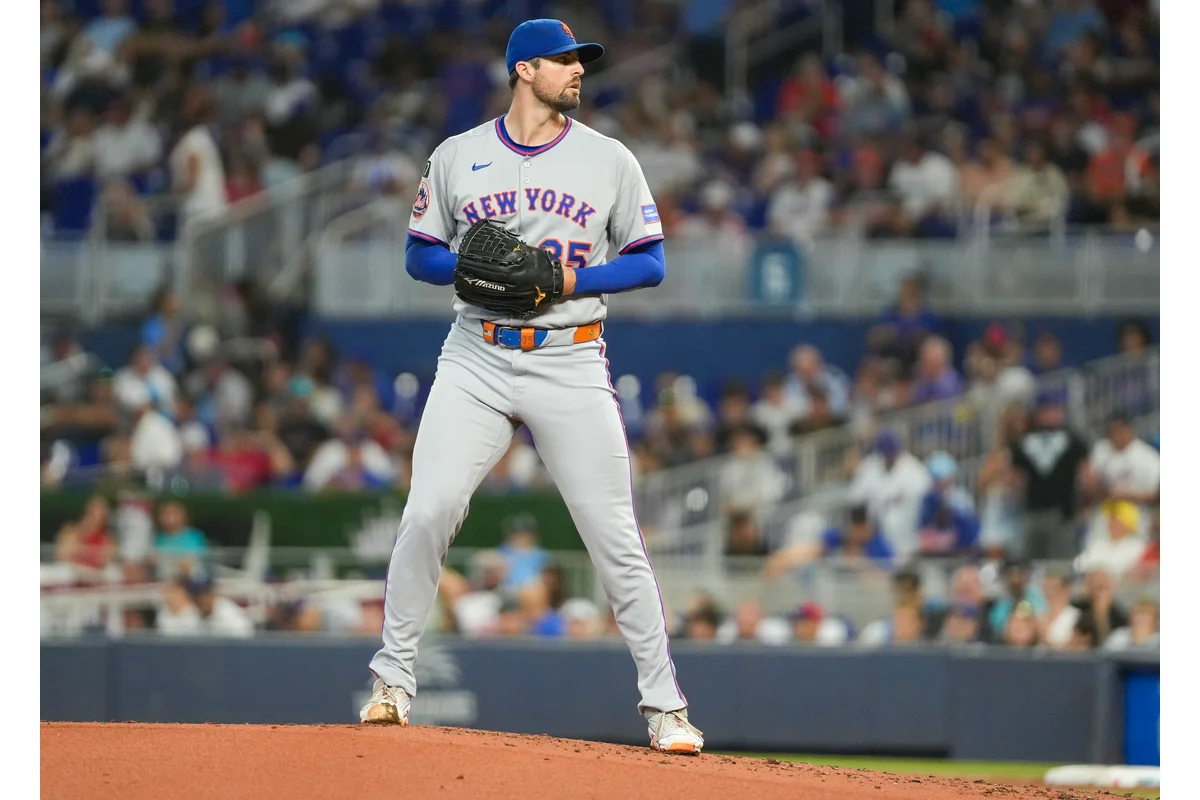
New York Mets pitcher Clay Holmes is significantly increasing his pitching volume during spring training as he gets ready to represent Team USA at the World Baseball Classic next month. On Thursday, Holmes threw 46 pitches across three innings, a workload triple that of most other pitchers on Day 2 of Mets spring activities, reflecting his preparation for starting in more demanding situations well before the Mets’ 2026 season begins.
Mets manager Carlos Mendoza highlighted Holmes’ uncommon intensity during practice, praising both him and fellow Team USA pitcher Nolan McLean for their dedication.
“You don’t see that type of aggressiveness,”
Mendoza said.
“You have to give [him and fellow Team USA member Nolan McLean] credit because they’ve been preparing to be in this situation. Already at three ups, already at 46 pitches, that takes a lot of work behind the scenes. The good thing is that he feels good and that he was able to do it.”
Holmes’ Role Evolves in Mets Rotation
Entering his second season with the Mets, Holmes has transitioned from serving as a closer during his time with the Yankees to a starting pitcher in Queens. Last season, he was a reliable middle-rotation option, finishing with a 12-8 record and a 3.53 ERA over 165.2 innings. Holmes notably increased his innings pitched from a career-high of 70 frames in 2021 while playing with the Pittsburgh Pirates and Yankees.
The Team USA pitching staff for the World Baseball Classic boasts impressive talent, including two-time AL Cy Young Award winner Tarik Skubal of the Detroit Tigers and reigning NL Cy Young winner Paul Skenes of the Pittsburgh Pirates, underscoring the competitive environment Holmes will join.
Bo Bichette’s Transition to Third Base Progresses
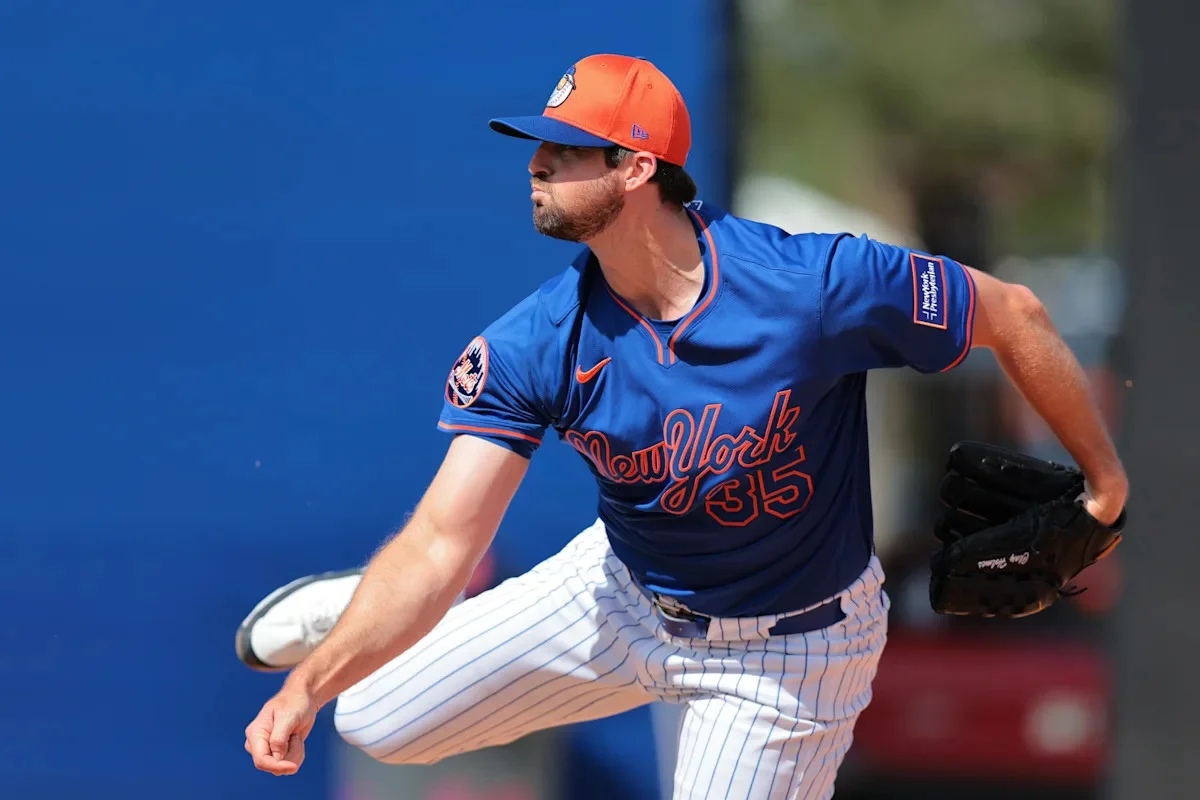
Manager Carlos Mendoza also monitored Bo Bichette closely as he practiced fielding ground balls at third base. The star infielder, previously known for his exceptional hitting with the Toronto Blue Jays, is shifting from his longtime position at shortstop to third base following a new three-year, $126 million contract with the Mets.
With established shortstop Francisco Lindor sidelined for six weeks after surgery on his left hamate bone, Bichette will not be substituting at shortstop this season, making his adjustment to third base a priority. Mendoza plans to work intensively with Bichette during spring training to ease this transition.
“Part of the transition, even when he’s taking regular ground balls, he’s realizing how much time he has compared to the shortstop position,”
Mendoza explained.
“The ball is going to get to you a lot quicker, so you’re going to have more time than what you think… The other one is the double play. You have to be quicker getting rid of the baseball. You have to give the second baseman a chance. Those were some of the conversations that we were having out of the gate. I’m glad that he’s here early so we can get that out of the way.”
Implications for the Mets and Team USA
Holmes’ rigorous preparation signals his readiness to contribute significantly as a starter for both the Mets and Team USA, illustrating his evolution from relief to a frontline pitching role. Meanwhile, Bichette’s position shift reflects the Mets’ adaptive strategy amid Lindor’s absence, aiming to optimize their infield defense while leveraging Bichette’s offensive talent. These developments, along with the high-caliber competition expected in the World Baseball Classic, set the stage for an intense season ahead, with each player poised to impact their teams’ success on multiple fronts.
