
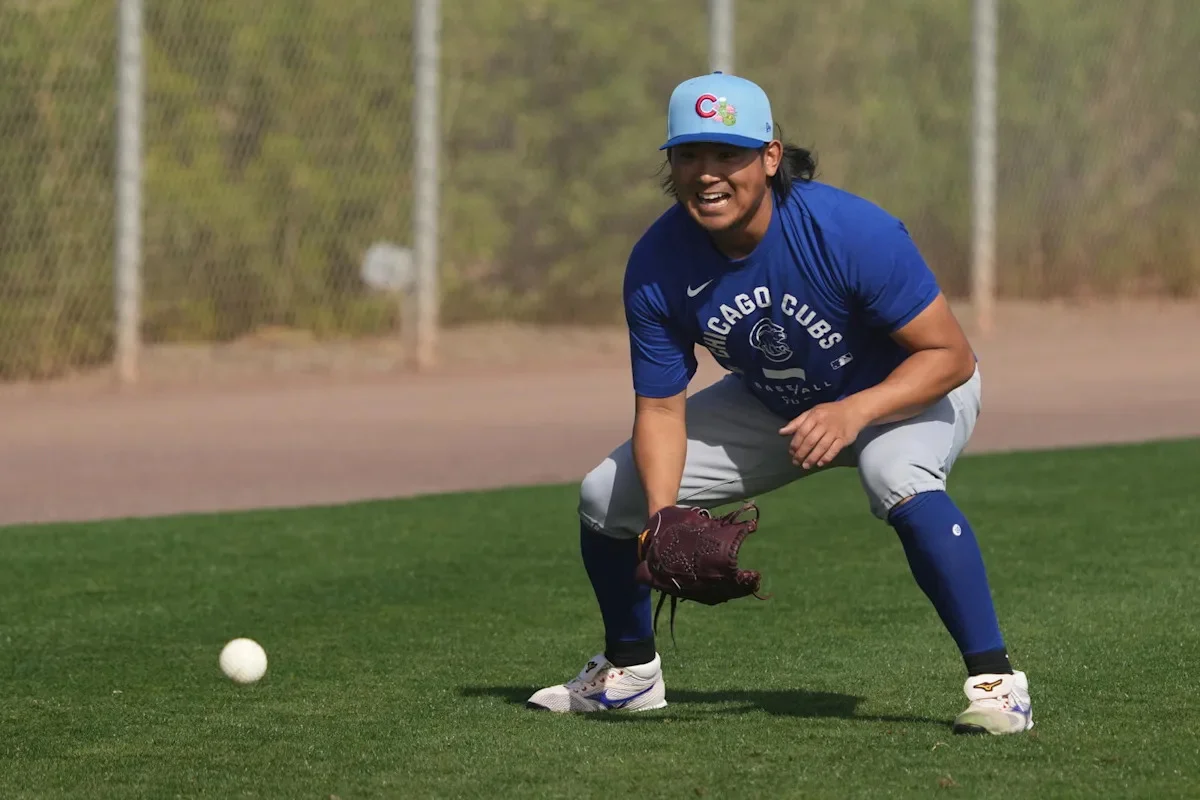
MESA, Ariz. — Shota Imanaga entered the offseason uncertain about his future with the Chicago Cubs after being sidelined during the decisive Game 5 of the National League Division Series. Despite watching the Milwaukee Brewers celebrate their series victory from the bullpen at American Family Field, the 32-year-old pitcher now prepares for spring training with a renewed determination to rebound and improve following a season disrupted by a left hamstring injury.
Imanaga’s 2025 campaign was marked by seven lost weeks due to the hamstring strain, which undermined his pitching mechanics and overall effectiveness. Compounding the challenge was a complicated contract situation that left his return to the Cubs in doubt. However, rather than test the free-agent market for a multi-year deal, he chose to accept the Cubs’ qualifying offer, opting for stability and a chance to refine his craft in Chicago.
Imanaga’s Offseason Focus and Confidence in Return
Throughout the winter, Imanaga remained focused on practical adjustments and preparation rather than dwelling on uncertainty. Speaking through his interpreter Edwin Stanberry, he explained,
“I was focused on, OK, what do I need to do, what I need to practice, and then just focusing on that. … I felt like I made the best choice talking with my agent, obviously with a one-year contract versus a multiyear for me, you’ve got to look at it one year at a time and doing what you can for the team and doing your best each year.”
The Cubs welcomed Imanaga back enthusiastically. Manager Craig Counsell shared optimism about the pitcher’s rebound, saying,
“I’m very excited for Shota to have an outstanding season. He’s going to respond to the things that happened at the end of the year, and he wasn’t happy with how he pitched. That’s what great competitors do, they respond to things like that. And he will absolutely respond, I’m very confident in that.”
Choosing Cubs Spring Training Over World Baseball Classic
Imanaga’s commitment to improving this year includes prioritizing spring training with the Cubs rather than competing in the World Baseball Classic for Team Japan. Hirokazu Ibata, Japan’s manager, expressed in December through an interpreter that he would be “obviously disappointed” if Imanaga decided against participating. However, Imanaga noted,
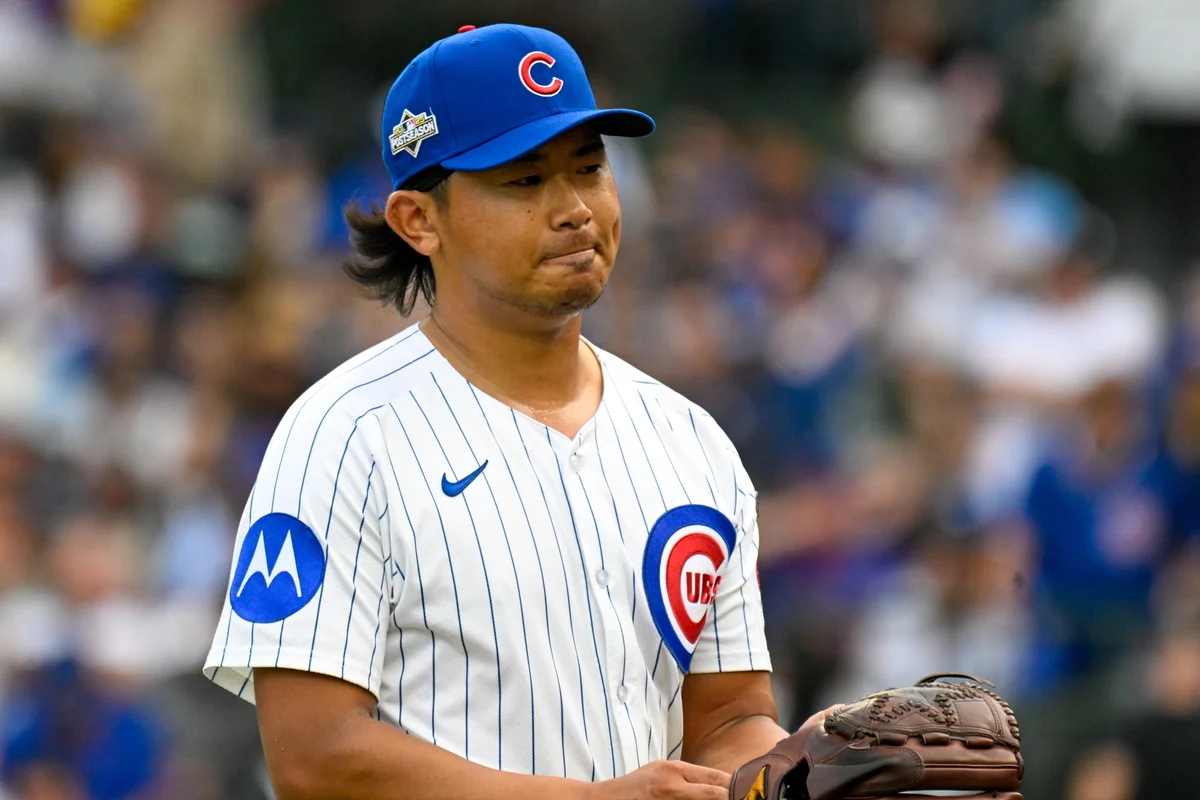
“I’m talking to everybody around me, getting everybody’s opinion, we thought that making your own adjustments, practicing here in Arizona probably for the best.”
Challenges from Injury and Mechanics Disrupted
The key to Imanaga’s recovery centers on regaining the consistency and control that helped him post a 2.91 ERA over 173 1/3 innings in 29 starts during his 2024 debut season. According to pitching coach Tommy Hottovy, Imanaga was close to rediscovering that effective command in the latter half of last season but struggled with tweaks needed to fine-tune his mechanics during competition.
Hottovy remarked,
“He wanted more, he thinks there’s more in there, there’s more to prove, and you can tell by the way he’s coming to spring training that he feels that way, because he’s in such a great place from where he was at the end of the year last year.”
Imanaga’s injury particularly affected his lower body strength, vital for generating stable pitching mechanics. His hamstring strain compromised his drive leg, causing him to lose confidence in his movements and leading to adjustments that disrupted his usual delivery.
Hottovy explained,
“You might sit a little deeper because you don’t want to overextend the hamstring and it actually might look like you’re creating more force, but in reality, you’re creating it to get out of it faster instead of holding it down the mound. And I think for him, his delivery does have a lot of depth in terms of how he gets in his back leg, but his strength comes from holding that position and then rotating hard late.”
He continued,
“He was having to affect how he was rotating, which was then affecting how his arm path was, and he knew he was trying to get his arm path up a little bit and a slightly higher arm-release point, but he just couldn’t do it, and he couldn’t figure out why he wasn’t able to support his trunk that way.”
Plans for Pitch Refinement and Arsenal Expansion
After dedicating the offseason to rebuilding lower-body strength, Imanaga enters spring training working on refining his pitch selection. The Cubs are focused on a three-part strategy: sharpening his sweeper, modifying his sinker grip to increase velocity, and reintroducing the cutter, which had been scaled back after his transition from Japan.
Hottovy highlighted this approach, saying,
“That’s opening up the arsenal quite a bit. What that means, though, for him is still making sure we get the heater-split dialed in, the sweeper off that arm path and then just kind of open up the rest.”
Last season, Imanaga’s sweeper showed improvement, and the Cubs expect it to evolve further by integrating it more naturally into his delivery. Hottovy also encouraged a greater reliance on the curveball, which comprised merely 2% of his pitches in 2025 but yielded hits on two of the three balls put in play. The vision is for the curve to complement Imanaga’s fastball and splitter against right-handed hitters.
Imanaga’s Focus on Present Growth
Rejecting the pressure to replicate past success, Imanaga emphasizes personal development over chasing a previous form. He stated,
“I feel like there’s times where if you’re chasing a specific version of you from a different year, you can go into a downward spiral. So instead of focusing on what I had in the past, I’m focused on trying to be a better version of what I am right now.”
With this mindset and physical readiness, Imanaga aims to build on the progress he made he made in the season’s second half, turning his 2026 campaign into a breakthrough year for the Cubs as they look to improve their pitching staff and overall competitiveness.
