
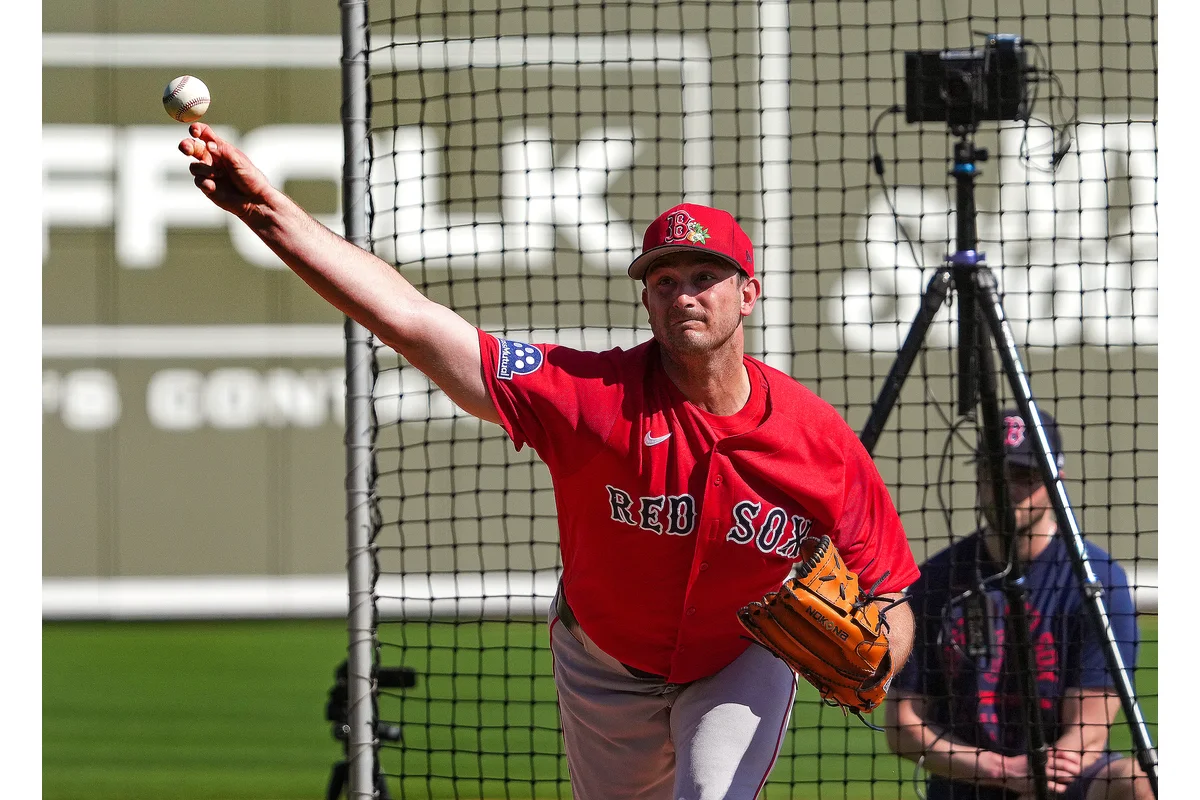
The Boston Red Sox finalized a surprising roster move just before Alex Cora’s spring training press conference, securing infielder Caleb Durbin from the Milwaukee Brewers as a key addition aimed at strengthening their offense for 2026. This transaction, part of a multi-player deal involving left-handed prospects Kyle Harrison and Shane Drohan heading to Milwaukee, highlights the team’s strategic focus on boosting offensive potential, centering on Durbin’s expected impact.
Introducing Caleb Durbin to Boston’s Infield
Caleb Durbin’s path to the Red Sox traces back to the 14th round of the MLB draft by Atlanta. After stints with the New York Yankees and Milwaukee Brewers, he emerged as a regular third baseman for the reigning best regular-season team in MLB during 2025. His rookie campaign featured a solid .256/.334/.387 batting line over 136 games, complemented by excellent defensive work at third base, and a 2.8 bWAR mark ranking seventh among first-year players.
Despite standing only five-foot-seven, Durbin’s offensive profile contrasts sharply with players like Nico Hoerner, sharing below-average batted-ball metrics but earning value thanks to exceptional bat-to-ball contact abilities. Notably, Durbin recorded a 9.9% strikeout rate and a 13.0% whiff rate, placing him in the 98th and 96th percentiles respectively, demonstrating his elite ability to consistently put the ball in play. His 24.6% chase rate further supports his approach, emphasizing plate discipline and making him a reliable offensive contributor.
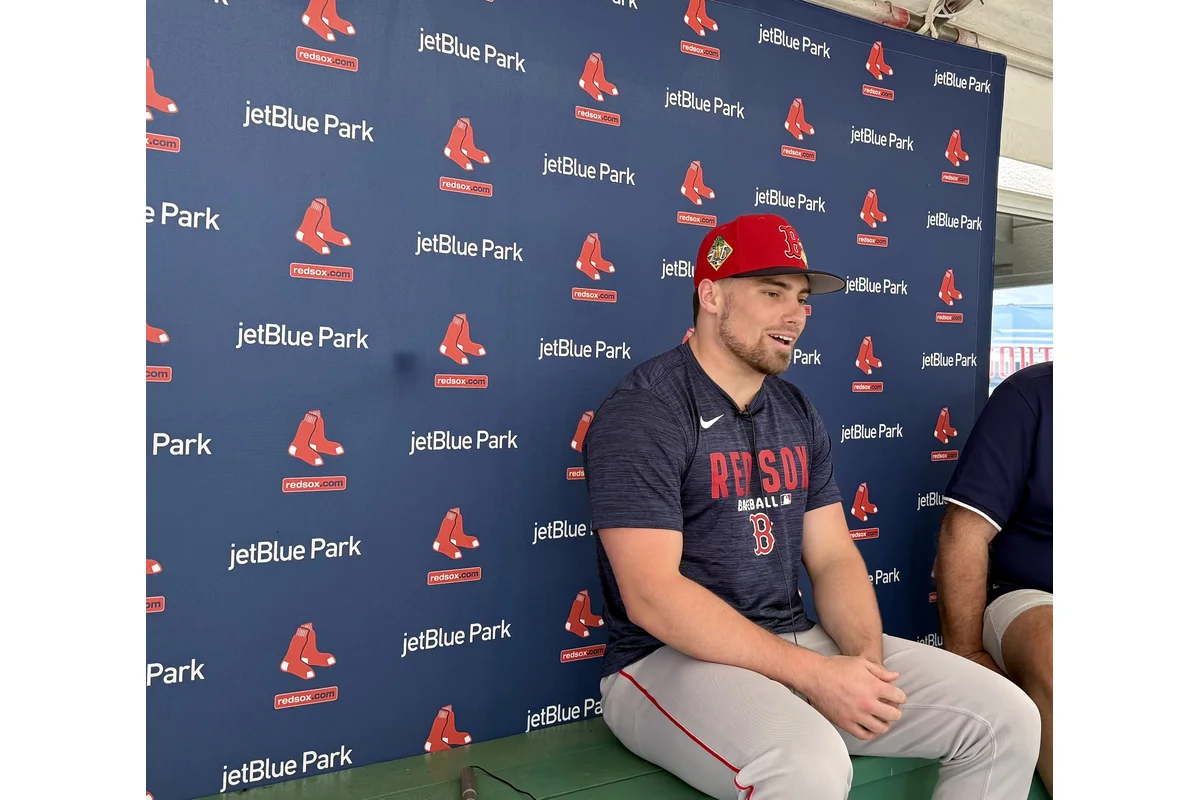
Durbin’s ultimate offensive ceiling will hinge on how much he can enhance his batted-ball outcomes, but his speed and contact skills ensure his production floor remains at least average.
Projecting Durbin’s Role in 2026
Though his average exit velocity was modest at 85.2 mph, Durbin managed to belt 11 home runs in 2025, largely thanks to an above-average 23.4% pull-air percentage. This figure, ranking 67th percentile among hitters with over 200 batted balls, is well-suited for Fenway Park’s dimensions. Encouragingly, during a brief Triple-A stint in 2025, Durbin’s pull-air rate climbed to 32%, which would have ranked third in the majors behind Isaac Paredes and Cal Raleigh.
If he can maintain this pull-air approach around 30%, Durbin could consistently reach between 10 to 15 home runs annually at Fenway despite limited exit velocity. His offensive development became apparent as the season progressed: after a slow start with a .165/.265/.236 line over his first 30 games, he surged to a .278/.352/.424 slash line from late May onwards, posting a .776 OPS that outpaced teammates Jarren Duran and Trevor Story.
While Durbin may not be the centerpiece of the lineup, his blend of offensive competence, plus defense, and potential for 20 stolen bases makes him a valuable asset for the Red Sox in 2026.
Additional Roster Depth: Seigler and Monasterio
Alongside Durbin, the Red Sox acquired two more infielders who could provide valuable depth. Neither Anthony Seigler nor Andruw Monasterio are guaranteed major-league roles on Opening Day, but both carry attributes that project utility and bench value.
Andruw Monasterio’s Versatility and Left-Handed Power Potential
Replacing Rob Refsnyder’s departure to Seattle, Monasterio could fill Boston’s need for a left-handed hitter against southpaws. Last year, Monasterio posted a .273/.360/.477 slash line against lefties, showing promising platoon versatility. Though his batted-ball metrics are unremarkable, he exhibits batting acumen with an above-average 26.4% chase rate while maintaining a reasonable strikeout rate (23.7%).
His defense is perhaps his strongest suit. Monasterio played second base, shortstop, and third base for Milwaukee, accumulating +6 defensive runs saved at second base across partial MLB seasons. His combination of defensive skill and ability to hit left-handed pitching positions him ahead of other depth contenders like Brendan Rodgers, Mickey Gasper, and Nick Sogard for a potential call-up if an infielder goes down.
Anthony Seigler’s Defensive Flexibility and Base-Stealing
Seigler, the final piece of Boston’s new acquisitions, secured a place on Milwaukee’s NLDS roster despite a modest .194/.292/.210 batting line over 34 second-half games. His value largely stems from his defensive versatility, covering second base, third base, first base, and catcher. His base running is a notable strength, boasting 52 stolen bases across the last two minor-league seasons while only being caught seven times.
At the plate, Seigler’s switch-hitting approach yielded a high .414 on-base percentage in Triple-A last season, indicating a disciplined eye. However, he will likely need to elevate the quality of his contact to carve out sustained playing time in the majors.
Players Traded to Milwaukee and Their Outlook
Boston parted with several prospects in this deal, most notably Kyle Harrison, a former top prospect acquired in the Rafael Devers trade who had mixed results at Triple-A and in the majors during 2025. Despite his potential, Harrison struggled with command, walking 27 batters across 50.1 innings, and faced challenges in maintaining deep outings and controlling his fastball.
Craig Breslow, Red Sox Chief Baseball Officer, once expressed belief that Harrison
“can pitch at the top half of a rotation,”
but performance inconsistencies and the emergence of younger pitchers like Payton Tolle and Connelly Early relegated Harrison down the depth chart, making the Red Sox comfortable moving him in the trade.
David Hamilton, another player sent to Milwaukee, is widely seen as limited in potential at the MLB level due to strikeout rates and below-average exit velocities. While he possesses elite speed and solid defense at second base, defensive lapses and below-average arm strength limit his versatility and value in the modern four-man bench era. Hamilton’s role as a specialist pinch runner was considered inefficient roster use given Boston’s already left-handed-skewed lineup.
Left-handed reliever Shane Drohan was perhaps the most surprising to trade away, given his strong Triple-A numbers in 2025 with a 2.27 ERA and 67 strikeouts in 47.2 innings. Armed with five average-or-better pitches, including a mid-90s fastball and a potentially above-average changeup, he appeared poised for a major-league bullpen role. However, his injury history and age (27) likely contributed to Boston’s hesitation to commit a 40-man roster spot to him, leading to his inclusion in the trade.
None of the outgoing players had a clear path to consistent MLB playing time without major setbacks, reinforcing that those acquired by Boston hold more promise for contributing in 2026.
Evaluating Boston’s Lineup Post-Trade
With the Durbin trade completed, attention returns to Boston’s offensive composition. In early winter meetings, Craig Breslow emphasized the team’s desire for a middle-of-the-order power bat, saying:
“And so, again, we’re going to consider all ways of improving the team, but finding someone in the middle of the order and who hits the ball out of the park is a really good place to start.”
– Craig Breslow, Chief Baseball Officer
However, the team’s offseason moves fell short of securing such a bat beyond acquiring Alex Bregman, leaving gaps in power production. Subsequent additions, including Isiah Kiner-Falefa and Caleb Durbin, both profile with below-average exit velocities (84.6 and 85.2 mph respectively), reinforcing a trend toward pitching and defense-oriented roster construction.
Breslow acknowledged this shift, noting that boosting run prevention is another effective route to winning more games:
“We work backwards from, ‘We need to put a better team on the field and win more games than we did last year. How do we do that?’ Offense was a fairly obvious one, but preventing runs is another way,”
adding,
“I joked with (hitting coach) Pete (Fatse) that hopefully we’re making his job easier, too, by not putting such demands on the offense.”
This focus means Boston relies heavily on its pitching staff and undermanned yet defensively skilled lineup to stay competitive.
Offensive Contributors and the Road Ahead
Boston’s offense depends on the progression of several key players: Roman Anthony, Trevor Story, Wilyer Abreu, and Willson Contreras. While each player has potential, significant concerns remain. Anthony, a promising 22-year-old, faces pressure as a budding star in his first full MLB season. Story, despite leading the team in home runs last year, has struggled to stay healthy, averaging only 54 games per season during his Boston tenure, and posted league-average expected slugging in 2025.
Wilyer Abreu, often highlighted by manager Alex Cora as a breakout candidate, must overcome notable struggles against left-handed pitching and persistent injury troubles. Contreras, newly transitioned to first base, carries hope for growth but has never surpassed 138 games or 24 home runs in a season.
Many fans hoped the Red Sox would land a consistent power hitter like Pete Alonso, who, despite defensive and baserunning weaknesses, has reliably produced 34 or more home runs annually during a seven-year MLB career with a .516 slugging percentage. The current Boston lineup has contributed only two 30-homer seasons in its history, both by Story in his Colorado days, highlighting the team’s lack of established power.
Consequently, Boston’s offense risks prolonged droughts reliant on sequencing hits rather than sustained power production, increasing the burden on its strong pitching and defense.
Understanding the Trade’s Broader Impact
The acquisition of Caleb Durbin and complementary depth pieces represents a calculated bet by the Red Sox to build a balanced roster prioritizing pitching, defense, and contact hitting over pure power. Durbin’s skill set and upside in Fenway Park create an intriguing prospect for bolstering the lineup, while Monasterio and Seigler add bench flexibility and positional coverage.
Yet, the absence of a clear middle-of-the-order power bat forces Boston to rely heavily on player development and health, especially among young talents and returning veterans. This strategy leaves open the possibility of pursuing further offensive reinforcements at the trade deadline to address lingering gaps.
With a deep bullpen and revamped defense, the Red Sox are prepared for the rigors of a 162-game season. However, competing against strong American League lineups with more robust offenses may prove challenging without additional firepower.
