
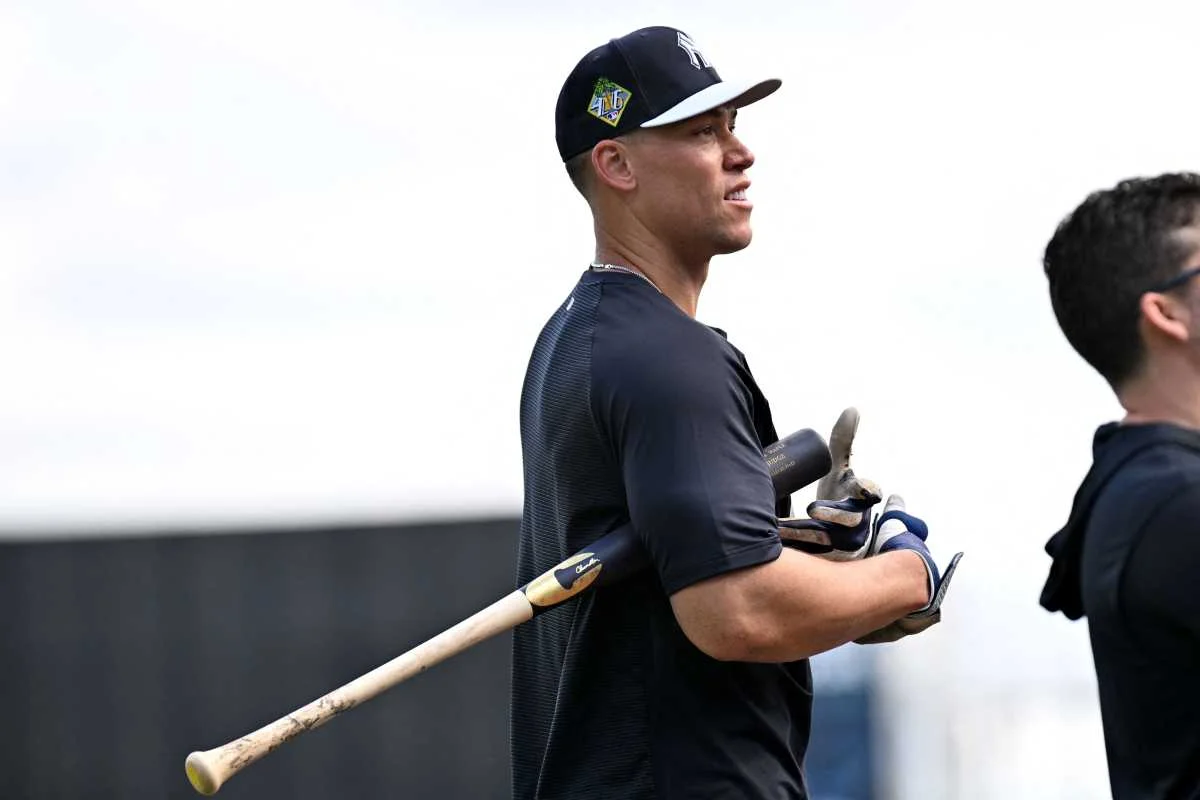
During a spring training session at George M. Steinbrenner Field in Tampa, Florida, Aaron Judge faced right-hander Paul Blackburn on March 1, 2025, while testing Major League Baseball’s upcoming automated ball-strike (ABS) system. With the count at two balls and two strikes, an umpire called Judge out on a close pitch, prompting Judge to tap his helmet as the digital scoreboard revealed the pitch was slightly outside according to ABS technology.
Instead of leaving the batter’s box, Judge remained poised and smashed the next pitch into the left side of the infield, likely resulting in a single if this were a real game. This moment exemplified the desired function of ABS, which has been implemented in minor league games since 2022 and is set for Major League Baseball’s regular season starting in 2026.
Challenges and Concerns Surrounding ABS Implementation
Despite optimistic outcomes, there are scenarios that could prove difficult. For instance, late in a close game with bases loaded, Judge could be called out on a borderline low pitch that has troubled him in the past. Such decisions could impact game results, especially if a team runs out of challenges; each team receives two challenges, which they can maintain only if their calls are upheld. This situation could leave them vulnerable in crucial moments.
Yankees manager Aaron Boone acknowledged this possibility, noting the inherent challenges of incorporating ABS during games. He emphasized the importance of players being assertive in using their challenges, rather than holding back to save them, as games can be decided early on. Boone said,
“But the thing we’ve found with this, where it’s been used, is people don’t challenge enough. I think the tendency is, ‘I’ve got to save them.’ Well, then you end up taking them home. Games are won or lost in the second, third, fourth inning all the time. Look, we want our guys to be good at it, we want them to be disciplined but we also want them to be aggressive with it.” – Aaron Boone, Yankees Manager
He further added,
“But that scenario you’re talking about is going to happen. It doesn’t mean it wasn’t right to not challenge [earlier in the game] because you may never get to that spot either.” – Aaron Boone, Yankees Manager
Live Practice Highlights the Learning Curve for Teams and Officials
During more than two hours of live batting practice, which involved an umpire calling balls and strikes rather than Boone, the Yankees achieved a high success rate in challenges, at one point overturning 14 out of 15 calls. However, the umpire’s relative inexperience—primarily officiating high school and college games—likely contributed to the numerous overturns. Boone has expressed no restrictions on which players can initiate challenges, including pitchers, despite differing opinions among other managers in the league.
Diamondbacks manager Tory Lovullo commented on the challenge distribution during the 2024 season, stating,
“Pitchers at times can get a little emotional. I know hitters sometimes are also going to be that way, From what I remember last year, and I can speak from that experience, the catchers were right the majority of the time. The hitters were about half the time. The pitchers about 10% of the time.” – Tory Lovullo, Diamondbacks Manager
All 30 teams are navigating this new system, each trying to leverage ABS technology to gain small advantages. While the system was a part of many minor league games last spring in Florida and Arizona, it was often viewed as a novelty since it was not scheduled to be used in major league regular season games until 2026.
Mixed Reactions Among Veterans and Managers Regarding ABS
Some experienced players have expressed reservations about introducing ABS into major league games, citing concerns about the added complexity in an already challenging hitting environment. Reds manager Terry Francona, for example, limited challenges within his team last spring to avoid practicing for a system not yet implemented at the major league level.
Veteran players, including Paul Goldschmidt, who is entering his 16th season, have shared thoughtful reflections. Goldschmidt said,
“I’ve had that thought, too, But I think in due time we’ll kind of adjust and figure it out… I think it’s going to be good for the game, I will say that.” – Paul Goldschmidt, Major League Player
This illustrates the ongoing conversation within clubhouses as players adapt to the presence of ABS and its potential effects on the pace and fairness of the game.
Significance and Future Outlook of ABS in Baseball
The automated ball-strike system represents a major shift in how baseball defines and enforces balls and strikes, aiming to reduce human error and improve accuracy. Although the technology is promising, its success will depend on how managers and players learn to use the challenge system strategically. The Yankees’ early experimentation with ABS in spring training highlights both the opportunities and potential pitfalls that lie ahead.
With Major League Baseball officially integrating ABS in the 2026 season, teams will continue refining their strategies, and officials will receive more training to keep up with the new standards. For players like Aaron Judge and others across the league, adjusting to this technological change will be integral to future in-game success.
