
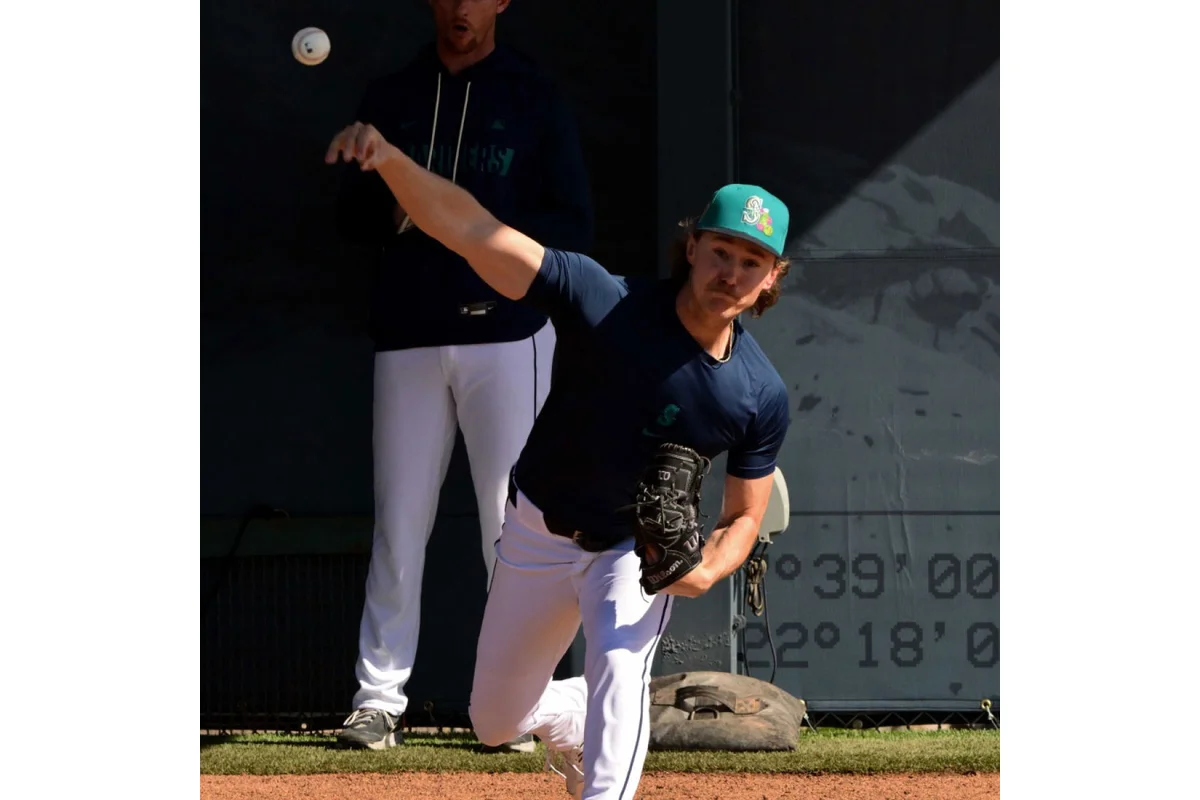
The introduction of the Automated Ball-Strike (ABS) system in Major League Baseball this year presents unique opportunities for the Seattle Mariners, particularly pitchers Bryce Miller and George Kirby. With the robot umps now in play, the key for Seattle’s starters will be learning how to leverage this new technology effectively, relying heavily on catcher Cal Raleigh’s skill in calling the strike zone.
How George Kirby Plans to Adapt to ABS Challenges
Mariners pitcher George Kirby recently shared his approach to handling the ABS system, emphasizing trust in catcher Cal Raleigh’s judgment. Raleigh’s deep understanding of the strike zone provides a critical advantage under the new system. As Kirby noted,
“It’s going to be tough when I throw a front-hip sinker and I don’t get it (the call) and tap my head.”
This reflects the pitcher’s readiness to manage on-field frustrations when calls don’t go his way, using Raleigh’s expertise as his primary guide.
This mindset of relying on Raleigh is advisable for all Mariners pitchers facing ABS calls, but it may be especially advantageous for Kirby. In the 2025 season, Kirby led Seattle starters in strikeouts via called third strikes, underscoring his precise command and ability to generate swings and misses on borderline pitches.
Why the ABS Challenge Could Benefit Kirby and Bryce Miller
George Kirby has earned a reputation as a solid, though not dominant, strikeout pitcher. Over his four-year major league career, he has averaged fewer than one strikeout per inning, with his peak strikeout percentage (26.1%) ranking him modestly in the 76th percentile among peers last season. According to Yahoo Sports analyst Jordan Shusterman, enhancing swing-and-miss opportunities would elevate Kirby’s performance. Although Kirby possesses a diverse pitching arsenal, he lacks a single overpowering “out pitch” comparable to Logan Gilbert’s splitter.
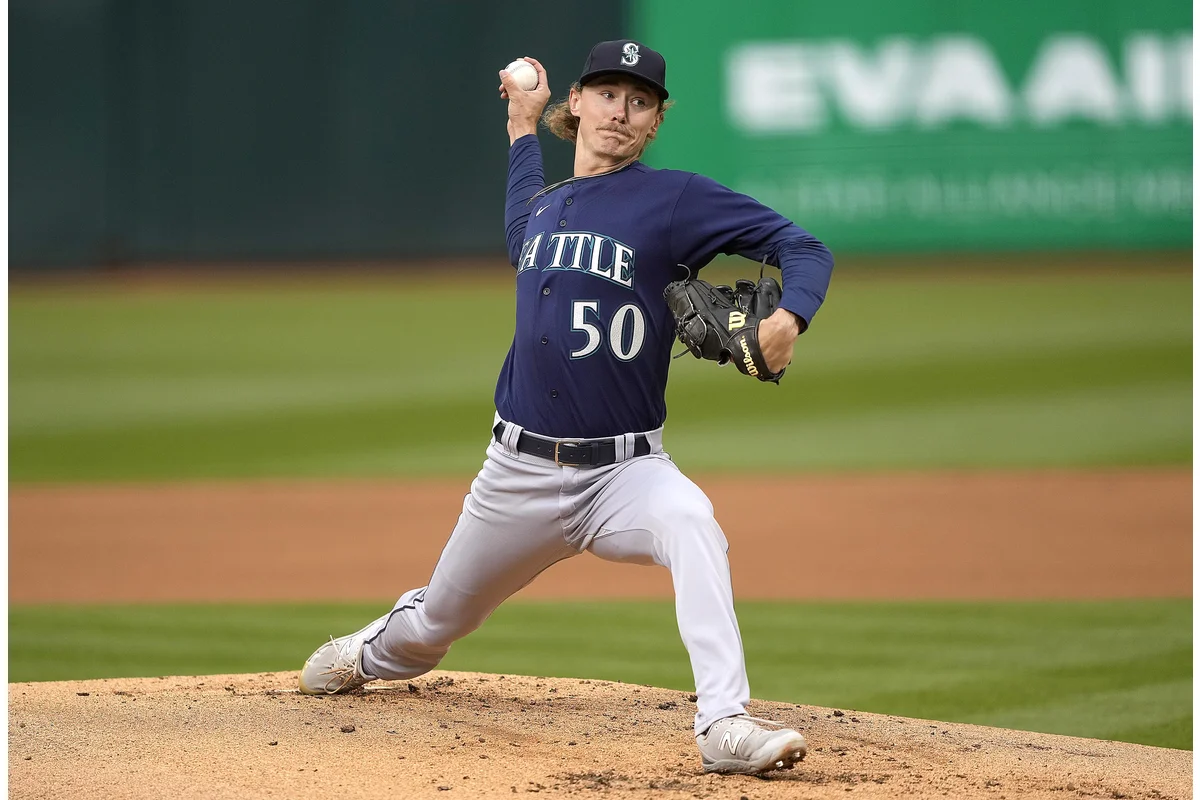
Kirby’s pitching strategy centers on a narrowed focus, favoring primarily his four-seam fastball, sinker, and slider, which allows him to aggressively target the strike zone. Since 2022, among starters with 600 innings pitched, Kirby ranks third in zone percentage, demonstrating his commitment to command and precision over sheer velocity or strikeout volume.
Most of Kirby’s called third strikes in 2025 came from pitches thrown at the edges of the strike zone rather than “garbage” calls. Out of 38 called third strikes, 31 were accurate strikes, illustrating the reliability of the umpiring when it favored him. Nevertheless, Kirby also encountered some missed opportunities, with seven third strikes incorrectly called balls, which could have augmented his strikeout numbers if reversed.
Balancing Missed Calls and Gift Strikes Under the ABS
Despite the seven missed third-strike calls against him, Kirby also received 52 called strikes on pitches outside the strike zone—an important factor since ABS technology aims to reduce such inconsistencies. While pitchers might worry about losing these “gift” strikes under ABS, early data suggests hitters succeed less often when challenging calls than pitchers and catchers do. During last spring’s tests, hitters achieved only a 50% success rate on challenges, compared to 54.4% for pitchers and catchers, suggesting teams will carefully limit when and who can challenge calls.
For pitchers like Kirby and Miller, who excel in getting strikes called on borderline pitches, the ABS could reinforce their strengths by reducing human error in unfavorable ways, while sustaining their ability to earn called strikes reliably.
Bryce Miller’s Similar Potential Under the New System
Bryce Miller shares many traits with Kirby when it comes to pitching style and benefit from the ABS. Like Kirby, Miller primarily relies on a fastball-oriented arsenal without a consistently dominant swing-and-miss pitch. His command, while slightly less sharp than Kirby’s, still produces a high rate of strikeouts looking over the past three seasons. For these reasons, Miller stands to gain from the ABS system’s consistent enforcement of the strike zone as much as Kirby does.
Other Mariners starters such as Logan Gilbert, Bryan Woo, and Luis Castillo are also facing the same challenge of adjusting to ABS, but the approach remains consistent: trust the catcher, rely on command, and make strategic use of challenge opportunities when available.
Implications for Mariners Pitchers in the 2026 Season
As the ABS system becomes a permanent fixture in MLB, Seattle Mariners hurlers will need to refine their strategies to avoid relying solely on instinct during challenge situations. Instead, pitchers like Kirby, Miller, and their peers would benefit by placing their confidence in Cal Raleigh’s judgment behind the plate, allowing the automated system to enhance fairness and reduce umpiring errors.
This evolution could lead to more consistent strike zones, fewer missed calls swinging games unfairly, and ultimately, improved pitcher performance when controlling the pace and outcome of at-bats. How well Mariners pitchers adapt to the ABS will be a key storyline to watch in the 2026 season and beyond, potentially shaping how other teams approach pitch calling and umpire challenges in the new technology era of baseball.
"It's going to be tough when I throw a front-hip sinker and I don't get it (the call) and tap my head."@Mariners pitcher George Kirby gives his strategy to using Automated Ball-Strike challenge system (ABS) this season. pic.twitter.com/vWrQ3akup4
— KING 5 Sports (@KING5Sports) February 19, 2026
George Kirby, 96mph Dart. 🎯 pic.twitter.com/OzAZBsXaA1
— Rob Friedman (@PitchingNinja) September 14, 2025
