
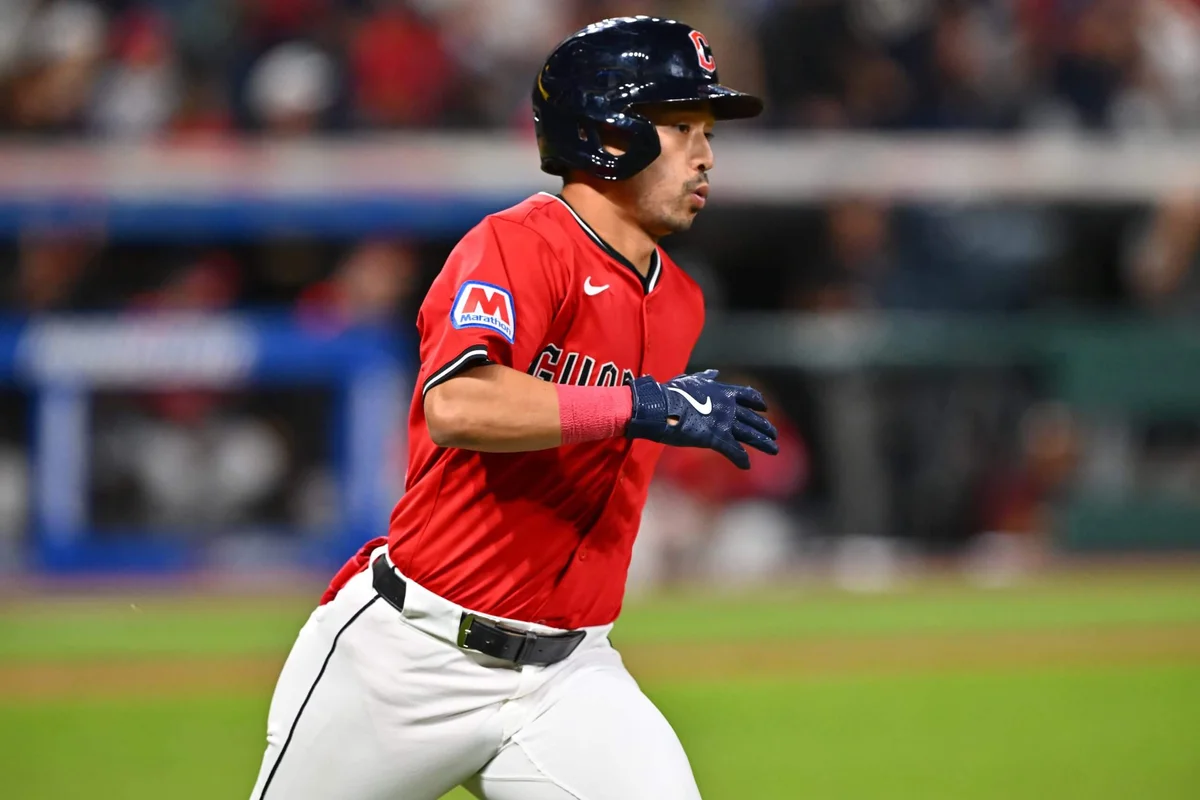
CLEVELAND, Ohio — Steven Kwan, a four-time Gold Glove winner and two-time All-Star, is undertaking a significant change by moving from left field to center field for the Cleveland Guardians starting in the 2024 season. This strategic switch could transform both his career trajectory and the team’s lineup flexibility, creating new opportunities for the Guardians as they prepare for the season ahead.
Known widely as one of the premier defensive left fielders in baseball, Kwan’s decision to shift to center field represents a major challenge. The move demands mastering new angles, routes, and instincts that center field requires at the major league level—skills that differ sharply from those in left field. His willingness to embrace this learning curve underscores the high stakes involved in this experiment, both professionally and personally.
Understanding the Risks and Challenges of Moving to Center Field
Transitioning from left to center field is no minor adjustment for Steven Kwan. Center field requires superior range, faster reads off the bat, and split-second decisions that carry little room for error. This position is often viewed as the outfield’s centerpiece, commanding greater defensive responsibility than corner outfield spots.
Paul Hoynes, covering the Guardians aggressively, summarized the challenge clearly:
This is a gamble on his part, at least in my way of thinking. And he admitted as much and he said he was up for the challenge.
The physical and mental demands of center field are heightened, demanding that Kwan essentially return to “school” to develop fresh instincts and instincts on routes his body must take to get to fly balls.

Steven Kwan’s move carries significant risk. Joe Noga highlighted this reality on the Cleveland Baseball Talk Podcast:
Steven Kwan is putting his reputation on the line. He could look silly at points during the season if this plays out and he’s out there at Progressive Field patrolling the outfield in center. But there’s also the potential that this could work out really good for him and for the Guardians.
New Defensive Role Aligns with Offensive Strengths
The intentions behind positioning Kwan in center field are not only defensive but deeply strategic. Moving him to center opens up left field for players who might provide more power, enhancing Cleveland’s lineup depth and offensive versatility. More importantly, this shift capitalizes better on Kwan’s offensive profile, which has always been somewhat unusual for a corner outfielder.
Hoynes elaborated on this point by saying:
If he can show he can play center field on a daily basis or a semi regular basis, this really more aligns with his skill set as a lead off hitter, a center fielder. In left field, you’re usually looking for a little more power than he produces. But in center field, if he can play that position he’s the ideal leadoff hitter.
Kwan’s elite ability to make contact, get on base consistently, and use his excellent speed for base stealing fits the prototype for a center fielder and especially a leadoff hitter.
Unlike left fielders who are generally expected to provide significant power numbers, center fielders often bring a blend of speed, range, and offensive consistency. Kwan’s 21 to 22 stolen bases last season further showcase his fit for that role, emphasizing his strengths beyond power hitting.
Long-Term Implications and Financial Stakes
This transition holds important implications not only for Kwan’s playing career but also for his contract negotiations and value as a player. With two years remaining before free agency, becoming a Gold Glove-caliber center fielder who also produces elite on-base numbers and developing power could significantly increase his market worth.
Noga emphasized Kwan’s mindset about the challenge:
He’s embracing the challenge, volunteering himself for the learning curve, and approaching it with the mentality of a player who is hungry to be more than what he already is.
Such buy-in is critical if this move is going to succeed on the professional level. Kwan is not reluctantly going through the motions; he is actively pursuing growth and adaptation.
The Guardians’ gamble on Kwan’s switch suggests they are betting the potential payoff outweighs any early season awkwardness or growing pains. Success could reshape team dynamics, create lineup versatility, and elevate Kwan’s standing league-wide as a uniquely valuable player.
Inside Guardians Camp: Preparing for the 2024 Season
As the team prepares for the Cactus League and regular season, several other storylines complement Kwan’s position switch. The Guardians have embraced technology in training, including live batting practice overseen by robot umpires. This introduction of the Automated Ball Strike Challenge System allows players to familiarize themselves with in-game review technology and has already led to successful overturned calls during practice sessions.
Paul Hoynes shared insights from live batting practice:
They had college umpires on the field, and when hitters disagreed with a call, they tapped their helmets to challenge, and the calls were reviewed instantly. For example, Steven Kwan and David Fry both got calls overturned.
This early exposure is vital for players as they adjust to the new rules and protocols that will affect gameplay throughout the season.
In addition to embracing technology, the Guardians’ pitching staff is gearing up with a lineup of starters ready to jump into early games. Logan Allen, Joey Cantillo, Tanner Burns, and other arms, including minor league prospects, will cycle through the initial Cactus League contests. The rotation is set to build momentum carefully, balancing workloads against the need for preparation.
Interestingly, Parker Messick, a pitcher with limited major league experience, has not been scheduled early starts but is expected to be given opportunities later in camp to ease into the rotation.
Other Key Player Developments in Guardians Camp
Alongside Kwan, other players’ roles and trajectories are being closely watched. The Guardians’ recent No. 1 draft pick, Travis Bazzana, remains positioned firmly at second base as the club wants to avoid rushing his development across multiple positions. Team officials expressed intent to see Bazzana establish himself at second before considering defensive shifts.
Bazzana, who represents Team Australia in the World Baseball Classic, also shed light on baseball’s place within Australian sports culture, ranking behind soccer and basketball but still maintaining a strong community presence. Both Joe Noga and Paul Hoynes expressed excitement about Bazzana’s potential impact once he arrives in Cleveland.
Joe Noga remarked on Bazzana’s appeal:
When Travis Bazzana finally does arrive in Cleveland, a lot of us are going to have a lot of fun and great conversations talking to him because he’s everything you want in terms of a face of a franchise type potential player.
Separately, Will Brennan, a former Guardian now with the San Francisco Giants, has a chance to reignite his career after elbow surgeries that limited his time. Former teammates and analysts welcomed the opportunity for Brennan to prove himself in a new environment, recognizing his character and hitting potential.
Managerial Landscape and Front Office Observations
As Guardians players and staff prepare for the season, there are comparisons to be drawn with other organizations. Pat Murphy, the Milwaukee Brewers’ manager, recently signed a contract extension reflecting stability and success after leading his team to multiple postseason appearances. His continued leadership echoes what the Guardians hope to achieve under their own management.
Paul Hoynes noted a cultural contrast regarding contract transparency:
I can’t believe the Brewers actually announced how long he signed for. That’s something unusual compared to the Cleveland front office, which tends to keep those details quiet.
Both Hoynes and Noga emphasized the high level of baseball knowledge within the Guardians’ organization and the intelligent decisions coming out of camp, hoping such strategic moves, like Kwan’s position switch, signal competitive ambitions.
Challenges and Adaptations with New In-Game Technologies
The Guardians continue to adapt not only to player positioning and roster decisions but also to the evolving technological landscape of baseball. The Automated Ball Strike (ABS) system requires players, umpires, and managers to recalibrate how decisions are made on the field. Players must get used to the possibility of instant replay on balls and strikes, while front offices are careful to monitor unintended consequences of technology on game flow and fairness.
Paul Hoynes explained the integration process during live batting practice:
They wanted to work on the ABS system well before the Cactus League games started to ensure players were comfortable with the mechanics of challenging umpire calls during plate appearances.
Questions remain about who will most often initiate challenges; anecdotal evidence suggests pitchers may be discouraged from challenging due to their positioning and vision when throwing. Catchers are expected to take a more active role in monitoring and potentially challenging calls.
The league has also adjusted broadcast presentation features, like removing solid strike dots on replay screens, to prevent players from gaining an unfair advantage by interpreting broadcast images in real time. These steps show MLB’s careful approach in balancing technology’s benefits without compromising competitive integrity.
Looking Ahead: What the Kwan Experiment Means for Cleveland
Steven Kwan’s move to center field represents more than just a positional change; it signals the Guardians’ willingness to innovate and adapt in pursuit of sustained success. If Kwan successfully adapts to center field, it will offer the team both defensive solidity and offensive versatility. This move also enhances Kwan’s own value, possibly boosting his marketability in trade discussions or contract talks as he nears free agency.
The Guardians are betting that Kwan’s high-level defensive skills, combined with his contact hitting and speed, make him a prototypical center fielder for the modern game. His adaptability could inspire others on the team and create new lineup permutations where offensive and defensive needs are more finely balanced.
While there is risk in tackling such a significant challenge, Kwan’s commitment and the team’s strategy suggest a thoughtful approach rather than a desperate gamble. The coming weeks of the camp and early regular season will be telling, but the foundation is laid for a potentially transformative chapter in both Kwan’s career and the Guardians’ competitive outlook.
