
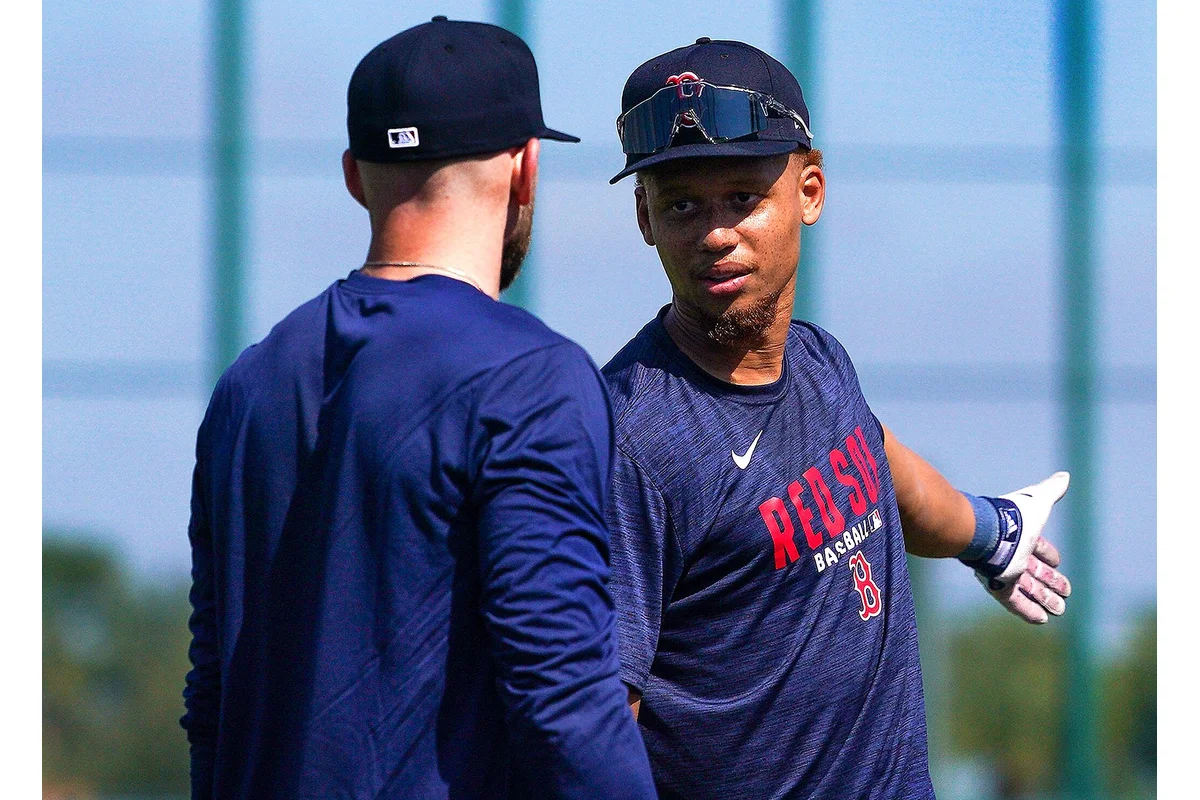
Last year, Kristian Campbell emerged as one of the most promising prospects in baseball, rising swiftly to a consensus top 10 player on industry lists. Just months later, as the 2026 spring season approaches, Campbell faces an uncertain future, starting in Triple-A rather than the major leagues. His journey highlights how player development can be unpredictable, emphasizing that reaching MLB or passing rookie status is not the end of growth or challenges.
Early Career and Breakout Performance
After only one year of college baseball, the Boston Red Sox selected Campbell in the fourth round of the 2023 draft. Known for his unique, somewhat choppy swing combined with solid contact skills, Campbell committed to adding muscle during the offseason, gaining 15 to 20 pounds. This physical development sparked a sudden leap in his offensive output: his power jumped from average to plus almost overnight, while he improved his ability to lift the ball without a significant increase in strikeouts.
During his debut season, Campbell posted an impressive 178 wRC+ across three minor league levels, hitting 20 home runs with a strikeout rate below 20%. His unconventional swing technique concerned some evaluators, but the Red Sox’s front office embraced his potential fully, placing him on the Opening Day roster in 2025 and signing him to an eight-year, $60 million contract shortly after the season began.

Promising Early Performance and Defensive Versatility
Campbell’s rookie season started well. He earned American League Rookie of the Month honors in April after batting .301/.407/.495 with four home runs. Although his strikeout rate increased to above 25%, it was accompanied by strong power and a 15% walk rate — typical for rookies adapting to major league pitching. Defensively, Campbell was mostly deployed at second base, with occasional stints in left and center field. While his defense at second base raised questions, his versatility remained an asset to the team.
Injury and Subsequent Decline
On April 30, Campbell went hitless in a game versus the Toronto Blue Jays and missed the next three contests due to rib discomfort. When asked about the injury later, Campbell himself downplayed its impact:
“No. That’s all clear. There was just a little side discomfort, but it’s all good.”
Despite this reassurance, the injury marked a turning point. By mid-June, Boston sent Campbell down to Triple-A for the rest of the year as his offensive production plummeted, especially in his inability to pull the ball effectively.
Performance Breakdown and Challenges at Triple-A
In April, Campbell was still managing to hit certain pitches hard to the left side of the field and showed early success driving breaking balls away. However, his power waned, especially on the pull side, where he only connected well against hanging breaking balls. His performance in Worcester, the Red Sox’s Triple-A affiliate, was lackluster, producing a 118 wRC+ with a 26.7% strikeout rate. Meanwhile, Boston’s major league lineup adapted without him, with players like Romy Gonzalez stepping in at second base and a surplus of quality outfielders limiting Campbell’s playing time there. Once a headliner in spring training, Campbell faded from prominence by the end of the 2025 season.
Controversy and Concerns Surrounding Campbell’s Swing
Even during his peak, Campbell presented a divisive profile. His swing incorporated a double toe tap and a pronounced front hip leak, which worked because of his exceptional hip-shoulder separation. This allowed him to maintain a closed stance despite his lower body moving toward third base. However, critics pointed out his violent, rotational swing caused excessive head movement and often left him off balance. While his bat speed and hand-eye coordination compensated for some mechanical concerns, not all evaluators were convinced his swing was sustainable at the major league level.
Boston’s Response and Offseason Adjustments
Despite Campbell’s sudden decline, Boston remains invested but cautious. The club sent him to winter ball to work on quieter, more controlled movements at the plate, aiming to rediscover his earlier power. They also traded for Caleb Durbin, and the defensive outlook for Campbell has shifted multiple times—from initially focusing on outfield roles to considering first base and then bringing him back to take groundballs in camp. These moves suggest that Campbell’s spot in the Red Sox’s immediate plans is uncertain given last season’s struggles and the current roster composition.
Questions About the Causes of Campbell’s Downturn
Campbell’s decline invites multiple theories. Was it the result of his unusual swing mechanics causing inconsistency? Could nagging rib pain combined with league pitchers’ adjustments have hampered his progress? And did the limited defensive experience in college and the minors place an undue burden on him during his rookie year? These questions remain unanswered and illustrate the uncertainties surrounding his future. Campbell’s status is currently in flux, caught between potential revival and stalled development.
Expert Perspective on Campbell’s Future Potential
Eric, a noted analyst, shared thoughts soon after Campbell’s demotion last year:
“I, like most everyone, entered 2025 convinced that this weirdo swing would work for Campbell even though it’s unconventional. Though he was demoted shortly before [list] publication, I still think it will… two years ago, this guy was playing in his lone college baseball season and now he’s facing the best pitchers in the world. He deserves time to adjust and hopefully get stronger so it doesn’t take his entire body winding up for him to swing hard.”
This perspective underscores the view that Campbell’s struggles may be temporary as he adjusts to the rigors of professional baseball.
Outlook: Strength and Adjustment as Keys to Revival
Campbell’s long season and complex swing mechanics create challenges that require physical resilience, especially to avoid disruptions from minor injuries or timing issues. His bat speed, relatively short swing, and solid approach once made him a legitimate offensive threat, even if his style was unconventional. Baseball history offers many examples of players who adapted over time, and Campbell’s ability to do the same remains to be seen. His talent is undeniable, but whether he can overcome recent difficulties depends on how he responds this season and beyond.
