
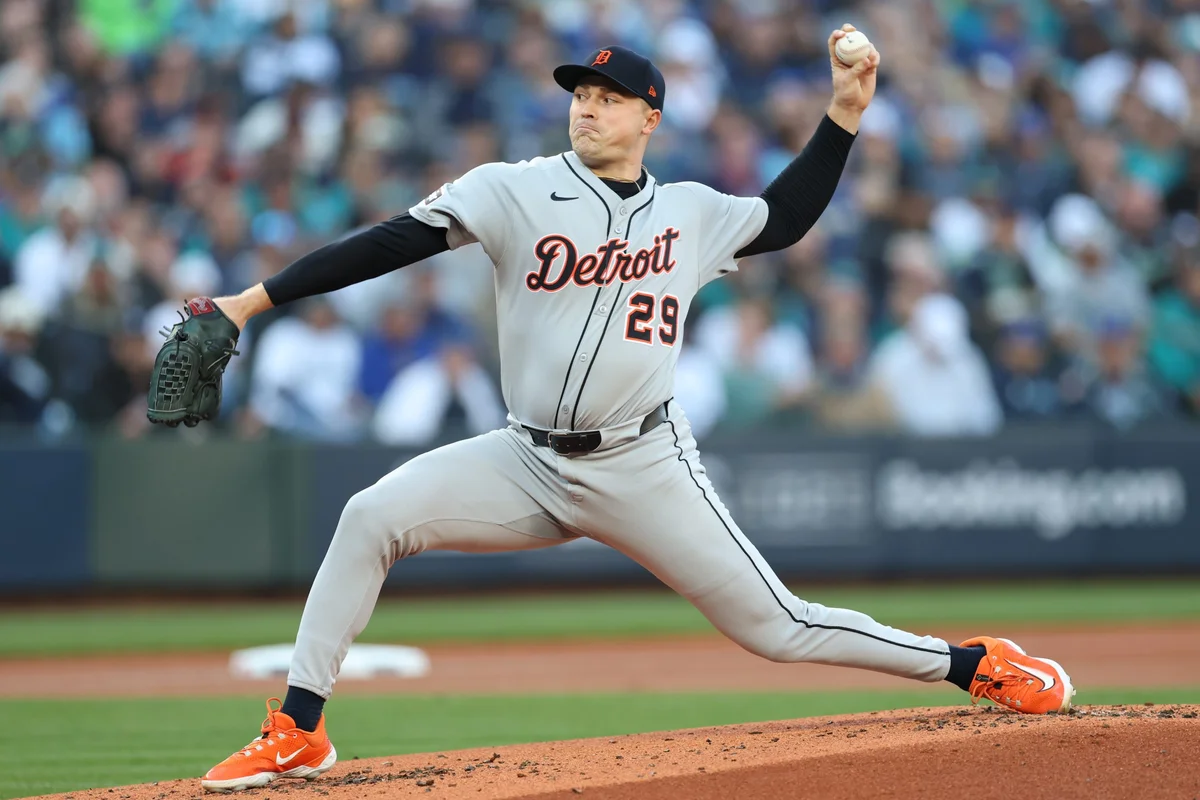
When Parker Meadows sustained a rare nerve injury in his right arm early in 2025 spring training, the Detroit Tigers took an unconventional path for his treatment. Instead of following routine protocols typically applied to position players, the Tigers leaned on a pitching coach’s expertise to guide Meadows’ injury recovery. This innovative approach reflected the team’s commitment to using advanced biomechanics and physician-supported throwing programs to support Meadows’ rehabilitation.
Applying Pitching Methodologies to Position Player Injuries
Throwing injuries are less frequent among position players like Meadows and fellow outfielder Matt Vierling, whose rotator cuff strain coincided with Meadows’ injury. Because such injuries are rare, many organizations default to reactive treatment methods without a clear plan for recovery. Detroit chose a different route by assigning assistant pitching coach Robin Lund to develop their rehab strategy. Lund’s extensive academic and coaching background, including a doctorate in exercise science and years as a kinesiology professor, helped Detroit bridge pitching science with position player care.
Under Lund’s guidance, the Tigers implemented throwing programs for Meadows and Vierling that mirrored those used for pitchers recovering from shoulder or elbow injuries. This meant closely monitoring workload progression, emphasizing proper mechanics, and ensuring offseason maintenance—all steps designed not only to heal but to prevent further injury. This approach marked a shift from traditional position player rehab toward a pitching-style injury management philosophy.
Structured Recovery Designed to Protect Long-Term Arm Health
For Meadows, whose nerve injury posed unpredictable recovery challenges, gradual progression was vital to avoid exacerbating his condition. Vierling’s rotator cuff injury also required careful management given his defensive responsibilities and need for arm strength across multiple field positions. The Tigers’ focus on biomechanics and controlled throwing workloads created a pathway for both players to recover without rushing, underscoring the importance of forethought in injury treatment.
The Tigers leveraged Lund’s pitching lab expertise, which includes precise monitoring of throwing angles, velocity, and recovery timelines. This scientific foundation helped transform injury rehabilitation into strategic injury prevention, highlighting how data-driven player development can provide an edge in maintaining roster health.
Results and the Impact on Detroit’s Roster Depth
By the time 2026 spring training arrived, both Meadows and Vierling were fully cleared to play. Though this successful rehab lacked the fanfare of a high-profile signing or top prospect’s debut, it represented a significant win for a team reliant on depth and versatility. Meadows’ speed and superior defensive coverage remain integral to Detroit’s outfield, while Vierling’s capacity to shift between outfield and infield gives manager A.J. Hinch valuable lineup flexibility.
Maintaining the throwing health of players like Meadows ensures Detroit’s defensive core can perform without limitation, an essential factor for contending teams. The Tigers’ decision to entrust a pitching coach with managing these injuries allowed them to avoid lingering complications and maximize player availability, which can be as critical as raw talent in a competitive season.
Innovative Injury Management as a Competitive Advantage
In an era where player development often centers on data tracking and player performance labs, Detroit’s approach to injury recovery demonstrates that health management is a vital piece of the puzzle. The integration of pitching science into position player treatment offers a model that other organizations may look to imitate. For Parker Meadows and Matt Vierling, this method has meant faster returns and a greater chance at sustained success on the field, solidifying the Tigers’ commitment to leveraging cutting-edge resources for the wellbeing of their roster.
