
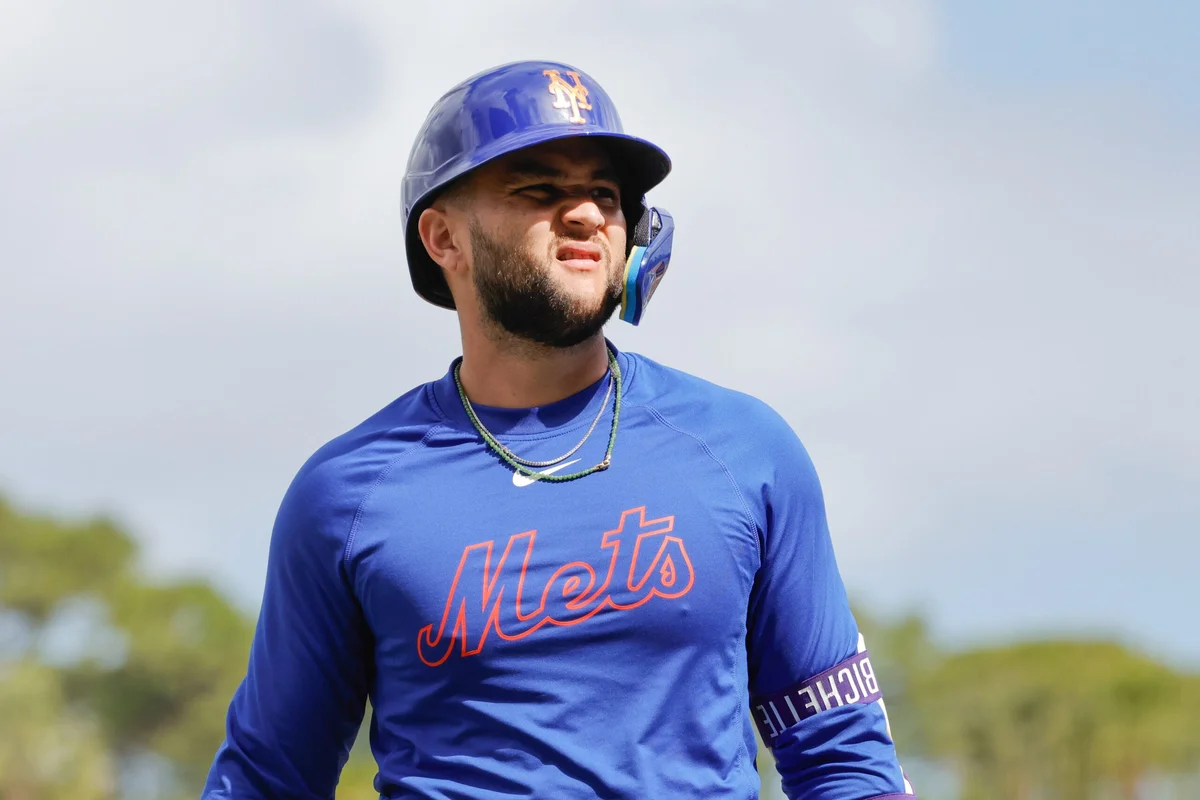
The New York Mets are facing skepticism as Bo Bichette adjusts to playing third base for the first time in his MLB career during the 2026 season. Meanwhile, the Mets missed out on signing Japanese third baseman Kazuma Okamoto, who accepted a four-year, $60 million contract with the Toronto Blue Jays, adding to the scrutiny around New York’s infield decisions. Bichette’s defensive miscues and the Mets’ handling of the position have stirred doubt among fans and analysts.
Kazuma Okamoto’s Arrival in Toronto Highlights Mets’ Missed Opportunity
Kazuma Okamoto signed with the Blue Jays to become their starting third baseman, earning praise early on for his defensive skills. Okamoto, a two-time Gold Glove winner from Japan, garnered positive attention for his smooth and reliable fielding, a key factor in Toronto’s run to the 2025 World Series. His “soft hands” and steady glove work have become a point of contrast to the Mets’ ongoing challenges at third base.
Kazuma Okamoto, third baseman, Toronto Blue Jays First impression: soft hands over there pic.twitter.com/6ji9QZJUHf
Despite his defensive strengths, Okamoto’s transition to MLB pitching remains untested, which partially explains the Mets’ hesitation in pursuing him given their concerns about offensive adaptation from Japanese hitters.
Bo Bichette Faces Intense Criticism Over Defensive Adjustments
Bo Bichette’s move to third base has been met with intense scrutiny after a notable misthrow in his first game as a Met, where his errant throw pulled first baseman Jose Rojas off the bag, preventing the completion of a tag. This error has fueled critics eager to highlight Bichette’s defensive struggles at the new position, despite the fact he has never played third base professionally before.
In his first game as a Met, Bo Bichette’s throw pulls first baseman Jose Rojas off the bag, and he can’t complete the tagBichette will be playing third base for the first time in his career this season pic.twitter.com/f2Yij2mOdy
Supporters of Mets players have noted that some of the defensive plays criticized were borderline challenging given the infield positioning, and point out that expectations may be unrealistically high so early in Bichette’s transition.
Comparisons With Other Position Changes Highlight Mets’ Unease
Fans and analysts have also compared Bichette’s adaptation to other recent position switches within the Mets organization. For example, Nick Castellanos, who has never played first base in his MLB career, received praise for a diving stop, showing a smoother transition than Bichette’s rocky start at third base.
Nick Castellanos looking good at first base, a position he has never played in his MLB career pic.twitter.com/2qbip9SEyn
This juxtaposition adds to the pressure on Bichette and fosters a perception among some observers that the Mets’ third base situation is a significant liability early in the season.
Contextual Challenges Behind Mets’ Third Base Decisions
The Mets’ cautious approach to pursuing Japanese talent like Munetaka Murakami, along with their decision not to aggressively chase Okamoto, stems from concerns about offensive adaptation and contract length preferences. At third base, Brett Baty was initially viewed as the primary option, and moving him off the hot corner would have required a very compelling reason, which Okamoto’s uncertain MLB offensive potential did not provide.
Thus, the Mets chose Bichette, a more offensively proven player, for third base, despite his defensive inexperience there. This decision has led to polarized opinions and intensified scrutiny, especially given the vocal “LOLMets” critics who focus sharply on any perceived team missteps.
Additional Defensive Moves Stir Fan Debate Around Mets Infield
Jorge Polanco’s move over to third base has sparked further fan discontent, as some supporters lament the offseason departure of Pete Alonso, who was once a cornerstone of the Mets’ offense. Polanco, often criticized for his defensive performance at second base, has not alleviated concerns at the corner infield spot, leading to more heated discussions among Mets fans.
As opposing fans and analysts continue to monitor these defensive experiments, the Mets face a challenging task in balancing offensive contributions with improving infield defense to remain competitive this season.
Looking Forward: Mets’ Defense and Offensive Balance Will Shape Season Narrative
The Mets’ handling of the third base position this season reflects broader organizational decisions shaped by contract constraints and player versatility. Bo Bichette’s ongoing defense challenges highlight the difficulty of position changes at the highest level, while the Blue Jays’ successful acquisition of Kazuma Okamoto underscores the delicate balance between offense and defense in roster construction.
How Bichette adapts throughout the season and whether the Mets can stabilize their infield defense will be major factors influencing the team’s overall performance. Fans and critics alike will watch closely as this story unfolds, underscoring the significance of third base for New York’s 2026 campaign.
Kazuma Okamoto, third baseman, Toronto Blue Jays
First impression: soft hands over there pic.twitter.com/6ji9QZJUHf
— Jayson Stark (@jaysonst) February 19, 2026
In his first game as a Met, Bo Bichette's throw pulls first baseman Jose Rojas off the bag, and he can't complete the tag
Bichette will be playing third base for the first time in his career this season pic.twitter.com/f2Yij2mOdy
— Talkin' Baseball (@TalkinBaseball_) February 21, 2026
Nick Castellanos looking good at first base, a position he has never played in his MLB career pic.twitter.com/2qbip9SEyn
— Talkin' Baseball (@TalkinBaseball_) February 20, 2026
