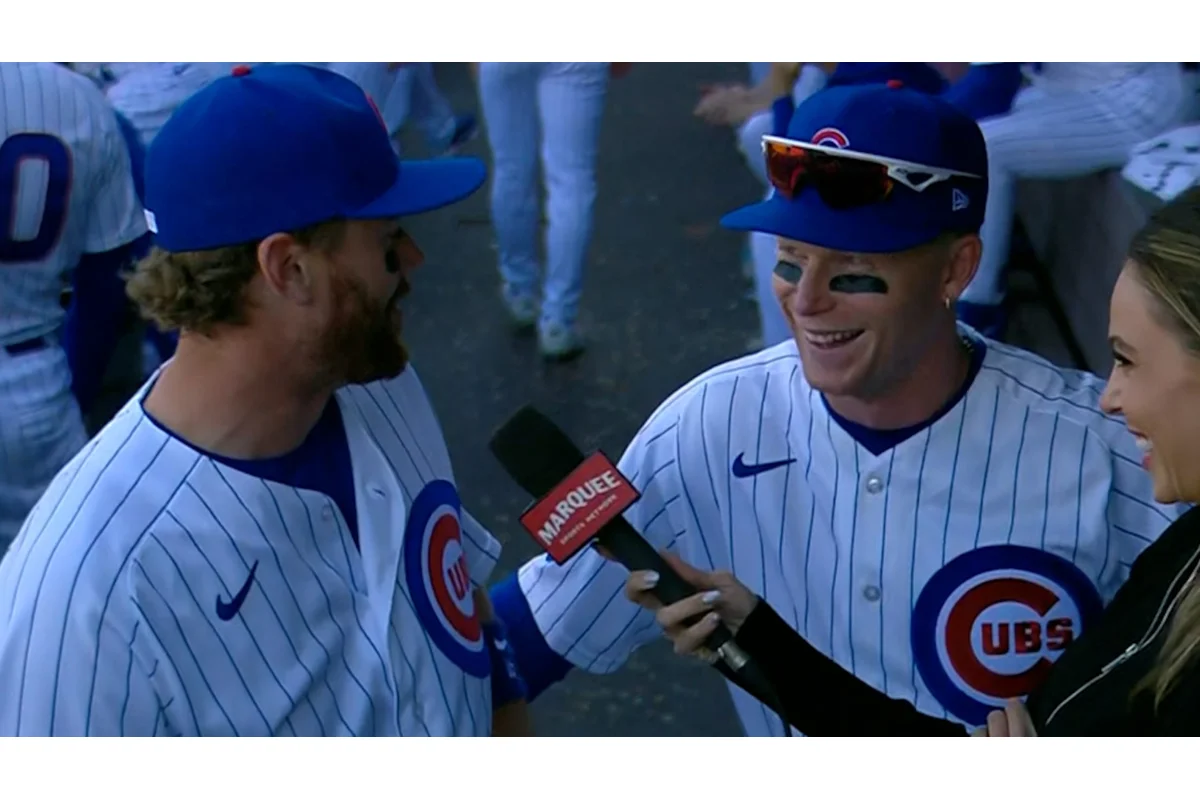
Chicago Cubs’ Pete Crow-Armstrong openly battles intense internal pressure. [Image Source: MLBSTATIC]
Chicago Cubs center fielder Pete Crow-Armstrong, often called PCA, stands out for his candidness about the intense pressure young players endure in the major leagues. Approaching his 24th birthday, Crow-Armstrong openly discusses the mental and emotional challenges that come with trying to meet high expectations in Chicago’s competitive baseball environment. The rising star’s transparency shines a light on the Chicago Cubs internal pressure that weighs heavily on emerging talent like himself.
Strong Start Followed by a Tough Second Half for Crow-Armstrong
During the 2025 season, Crow-Armstrong showed flashes of brilliance that stirred MVP discussions, with 25 home runs, 27 stolen bases, and 71 RBIs by the All-Star break. His defensive performance also earned praise as he started in his first All-Star Game. However, the second half of the season saw a significant decline in his offensive output as he managed only 6 home runs, 24 RBIs, and 8 stolen bases after the break. Despite maintaining his solid defense, Crow-Armstrong struggled at the plate, visibly expressing his frustration through actions like flinging helmets and kicking dirt during games.
Facing the Mental Toll of Baseball’s Demands
One aspect that endears Crow-Armstrong to fans is his emotional honesty. He is unafraid to express how internal struggles affect him personally, making his highs more exhilarating and his lows more relatable. In a recent interview with Wayne Drehs for Chicago Magazine, Crow-Armstrong admitted,
Image of: Chicago Cubs
“That’s the stuff that keeps me up. It’s never because I went 0 for 4 that I can’t sleep. It’s always because I’m embarrassed. Pissed and embarrassed,”
revealing how deeply he feels the repercussions of his performance. He also acknowledged,
“I don’t throw my stuff all around and spaz out to show people I give a shit. What it shows is that it’s something I still need to work on.”
These emotional reactions seemed to have contributed to his inability to regain offensive consistency after the All-Star break.
Crow-Armstrong elaborated on the difficulty of maintaining success in baseball:
“What’s undeniable is that baseball is too hard to go out there every day and succeed. That is for some reason the one thing I can’t yet rewire in myself. It’s harder than any mechanical change or anything that I’ve had to fix… I’m just lacking in that area. I’m a little late to get there. That’s about growing up and having the self-discipline to be a better teammate. I need to keep it present and forward-thinking instead of dwelling all the time on what I could have done better.”
Struggles Affecting Technique and Decision-Making
The latter half of the 2025 season was marked by PCA’s mental battles festering internally, which then influenced his mechanics and approach at the plate. Crow-Armstrong admitted to The Athletic that one of the biggest issues was poor swing selection as he tried to force his way out of the slump. He said,
“I know what I do well. I know what I don’t do well. I know that I chase. I know I can get away with hitting bad balls and doing damage on bad balls, but there is no consistency there. It’s very sporadic.”
In response, the Cubs and Crow-Armstrong have focused this offseason on improving consistency both mentally and physically, aiming to develop a more stable approach to the plate and a calmer mindset during play.
John Mallee, the Cubs assistant hitting coach, underlined the young star’s competitive nature and emotional investment in the team, stating to Wayne Drehs,
“He is one of the most competitive players I’ve ever been around. He shows his emotions. He never wants to let his teammates down. So when he fails, he’s such a team guy and wants to win so bad he takes it out on himself.”
Growth Through Acceptance and Self-Compassion
Crow-Armstrong’s forthrightness about his internal struggles is a sign of maturity rather than weakness. Rather than hiding his vulnerabilities, he embraces them as part of his journey toward becoming the player and teammate he aspires to be. Writing for The Players’ Tribune during his rough patch last September, he shared,
“I just want to be the best Cub I can be,”
and explained,
“And how do I do that when I’m not being the ballplayer I need to be? I’m workin’ on that. I promise… Because I know what it means to wear this jersey. I know the responsibility that comes with it. I have for a long time… I’ve got to give myself some grace. Stop trying to force it. Accept how I don’t have all the answers — I think it’s OK to do that.”
He concluded with a hopeful declaration:
“And I think that when the time comes, when those big moments come, you’re going to see the real ballplayer I am. And you’re going to see the type of Cub I want to be.”
Looking Ahead: What This Means for the Chicago Cubs
Crow-Armstrong’s open dialogue about the pressures he faces offers an important window into the Chicago Cubs internal pressure that challenges many young players destined for stardom. His journey underscores the demanding nature of professional sports, where mental toughness and emotional resilience are as crucial as physical skills. The Cubs organization’s recognition and support of his growth will be key to helping him leverage his undeniable talent into sustained success. Fans and analysts alike will be watching closely in the upcoming seasons to see how PCA channels this experience into becoming a cornerstone of the franchise.