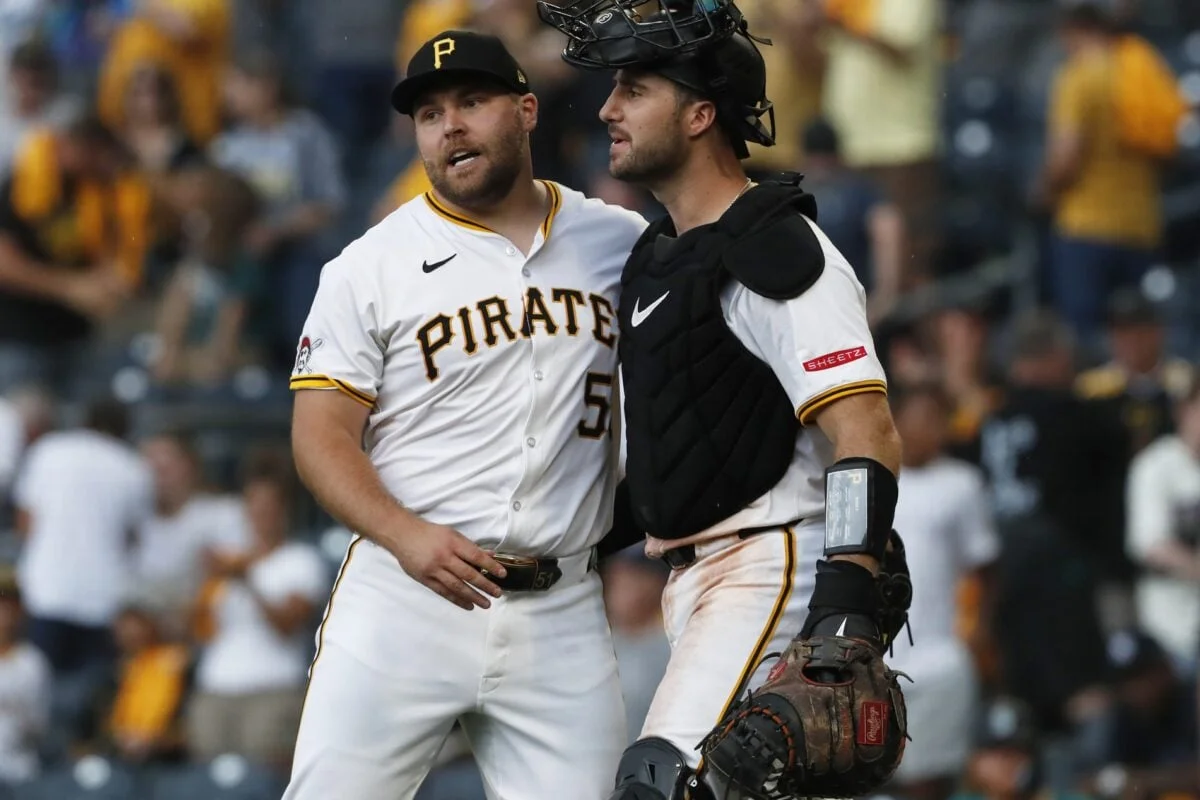
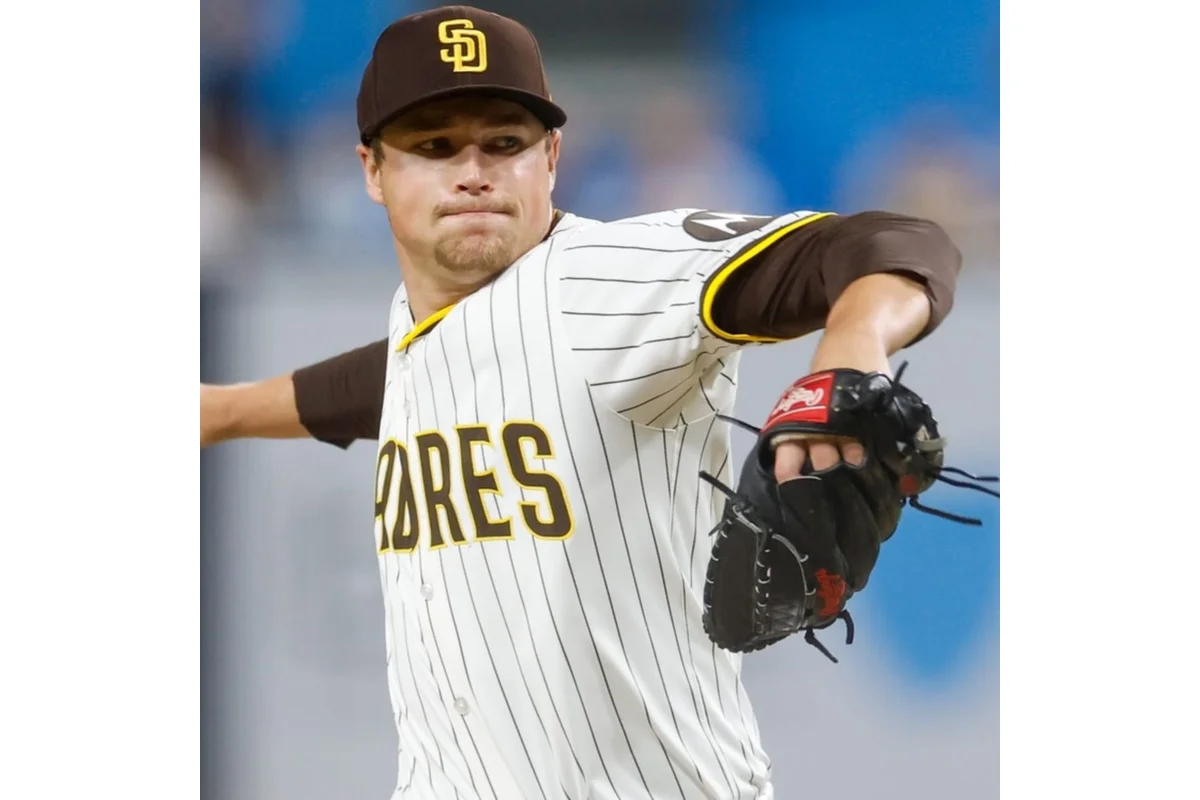
David Bednar delivering his signature splitter pitch during spring training. [Image Source: LASTWORDONSPORTS]
Yankees closer David Bednar’s distinct splitter pitch traces back to a key influence during his time in the Padres organization, where he was introduced to the technique by Japanese pitching legend Hideo Nomo. This was not simply an adoption of a common pitch but a direct inheritance from Nomo, who served as a special assistant in San Diego and profoundly shaped Bednar’s approach. Bednar’s splitter, a crucial weapon complementing his 98-mph fastball and a curveball in the high 70s, has developed into a swing-and-miss pitch clocked in the low 90s.
Bednar described his grip on the splitter as
“a little bit of a unique grip.”
He explained,
“I use more of the seams on the splitter, which I found is not quite as traditional. (Nomo’s) hands are probably a little bigger — I don’t have enormous hands. But I really like it because I can still think about being aggressive, like a fastball down, then just let the grip do the work and trust it.”
Passing the Pitch Down Through Baseball’s Ranks
After Bednar rose to prominence as one of the game’s elite closers with the Pittsburgh Pirates, his splitter pitch became part of a lineage extending beyond him. Bednar worked closely with Justin Meccage, the Pirates’ bullpen coach through 2024, who later took the knowledge to the Brewers’ Triple-A team, the Nashville Sounds. There, Meccage taught the splitter to Tobias Myers, who joined the Mets organization last month as he shifted into a starting role.
Myers credited this pitch for his breakout performance last season. During his final 16 appearances, he posted a 2.64 ERA while tallying 23 strikeouts across over 30 innings. Myers’ opponents hit just .108 against his splitter, which generated a 39.4% whiff rate. He acknowledged the pitch’s impact, saying,
Image of: David Bednar
“Not like it’s a crazy pitch alone. It’s just that I can execute that pitch a lot better than I can the previous changeup I was throwing. If I can go out there and use it consistently, throw it whenever I want, in any count — righty, lefty — I think that opens up a lot of doors for me.”
—Tobias Myers
Upon learning about Myers’ success with the grip he once used, Bednar responded with a smile, saying,
“That’s cool to kind of pass it forward.”
Overcoming Early Challenges Through the Splitter
Bednar’s journey with the splitter began as a remedy to his own struggles with the changeup. He recalls how quickly the pitch clicked during early training sessions with Nomo, noting,
“It was a little more nuanced than that, but when I first started to get a feel for it, you just rip it to the bottom and let it work. That pitch really helped me get to the big leagues for sure.”
Last MLB season, Bednar posted a 31.1% whiff rate, ranking in the 89th percentile league-wide, with his splitter producing an even higher 36.2% whiff rate. This mastery coincided perfectly with the Yankees’ urgent need for a reliable bullpen option ahead of last July’s trade deadline. The team’s previous closer, Devin Williams, was struggling, carrying an inflated 5.01 ERA, making Bednar an attractive solution for manager Aaron Boone.
Adjusting to the Big League Spotlight in New York
Moving from Pittsburgh’s smaller market to the high-pressure environment of Yankee Stadium posed a significant challenge. Unlike Williams, who struggled with the transition, Bednar had already confronted adversity earlier in the season when he was briefly demoted to Triple-A Indianapolis for 18 days. Upon returning to the Pirates, he excelled, recording a 1.70 ERA and 50 strikeouts over 37 innings in 39 outings, which set him up for his role in a pennant race with New York.
Although his debut with the Yankees saw him blow a save, Bednar quickly cemented his position as the team’s closer by delivering a crucial five-out save just two appearances later, striking out five hitters and ending a five-game losing streak. Boone praised Bednar’s combination of approachability and fierce competitiveness, saying,
“I love him. He’s just such a solid guy. He’s real easy-going, easy to talk to, good dude, but has that competitive fire between the lines. Give me the ball. No real ego to it — just what do you need? Let’s go.”
The manager also expressed hopes for Bednar’s leadership role, observing,
“I think more and more, he’ll become a leader down there, too. Just by the way he does things. Good work habits. Pro. I’m hoping he’s a leader now that he’s here and he’s the guy.”
Establishing Himself as a Reliable Closer
Bednar finished the season with a flawless 7-for-7 record in save opportunities and an exceptional 1.17 ERA over his last 14 appearances, securing the closer role for the Yankees. Boone described him as “low-maintenance,” a manager’s highest praise for a relief pitcher adapting seamlessly to a demanding new environment. Bednar acknowledged the challenges of joining a new team midseason, comparing it to
“drinking out of a fire hose,”
but emphasized how familiarity with the clubhouse now helps him prepare for a full season.
He also embraced the heightened expectations, reflecting,
“Obviously there’s a lot more noise here, sure. But it’s a privilege to put the pinstripes on and what an awesome opportunity. I love every second of it.”
Legacy, Influence, and What Lies Ahead
David Bednar’s splitter pitch embodies not just a specialized technique but a lineage connecting generations of baseball players, from Hideo Nomo’s influence in San Diego to Tobias Myers’ promising development with the Mets. This pitch has shaped careers and altered bullpen dynamics across multiple teams, demonstrating the power of mentorship and adaptation in the sport.
With Bednar firmly established as a cornerstone of the Yankees’ bullpen, his journey highlights the importance of resilience and evolution. His steady presence provides much-needed stability in a pressure-packed role, while his willingness to share knowledge reflects the cooperative spirit fueling baseball’s ongoing cycle of talent development. As the new season unfolds, Bednar’s splitter pitch will undoubtedly continue to be a defining weapon, influencing both his success and the next generation of pitchers striving to leave their mark.