
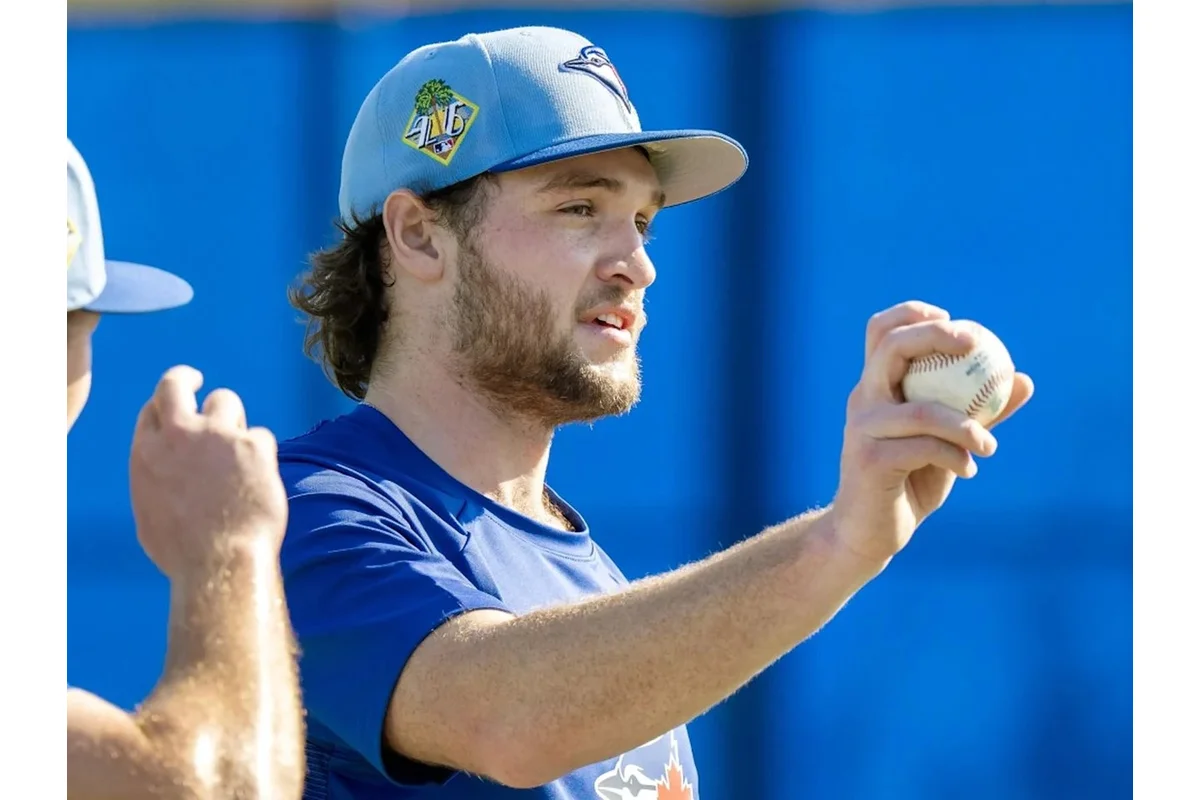
The Toronto Blue Jays are taking a cautious approach to managing Trey Yesavage’s workload in the 2026 season, prioritizing long-term development over immediate heavy usage. After an extraordinary rise last year from Class-A Dunedin to a key player in the World Series, the 22-year-old right-hander’s spring training debut remains undecided as the team aims to protect its young star’s health and performance.
Balancing Expectations with Strategic Rotation Management
Blue Jays manager John Schneider emphasized the importance of measured expectations for Yesavage, pointing out the impracticality of assigning him a full starter’s workload immediately. Schneider explained that simply giving Yesavage the same typical rotation schedule—around 32 starts or 200 innings—would not be realistic. Instead, the team plans a flexible rotation strategy to carefully monitor and adjust Yesavage’s innings throughout the season.
“We’re just trying to be strategic,”
Schneider said earlier this week.
“Looking at the broad picture, I think it would be unrealistic to say, ‘All right, Trey, first year in the big leagues, here’s your 32 starts and your 200 innings.’ We’re trying to stay aware of that, and there’s probably going to be some times where you have to hone him in a little bit if you can maneuver the rotation a little bit.”
Yesavage’s Rapid Rise and Remaining Rookie Status
Yesavage’s ascent involved progressing through multiple full-season affiliates before a September promotion to the major leagues, culminating in a pivotal playoff performance. Because his call-up occurred late in the season, he did not accumulate enough MLB service time to lose rookie eligibility, meaning 2026 will be his official rookie campaign. Despite his impressive performance in 2025, a full season at the highest level presents fresh physical and mental challenges, necessitating careful management of his pitching load.

Last year, Yesavage pitched a total of 139 2/3 innings across all levels, including nearly 28 innings during the Blue Jays’ playoff run. Such intensity underscores why the organization is cautious about imposing a traditional starter’s workload too quickly.
Flexible Approach to Season Scheduling
While other Blue Jays pitchers advance through spring training on a typical timetable, Yesavage’s preparation is deliberately more measured. Schneider reiterated that workload adjustments may include skipping starts or pushing back scheduled appearances depending on how Yesavage feels and the team’s broader strategy.
“We don’t want to pigeonhole it and say that we’re going to cut five or six starts off his season,”
Schneider added.
“If there’s a time to adjust, to skip a guy or to push a guy back, yeah. You’ve got to look at the schedule and look at what other people are doing, but I don’t want to say it’s reactionary. If he’s feeling great, then great, but history has shown it’s hard to say, ‘Hey, 22-year-old Trey, here’s 32 Major League starts, go strike out 12 every night.’”
Depth in Starting Rotation Aids Workload Management
The Blue Jays’ strong starting pitching corps offers flexibility in handling Yesavage’s workload. Their roster includes star pitchers like Max Scherzer, who recently re-signed on a one-year contract, alongside proven arms Kevin Gausman and José Berríos. Newly acquired free agents Dylan Cease and Cody Ponce are also expected to factor heavily into the rotation.
Though Shane Bieber’s season start will be delayed due to arm fatigue, he remains an important part of the staff, and Eric Lauer demonstrated reliability in a starting and bulk-relief capacity last season. This depth allows the Blue Jays to adjust their rotation as needed, lessening the pressure on Yesavage to stretch too quickly.
Implications for the Blue Jays Moving Forward
By carefully managing Trey Yesavage’s workload, the Blue Jays aim to preserve his health and maximize his potential throughout the 2026 season and beyond. Their ability to leverage a robust starter lineup not only reduces risks of early burnout for their young star but also positions the team to maintain competitiveness deep into the season. This strategic approach reflects an understanding of the challenges young pitchers face, especially those with rapid ascents like Yesavage, offering a promising foundation for both player and team success.
