

The Chicago Cubs signed veteran outfielder Michael Conforto to a minor-league contract on Monday, finalizing the move Thursday after he passed a physical. While initially appearing as a minor offseason acquisition, deeper analysis suggests Conforto might provide meaningful depth for the Cubs as they prepare for the 2026 season. With the outfield coping with uncertainties—such as Moisés Ballesteros’s delayed arrival due to visa complications and Tyler Austin’s prolonged recovery from a knee injury—Conforto’s experience could make him a valuable asset if the Cubs encounter an injury-driven shortage.
Assessing Conforto’s Recent Performance and Underlying Skills
In the 2025 season with the Dodgers, Conforto’s offensive output was below average, posting an 83 weighted runs created plus (wRC+) in 486 plate appearances. His slash line of .199/.305/.333 with 12 home runs did little to suggest a strong impact bat, especially considering his limited defensive value. However, when examining advanced metrics, Conforto’s true skill set becomes clearer. His actual weighted on-base average (wOBA) stood at .287, but his expected wOBA—a measure of the quality of contact and plate discipline—was markedly higher at .330. This negative gap of .043 was the second-largest in the majors among qualified hitters, trailing only Salvador Perez.
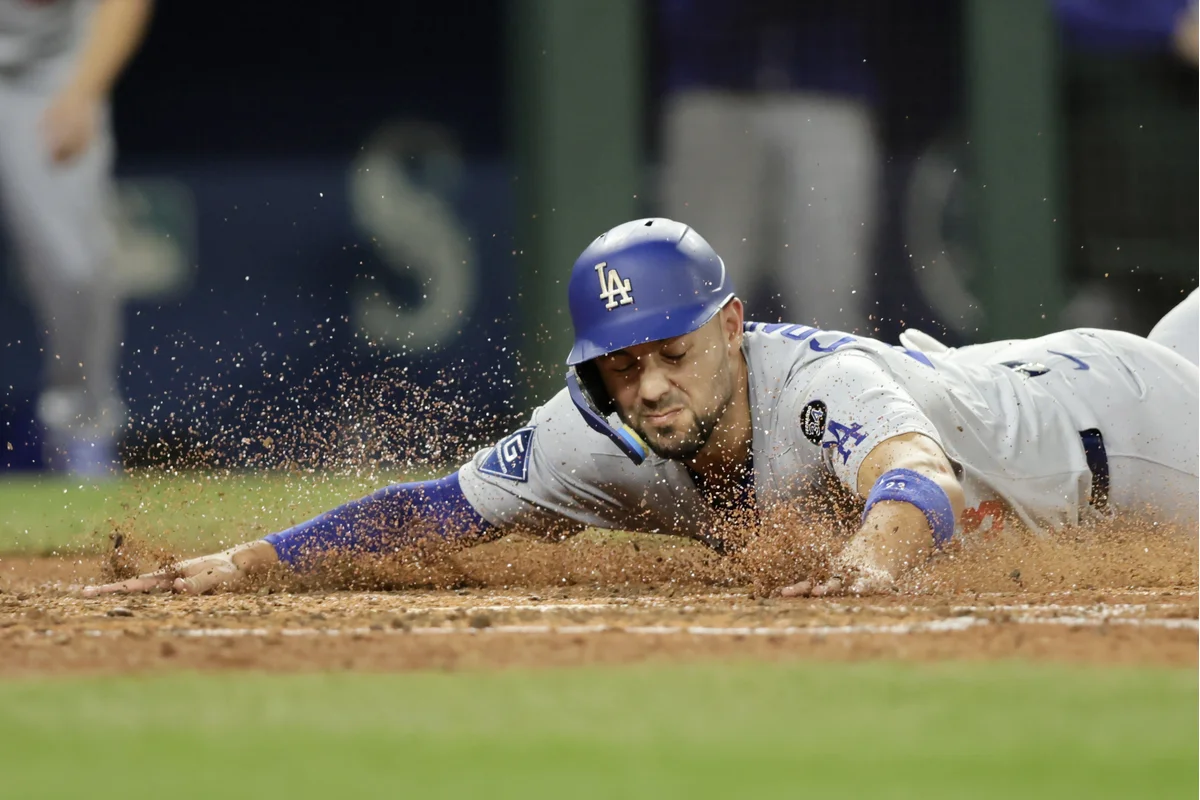
Such a discrepancy indicates Conforto consistently made solid contact and demonstrated good strike-zone discipline, but the balls found defenders more often than luck would suggest. This level of misfortune rarely persists over a full season. Considering Conforto’s career peak includes a 115 wRC+, a rebound in his offensive production remains a possibility heading into 2026.
Maintaining Bat Speed and Plate Discipline
Though Conforto is no longer the dynamic force who captivated fans with postseason heroics in 2015 or the middle-of-the-order power hitter who delivered 88 home runs from 2017 to 2019, he has retained important aspects of his game. Last season, his average bat speed measured at 74 miles per hour, ranking him in the 77th percentile among hitters. This is notable, especially given his history of injuries, since bat speed typically declines first as players age or recover from physical setbacks.
Conforto complements this with strong control over the strike zone, seldom chasing pitches out of play and maintaining a patient approach that generates walks. In a Cubs lineup already known for disciplined hitters, his style aligns well: he doesn’t need to swing aggressively to contribute but can add value by extending at-bats, wearing down pitchers, and applying pressure consistently.
In short, Conforto remains a professional competitor who can be a challenging opponent for pitchers.
Defensive Limitations and Role Flexibility
Defense stands out as the primary concern for Conforto. Last season, he posted minus-5 Defensive Runs Saved over 1,010 innings in left field, a sign of declining effectiveness. This drop-off is significant and suggests he is no longer the reliable corner outfielder teams once counted on. While it’s possible he could improve defensively, especially if mitigating hamstring issues that have affected him in recent years, his current value likely lies more in his bat than his glove.
Fortunately for the Cubs, Conforto is unlikely to be asked for extensive defensive duties. He is primarily insurance against injuries to starters like Ian Happ, Moisés Ballesteros, or Seiya Suzuki. In such scenarios, he offers a left-handed, experienced bat capable of providing depth without the pressure of regular play in the field.
Adding Support to a Championship-Minded Lineup
The Cubs don’t depend on Conforto to be a central figure in their lineup, as much of the core offensive workload will fall to players like Pete Crow-Armstrong, Suzuki, Happ, Alex Bregman, and Michael Busch. However, with setbacks affecting other outfield options such as Ballesteros, Austin, and Jonathon Long, Conforto’s presence adds an extra layer of security for a team with postseason aspirations.
With spring training still underway, the potential remains for Conforto’s timing to improve, the swing to synchronize, and the positive expected metrics to convert into tangible results. If that happens, Chicago may discover that this seemingly low-profile acquisition provides more than a simple roster fill-in, quietly enhancing the Cubs’ depth and competitive edge for the 2026 campaign.
