
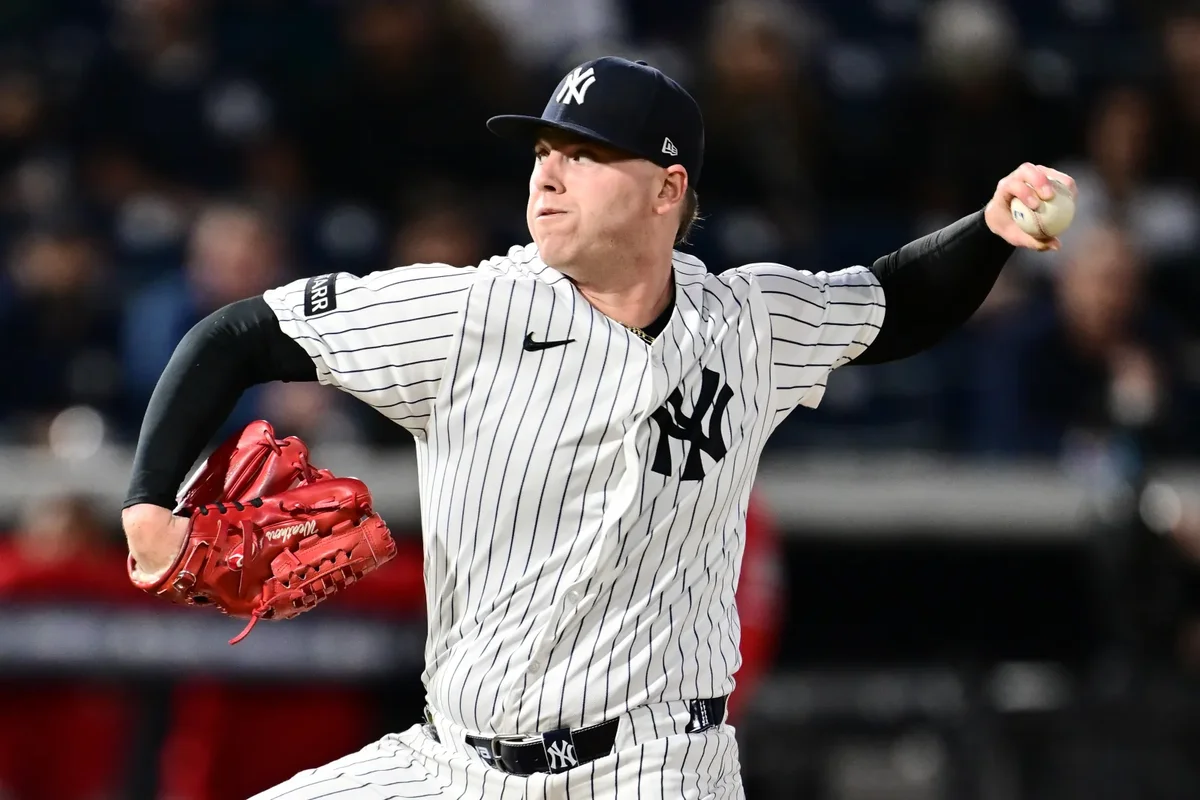
TAMPA, Fla.—In November, Trent Grisham chose to accept the New York Yankees’ qualifying offer of $22.025 million, a decision that seemed straightforward for the centerfielder. Coming off a career-best season, Grisham’s acceptance secured a major financial gain and kept him with a contending team, rather than testing free agency and risking a less favorable contract or team environment.
Having earned around $15.4 million over his previous seven MLB seasons, Grisham’s deal represented a huge leap—more than four times his prior highest single-season salary of $5.5 million. The chance to continue batting leadoff and playing centerfield for a team favored to win the American League pennant tipped the scales in favor of accepting the qualifying offer.
The Financial Upside and Competitive Appeal
Grisham’s new contract offered a rare financial windfall, highlighting how lucrative the qualifying offer can be for a player coming off a breakout year. His previous salary of $5 million last season underscored just how valuable this deal was. Beyond the money, remaining with the Yankees meant a sustained opportunity to compete at the highest level, contrasting with potential multiyear deals in less competitive teams like Anaheim, Miami, or Colorado.
At 29 years old, Grisham valued not only his paycheck but the chance to chase championships alongside teammate Aaron Judge. This combination of financial security and competitive positioning made rejecting the offer unlikely for the outfielder.
Grisham’s Focus on Winning Over Market Uncertainties
In an interview prior to a Yankees victory over Atlanta, Grisham emphasized that winning was his primary motivation.
“For me I think it boiled down to wanting to win,”
Grisham said.
“That’s really what I value most when looking at teams and going through the process. At the end of the day, we have a really good shot to win here — year in and year out, really.”
This motivation contrasts with the traditional view of qualifying offers, which were primarily seen as teams securing draft compensation while players sought larger contracts elsewhere. In recent winters, however, four players, including Grisham, opted to accept one-year qualifying offers, signaling a shift in player decision-making.
Understanding the Market Impact and Player Comparisons
Had Grisham declined the offer, the draft pick compensation attached to his signing could have severely limited his market, especially given the high contract value. Accepting the qualifying offer placed him among the highest-paid outfielders with new contracts, behind only Kyle Tucker and Cody Bellinger in the Dodgers’ lineup. Overall, Grisham tied for 12th in average annual contract value among all players who signed new deals that offseason.
Grisham described the decision as straightforward:
“It was a pretty simple process for me,”
he said.
“The market kind of made itself pretty evident early, and having that understanding, it was as easy as it could be.”
Grisham’s Approach to Analytics and Preparation
Despite the growing prevalence of data-driven strategies in baseball, Grisham prefers a more traditional approach. When asked about analyzing Yankee Stadium data to maximize his performance for the upcoming season, he acknowledged, “I personally don’t crunch numbers.”
“I’m more of an old-school guy. I don’t try to overthink stuff. Paralysis by analysis is a real thing,”
Grisham said. This stance is somewhat unconventional in a sport increasingly dominated by analytics, but it aligns with his mindset as a slugger who often avoids batting gloves and focuses on scouting reports and video rather than advanced metrics.
Last season proved the effectiveness of his strategy, as he posted career highs in home runs (34), RBIs (74), slugging percentage (.464), OPS (.811), and OPS+ (125).
Grisham further explained his approach by highlighting experience over statistical immersion:
“It’s definitely a learned behavior. Having played a while, and growing up in the first stages of [analytics], from being around it so much, you have a very good understanding. You don’t really need to, in my opinion, with a personality like mine, be in the weeds with it. But for me, it’s always about keeping the main thing the main thing.”
Traditional Preparation and Trusting Instincts
When it comes to game preparation, Grisham subscribes to the timeless routines of baseball players:
“Just what I guess baseball players have been doing since the beginning of time,”
he said.
“Everybody prepares differently, but nothing’s new under the sun. Guys have been doing it for 100 years.”
He prefers maintaining a general awareness rather than delving into exhaustive predictions based on recent pitching trends.
“I don’t like to play that game. I just like to have a general awareness of what’s going on, trust my instincts, trust my process and go,”
Grisham added.
Grisham’s Quiet Impact on the Yankees and Relationship with Aaron Judge
While Grisham sometimes appears laid-back on the field—earning the nickname “The Big Sleep” from Yankees manager Aaron Boone—he remains an attentive teammate and key contributor. His close friendship with three-time MVP Aaron Judge extends beyond the field, as they share a locker room at Steinbrenner Field and communicate valuable in-game information.
Judge praises Grisham’s knowledge and insight:
“He’s a guy that knows his craft, perfects his craft, and it’s fun to watch,”
Judge said.
“He’s knowledgeable in the outfield, he’s knowledgeable at the plate. Maybe we talked about a guy’s fastball before the game, he’ll give me something like, hey, it’s not moving that much or it’s getting on you a click early. He’s just always giving me good little nuggets like that. He knows the game inside and out.”
General Manager’s Perspective and Outlook for the Season
Yankees general manager Brian Cashman has expressed optimism about Grisham’s value to the team, referring to him as a bargain on MLB Network Radio. While that label may be an overstatement, reaching near his previous power numbers would constitute a successful season for both player and organization.
Before the start of the season, Grisham’s decision to accept the qualifying offer positioned him as a clear offseason winner. As Opening Day approaches, Yankees fans and analysts alike will be watching to see if Grisham can maintain his upward trajectory and contribute to a championship pursuit.
