
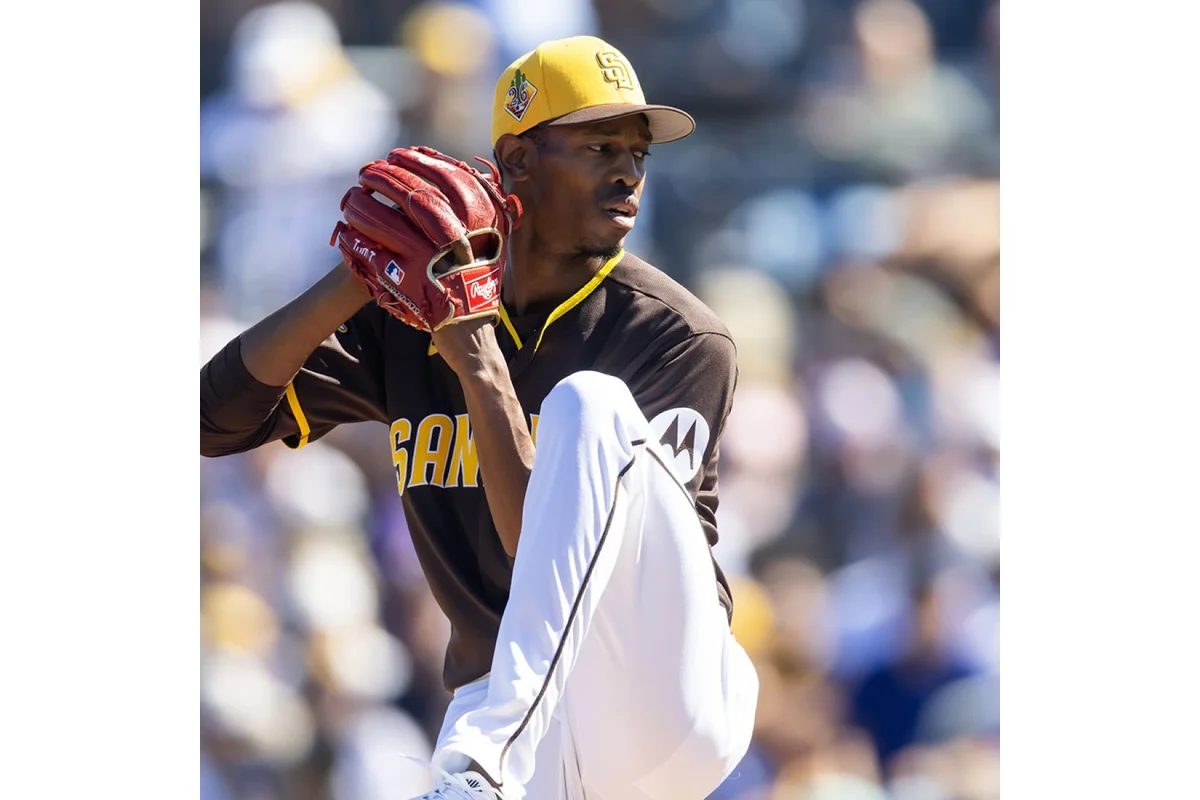
On the first day Triston McKenzie appeared in a Padres uniform during a game, his fastball velocity surprised everyone, reaching as high as 98.7 mph—a speed beyond his previous career best of 96.5 mph. This sudden increase compels the San Diego Padres to reconsider the role he could play this season, raising the critical question: is McKenzie’s pitching arm truly back after years of health setbacks?
The Padres initially signed McKenzie more as an insurance policy than a frontline pitcher, viewing him as a long shot capable of providing useful innings if his former form never returned. His reputation from 2020 to 2022 hinted at potential, especially given his renewed connection with Padres pitching coach Ruben Niebla, who coached him in Cleveland. However, the extraordinary jump in velocity suggests McKenzie might be more than just a depth option.
Shift in Padres’ Pitching Strategy Due to McKenzie’s Return
San Diego’s early plans for their pitching staff prioritized managing innings carefully and building depth, limiting risk by avoiding reliance on uncertain bounce-back candidates. McKenzie fit this mold as a low-risk, non-roster invitee expected to contribute modestly if healthy. Yet the velocity he displayed indicates his elbow is producing power again, contradicting the notion he’s still protecting an injured arm.
In recent years, McKenzie’s arm troubles have visibly affected his performance. A UCL sprain cost him much of 2023 and spilled into subsequent seasons, driving his fastball average down to roughly 91.1 mph by 2024. This decline fueled doubts about his physical condition and his ability to pitch beyond mere survival mode. Now, with his velocity nearing 99 mph, McKenzie challenges the Padres’ assumptions about his ceiling and reliability.
Implications for the Padres’ Rotation and Season Outlook
This unexpected velocity rebound reshapes the Padres’ assessment of McKenzie’s value. If his arm is genuinely revitalized, he transforms from a fallback option into an important strategic asset who could influence roster decisions significantly. This may reduce pressure on other starters currently viewed as safer bets or allow more flexible workload management across the rotation.
The team might shift its approach to spring training from cautious evaluation to competitive positioning, as McKenzie’s renewed strength opens the possibility of a more impactful contribution when the season begins. Although his performance in his Padres debut included some struggles, San Diego views those early inconsistencies as acceptable if the underlying velocity gains prove sustainable.
By pushing the edge of their original strategy, McKenzie forces the Padres to confront tougher choices as they balance stability with the potential reward of a returning fastball that could help them chase deeper postseason success.
