
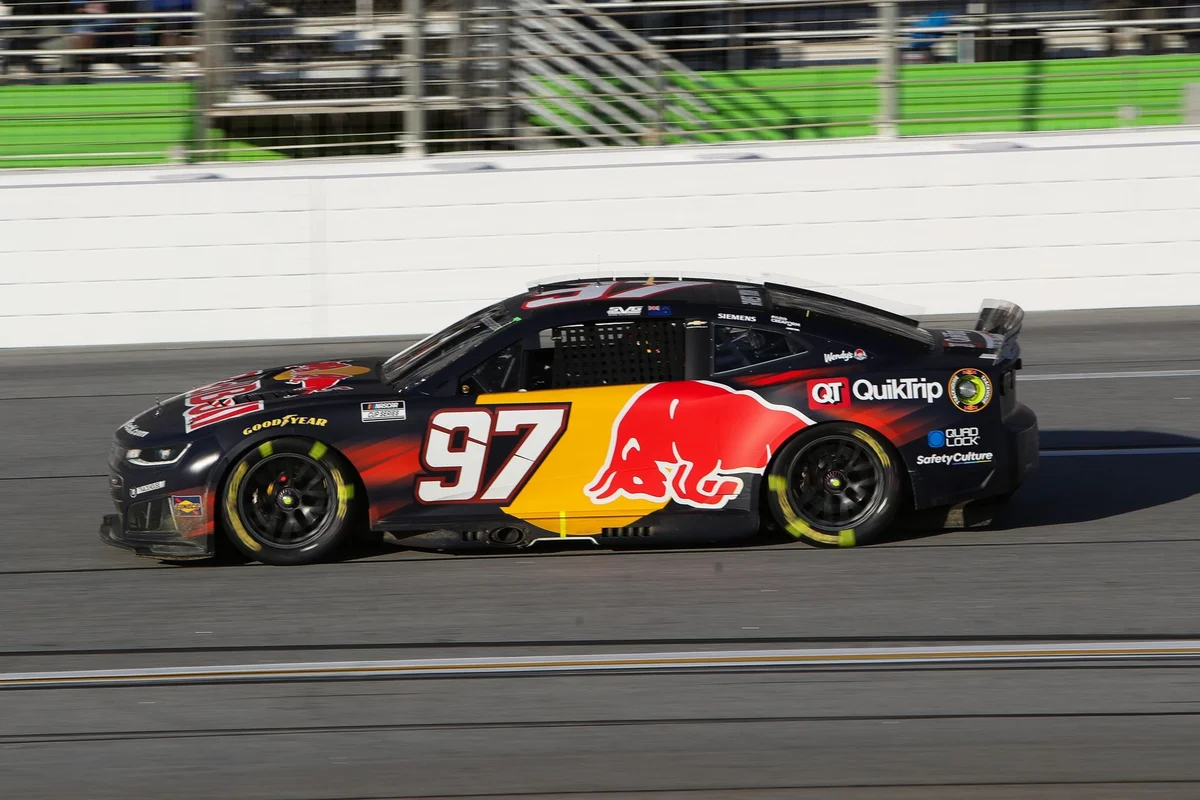
Kyle Larson’s aggressive maneuver on the last lap of Stage 2 in the recent Autotrader 400 at EchoPark Speedway caused a major collision involving Shane Van Gisbergen, ending Larson’s race with significant damage. Denny Hamlin provided a detailed breakdown of the incident, explaining the sequence and contributing factors that led to the crash. The intense moment unfolded Sunday in Atlanta, highlighting the challenges drivers face in close-quarters racing.
Understanding the Critical Moment Between Larson and Van Gisbergen
During the race, Larson shifted from the top of the track to the bottom, making contact with Shane Van Gisbergen’s No. 97 car and sending it sliding through the infield. Larson’s No. 5 Chevrolet absorbed heavy damage, forcing him to finish in 32nd place and suffer yet another DNF at the Atlanta circuit. Hamlin described the move as a clear miscalculation on Larson’s part and explored the confusion it caused between Larson and his spotter immediately after.
“I saw him and his spotter saying, ‘I told you three-wide,’ and then Kyle said something like, ‘I didn’t know I was three-wide.’ It’s an interesting spot. I’m trying to figure out how to justify it here.” – Denny Hamlin
Hamlin further highlighted the problem drivers encounter when cars are side by side but separated by distance, creating a blind spot situation that can hinder visibility.
“Certainly when the two cars are separated that far side by side — you know, your side by side with someone, but there’s 30 feet between you — that’s like when you’re going down the highway and someone’s in your blind spot,”
“You have your mirror. You have your camera on the back of the car. But that’s only got a certain field of view. That car is here. So it’s too far away for him to just turn his head and see it. It is a blind spot, sort of.” – Denny Hamlin
Hamlin’s Critique on Larson’s Risky Move
Despite explaining the challenge of spotting another car in such conditions, Hamlin expressed strong reservations about the decision Larson made by moving sharply from the high line to the low line so close to the finish.
If you didn’t see it, which appears he didn’t see it, what were you gaining by going from the very top of the racetrack all the way to the bottom?
This aggressive strategy baffled Hamlin, who questioned Larson’s motivation since the race was nearing its conclusion with just one lap remaining.
Larson’s Admission and Van Gisbergen’s Response
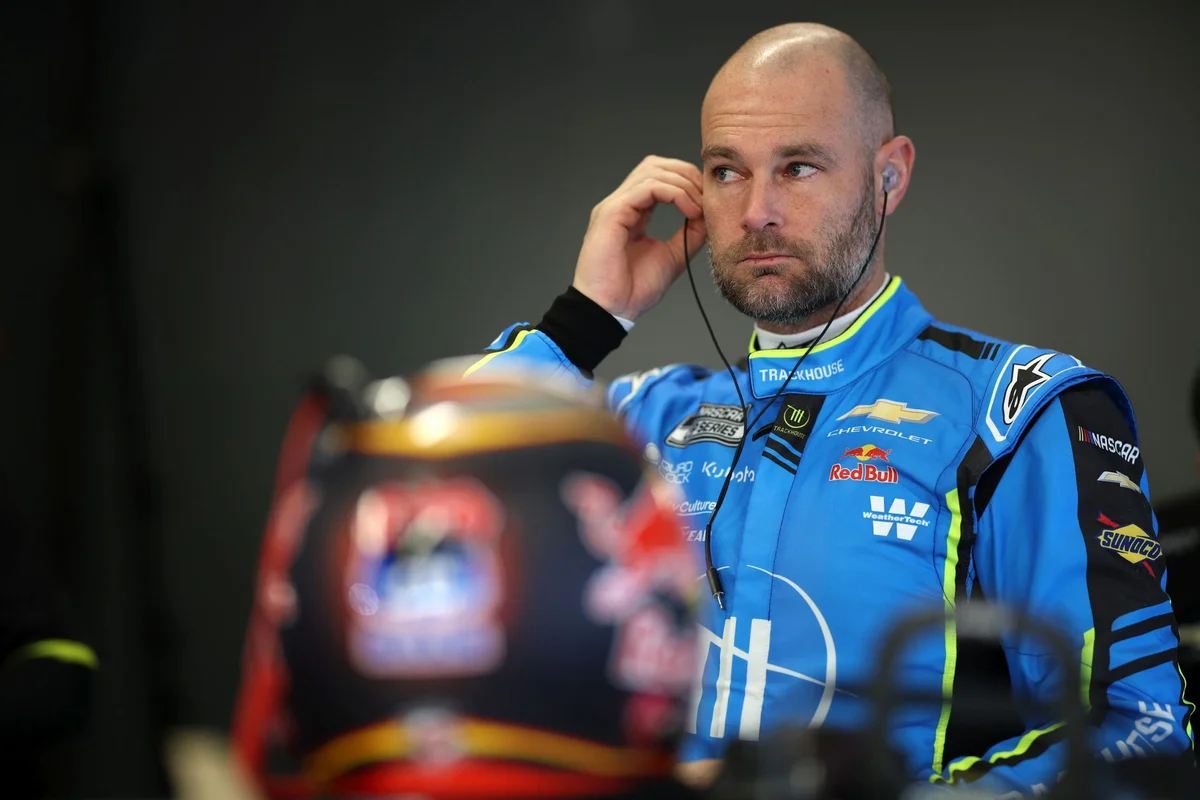
Kyle Larson accepted full responsibility for the crash, acknowledging that he failed to realize Shane Van Gisbergen had not cleared Tyler Reddick, which contributed to the contact. Larson admitted he should have paid closer attention rather than reacting instinctively during the heat of the moment. Meanwhile, Van Gisbergen’s radio comment encapsulated the frustration stirred by the crash.
“That was a lot of drama for one point.” – Shane Van Gisbergen
The Broader Impact of the Incident on Larson’s Race and Momentum
Prior to the collision, Larson had been one of the dominant racers, leading a race-high 47 laps. This incident abruptly ended his strong performance and added another DNF to his record at the reconfigured Atlanta track—his sixth in nine starts. The crash underscored how quickly fortunes can shift on a demanding drafting-style racetrack, where momentum is critical and mistakes can be costly.
The crash involving Shane Van Gisbergen and Kyle Larson at EchoPark Speedway not only removed a top competitor from contention but also sparked vigorous conversations about driver decision-making and awareness under pressure. As Larson and Van Gisbergen reflect on the event, the racing community remains attentive to how such incidents will influence strategies in upcoming Atlanta events and other similar tracks.
