
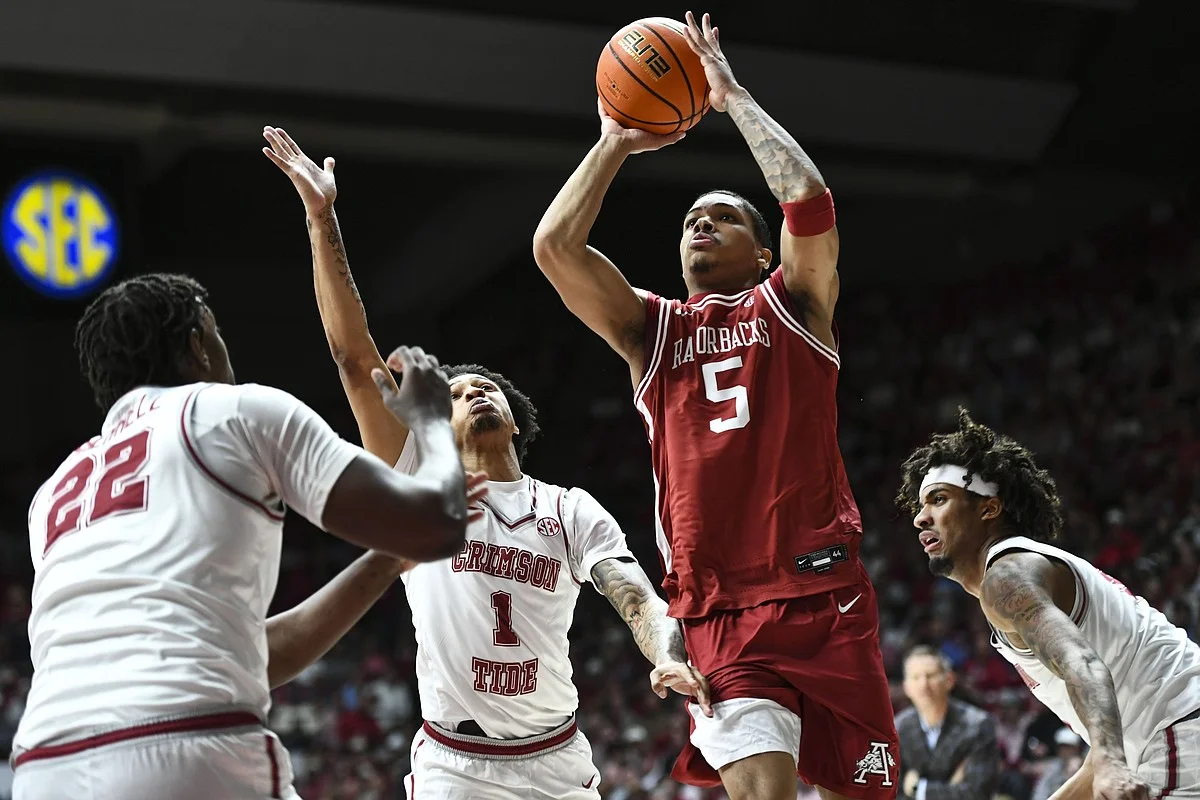
Charles Bediako has been at the center of a major discussion in men’s college basketball due to his eligibility status with the NCAA. After playing professionally in the G League, he returned to Alabama to finish his degree and sought to resume his college basketball career. His request to play again was influenced by Baylor’s recent signing of James Nnaji, prompting Bediako to aim for a similar opportunity under the NCAA’s guidelines.
Despite his intentions, Bediako’s eligibility was widely contested. Prominent college basketball coaches—such as Arkansas’ John Calipari, Michigan State’s Tom Izzo, Purdue’s Matt Painter, Illinois’ Brad Underwood, and UConn’s Dan Hurley—expressed strong opposition to allowing former professional players to return to college play. They advocated for stricter eligibility rules, causing the NCAA to deny Bediako’s request to play at Alabama.
Legal Battles and Court Rulings Affecting Bediako’s Playing Status
Bediako challenged the NCAA’s ruling by filing a lawsuit, leading to a temporary restraining order that permitted him to participate in five games under Alabama coach Nate Oats. However, the judge who initially ruled in Bediako’s favor had ties to Alabama as both an alumnus and a donor, raising concerns over impartiality. Subsequently, a different judge overturned the restraining order, reinstating Bediako’s ineligible status and preventing him from continuing to compete for Alabama.
Throughout this legal saga, speculation arose that Alabama could face penalties for playing Bediako during the time he was temporarily allowed to compete. Yet, the NCAA has now clarified that no disciplinary measures will be taken against the Crimson Tide for those games.
NCAA Confirms No Punishment for Alabama Regarding Bediako’s Participation
According to a recent update shared by Crimson Tide Sports on Instagram, the NCAA will not impose sanctions on Alabama for playing Charles Bediako. As detailed by reporter Matt Norlander, the NCAA committee chair confirmed that the selection committee will treat the situation as part of the “normal player availability process.” This means that Alabama’s involvement with Bediako will not affect the team’s standing or result in any punishment from the committee overseeing college basketball selections.
“New news from the NCAA as they will NOT be punishing Alabama for playing Bediako.
Via Matt Norlander
‘Key detail from the committee room: NCAA cmte chair says the actual selection committee “will apply our normal player availability proces,” re: Charles Bediako.
The selection committee will NOT hold anything/punish Bama for playing Bediako.”
Fan Reactions Highlight Division Over NCAA’s Decision
The resolution sparked a variety of responses from fans online, revealing a mix of frustration, sarcasm, and approval. Some insisted on extending similar restrictions to Euro League players, indicating dissatisfaction with perceived inconsistencies in NCAA eligibility enforcement. Others criticized the NCAA as an ineffective organization that fails to uphold fair standards.
“Good. Now ban the Euro League players,” one fan suggested.
“Figures,” one fan said sarcastically.
Several supporters defended Alabama by emphasizing that the NCAA did not have control over Bediako’s temporary participation and that the team stopped playing him once he was declared ineligible. One fan noted:
“It’s pretty hard to punish Alabama when the NCAA had no say in him playing temporarily,” another claimed.
“And they won’t punish anybody else for doing exactly what we did, complete joke of an organization,” one fan called out the NCAA.
“There’s nothing they can do. Alabama never played an ineligible player. When he was declared ineligible, they stopped playing him,” one fan explained.
Implications for NCAA Eligibility Rules and College Basketball
The Charles Bediako case underscores ongoing tensions regarding eligibility rules for players with professional experience aiming to return to college basketball. The NCAA’s decision not to discipline Alabama reflects the complexities involved when legal challenges intersect with eligibility regulations. Moving forward, this situation may influence how the NCAA reviews similar cases involving professional play and re-entry into college programs.
Coaches like Dan Hurley and Matt Painter, who were vocal opponents of granting eligibility to former professionals, have pushed for clearer and potentially stricter guidelines. The controversy also raises questions about the consistency and transparency of NCAA enforcement policies, which could impact recruiting, player decisions, and the overall integrity of collegiate basketball competitions.
With the NCAA committee maintaining that normal protocols will apply, teams and players are likely to watch future eligibility debates closely, wondering how precedent set by the Bediako case might shape decisions in upcoming seasons.
