
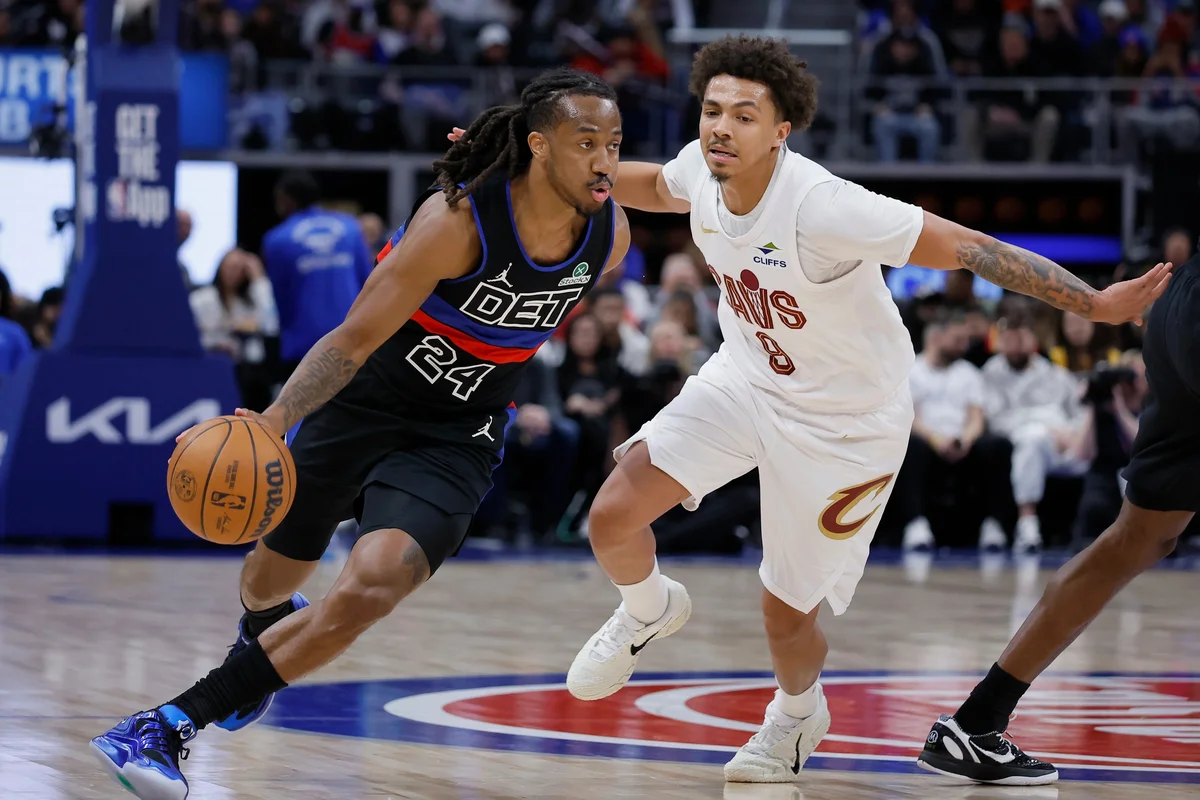
Daniss Jenkins, a key figure for the Detroit Pistons, has been instrumental in their success this NBA season, stepping up as a crucial backup point guard. However, as the playoffs approach, Jenkins is struggling with a significant slump that threatens the Pistons’ momentum and may force head coach J.B. Bickerstaff to reconsider his rotation strategy.
Jenkins’ Recent Struggles Threaten His Role for the Postseason
Since the All-Star break, Jenkins’ performance has dropped sharply. Over six games, he has averaged only 5.3 points and 0.8 assists in approximately 17 minutes per contest, with an alarming 35.5% True Shooting percentage. His shooting has been particularly poor, connecting on just 28.6% of his field goals (12-of-42) and 18.2% from three-point range (2-of-11). Notably, he has committed more turnovers (6) than assists (5) during this period. The Pistons have notably struggled during the minutes Jenkins has played, losing the point differential by 13 points, a stark contrast to their overall 5-1 record and plus-47 differential in those same games.
While slumps are common in the long NBA season, Jenkins’ dip in productivity is especially concerning given his status as an emerging player without an extensive track record of consistent contribution. This decline calls into question his readiness to deliver in high-pressure playoff settings.
Potential Backcourt Adjustments if Jenkins Fails to Rebound
If Jenkins does not recover his form before the postseason begins, Detroit may need to explore backcourt alternatives. Marcus Sasser and Kevin Huerter stand as potential candidates to regain rotation minutes. Both possess stronger shooting credentials, which could provide a much-needed offensive boost. Though Huerter lacks Jenkins’ ball-handling and playmaking skills and Sasser does not match his physical presence and size, their ability to make shots may outweigh these drawbacks in Detroit’s current offensive struggles, especially against tougher defenses.
Earlier in the season, Jenkins was a reliable outside shooter, converting 37.8% of his three-point attempts in his first 39 games. However, his efficiency from deep has fallen to just 26% since the beginning of February—a concerning trend that undermines his value as a perimeter threat.
Roster Flexibility and the Impact on Detroit’s Playoff Position
Despite Jenkins’ struggles, the Pistons maintain a solid lead with a 5.5-game cushion over the No. 2 seed Celtics, granting the team some leeway to experiment with lineups as the regular season winds down. This flexibility allows coach Bickerstaff to potentially reduce Jenkins’ minutes until he regains his shooting touch, while evaluating other players who might better serve the team’s playoff ambitions.
How Jenkins responds in the coming weeks will be crucial, not only for his place in the lineup but also for the Pistons’ positioning in the postseason. With the playoffs looming, Detroit faces a critical crossroads in balancing player roles to maximize their chance of success.
