
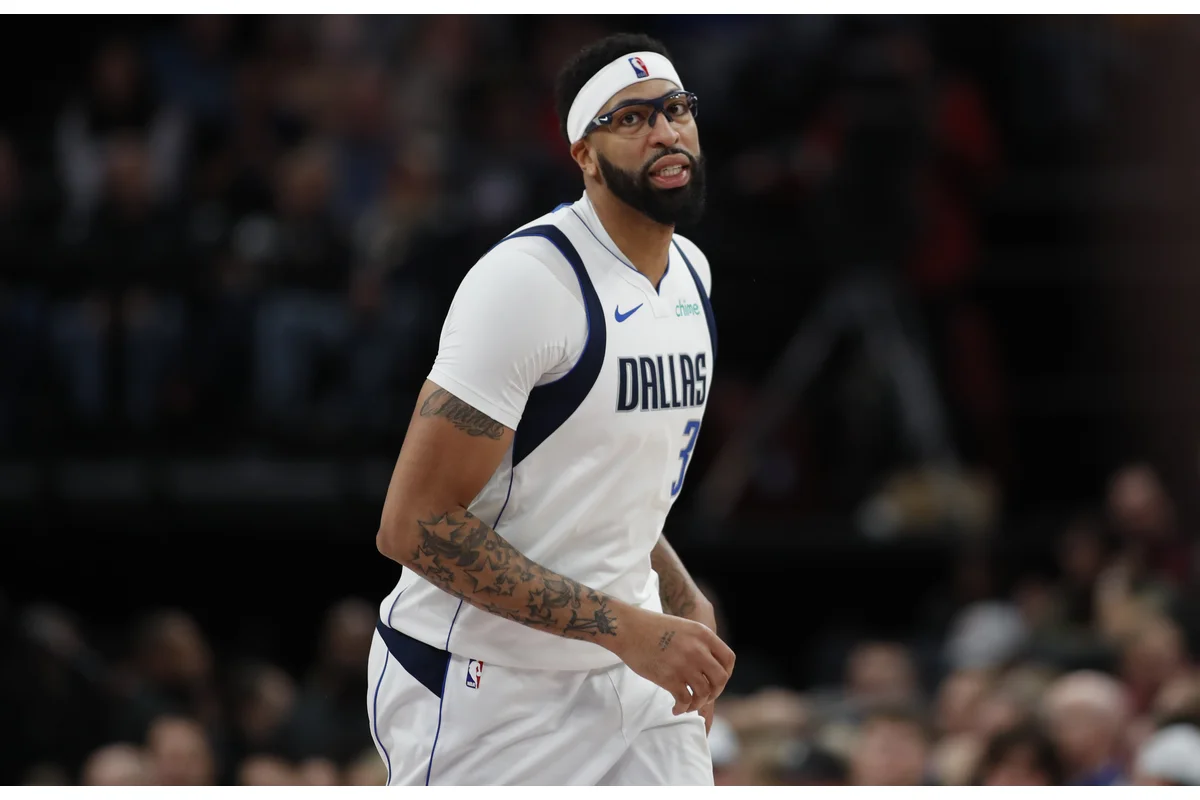
The Dallas Mavericks have ended their brief Anthony Davis era by trading the 10-time All-Star to the Washington Wizards in a surprising blockbuster move on February 4, 2026. This significant transaction signals a strategic shift for both teams, as Dallas pivots toward building around top draft pick Cooper Flagg, while Washington aims to bolster its roster with veteran leadership and young talent.
Details of the Anthony Davis Wizards Trade
The trade sent Anthony Davis, along with guards Jaden Hardy, D’Angelo Russell, and Dante Exum from Dallas to Washington. In return, the Mavericks received a package of players and draft picks that included forward Khris Middleton, guards AJ Johnson and Malaki Branham, forward Marvin Bagley III, a 2026 first-round pick from Oklahoma City, a 2030 top-20 protected first-round pick from Golden State, and multiple second-round selections spanning 2026 to 2029.
Why Dallas Chose to Move On from Davis
Only a year after acquiring Davis in a trade that sent Luka Doncic to the Lakers, the Mavericks have shifted their focus toward youth and salary flexibility. Former GM Nico Harrison once viewed Davis as the cornerstone for a Dallas championship run, but injuries, including a recent hand sprain sidelining Davis for over a month, reduced his value significantly. Given Davis’s massive $120 million remaining contract, Dallas faced pressure to free cap space and avoid a hefty luxury tax while investing in players on Cooper Flagg’s developmental timeline.
The Mavericks traded Davis amid a challenging market where few teams valued his combination of skill and high salary. Although the package lacks premium draft picks, it gives Dallas multiple first-round selections in the coming years, supplementing the franchise’s depleted stock following previous trades. Returning Khris Middleton and other young players with manageable contracts also provides Dallas with valuable assets to build around Flagg as they reset their roster.
Evaluating Dallas’s Return: Risks and Rewards
Dallas’s return earns a grade of B for its strategic approach to shed Davis’s contract and restock picks, despite not receiving a star-level player in exchange. By offloading up to $67 million in salary for the 2026-27 season, the Mavericks increase their cap flexibility significantly, enabling potential future moves to acquire more assets. Young players such as AJ Johnson, Malaki Branham, and Marvin Bagley III bring promise, although the Mavericks will likely need additional trades or signings to fully capitalize on the financial breathing room.
While some argue Dallas might have benefited from retaining Davis and aiming to compete when Kyrie Irving returns from his ACL injury, the reality of the franchise’s asset situation and the risks involved in rushing a rebuild around a 20-year-old Flagg made the trade a more prudent choice.
Washington’s Ambitious Rebuild Accelerates with New Additions
The Wizards have assembled a revamped core by acquiring Davis and pairing him with recently added guard Trae Young. This pairing aims to blend veteran experience with youth, anchored by first-round picks Kyshawn George and Alex Sarr. Despite Davis’s current injury status, Washington’s approach looks to balance a desire for competitiveness with the need to secure future draft positioning, as the team is contending for one of the bottom slots to maintain valuable draft assets.
Washington’s roster currently reflects a growing emphasis on a four-out offensive system, with Alex Sarr playing limited minutes as a power forward but showing potential to coexist alongside Davis defensively and offensively. Both Sarr and Davis rank among the league’s elite rim protectors in terms of opponent efficiency on shots within five feet, framing a formidable interior defense for the Wizards.
Challenges Facing the Wizards in Integrating New Pieces
Washington’s biggest questions lie in how Davis and Sarr will complement each other on offense, as Sarr’s game has evolved from perimeter shooting toward higher efficiency closer to the basket. The Wizards must find the optimal rotation that allows Davis to act as a primary screener with Young in pick-and-roll sets, while enabling Sarr to maximize floor spacing and shooting opportunities. Sarr has improved his three-point shooting to 33% in his second season, an encouraging development though defenses may prefer he attack more from the perimeter.
The pressure to compete intensifies with the addition of Davis and Young, both of whom may seek lucrative new contracts soon—Young can opt-out in free agency this summer, while Davis’s player option is worth $62.8 million for 2027-28. While the young talent like Kyshawn George and Tre Johnson shows potential, none yet matches the ceiling of Dallas’s Cooper Flagg, which puts an emphasis on Washington’s ability to develop players or secure another high draft pick to advance their rebuild.
Implications for Both Teams Moving Forward
Dallas’s trade marks a decisive commitment to managing cap space and accumulating draft picks in an attempt to rebuild prudently around Cooper Flagg. The added flexibility and incoming players should allow the Mavericks to remain patient while focusing on developing their promising core.
Meanwhile, the Wizards are balancing the urgency to improve next season with the need to maintain their draft position and continue developing young talent. Integrating Davis and Young successfully will be critical to the team’s success, but it carries risks if the team’s rebuild feels rushed before their young players are fully ready to carry the load.
With this blockbuster trade, both franchises are positioning themselves for a volatile but intriguing next phase, leaving fans and analysts alike to watch closely how these calculated gambles translate on the court and shape their futures in the Eastern and Western Conferences respectively.
