
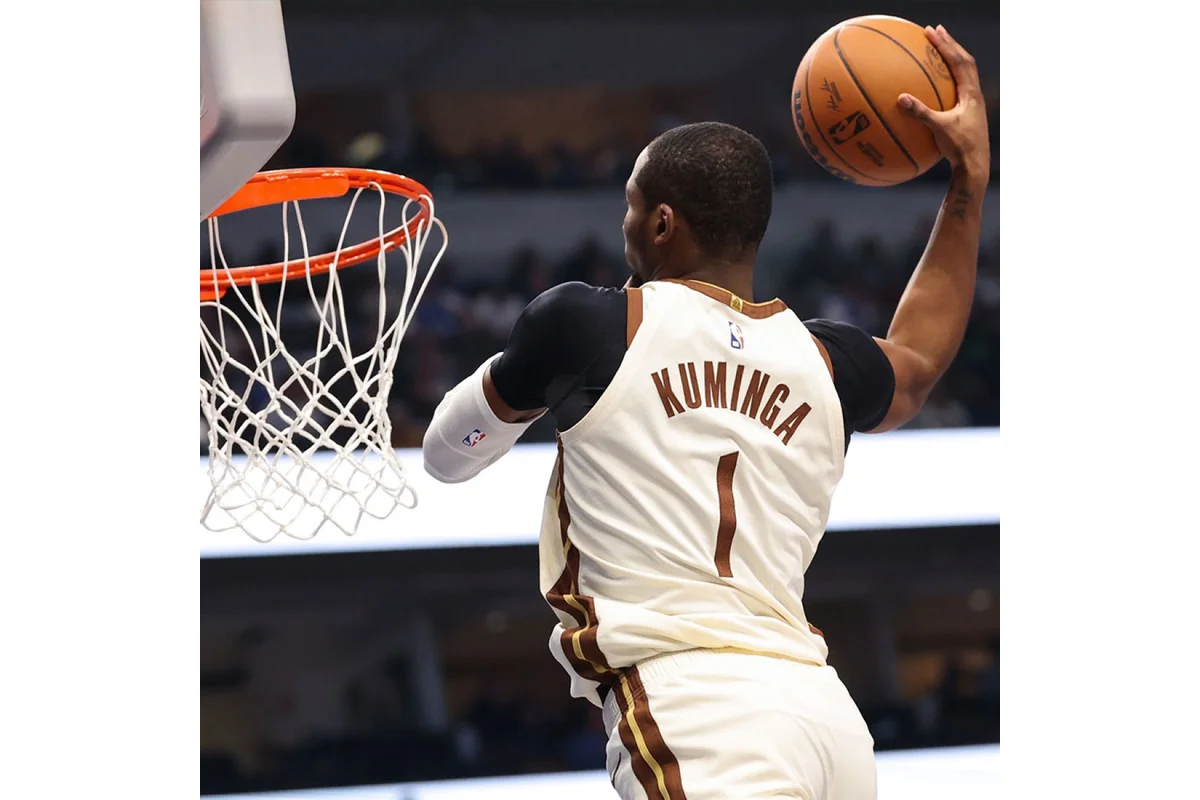
Jonathan Kuminga’s five-year run with the Golden State Warriors came to an end last week when he was traded to the Atlanta Hawks, marking the conclusion of a complicated internal struggle within the organization. Sources revealed that the core issue stemmed from fundamental disagreements between owner Joe Lacob and head coach Steve Kerr regarding Kuminga’s development and position on the team.
Kerr saw Kuminga primarily as an energy wing, akin to players like Shawn Marion or Aaron Gordon, emphasizing defense and versatility. In contrast, Kuminga expected a more prominent on-ball role as a leading scorer, a difference that intensified tensions behind the scenes.
Owner’s Vision Clashed With Coaching Strategy
Joe Lacob formed a strong connection with Kuminga during a Miami dinner in the 2021 predraft period and envisioned him as a potential franchise cornerstone. Yet, sources confirmed that the coaching staff did not share Lacob’s commitment to this plan, creating friction between Lacob’s hopes and Kerr’s direction for Kuminga’s growth.
Let your basketball people make basketball decisions,
one team insider remarked.
December Confrontation Exposed Deeper Problems
The most heated moment occurred on December 10 in Kerr’s office, when a discussion escalated from minor issues to a frank confrontation. Kerr expressed frustration over what he viewed as Kuminga’s failure to fully buy into the team’s approach, while Kuminga revealed his feelings of being undervalued by Kerr over the years. The meeting ended with Kerr slamming his whiteboard in exasperation.
I do feel for him that he has been sort of at the whim of my decision-making,
said Kerr, acknowledging his role in the breakdown.
Agent and Front Office Differences Compounded Negotiations
Kuminga’s agent, Aaron Turner, and others close to the player were criticized by Kerr and general manager Mike Dunleavy for focusing on incorrect priorities outside the Warriors’ facilities. This disconnect contributed to stalled contract extension talks the previous summer.
Lacob’s personal ties to Kuminga further complicated trade talks. At the 2024 trade deadline, the Warriors explored a deal involving Kuminga for Alex Caruso with the Chicago Bulls, and later, at the 2025 deadline, considered including him in a package for Kevin Durant with the Phoenix Suns, though the latter was vetoed by Durant.
Missed Trade and Playing Time Opportunities
Last summer, Sacramento Kings and Phoenix Suns showed interest in a sign-and-trade for Kuminga. The Kings offered a feature role with over 30 minutes per game, but the Warriors rejected the offers, reportedly due to Lacob’s unwillingness to part with the player under those terms.
During his final two months in Golden State, Kuminga logged only 117 minutes, including 16 consecutive games without playing. He declined three low-stakes playing opportunities and withdrew from a January 2 game against Oklahoma City citing back soreness, despite being promised substantial minutes.
Coaching and front office members interpreted these actions as Kuminga giving up on the team, while Kuminga and his circle felt the organization had lost faith in him.
Everybody was right. Everybody was wrong. Everyone’s to blame,
stated one team source. Nobody won.
Reflections and Final Thoughts
Kerr expressed regret about his contribution to the breakdown, a sentiment briefly echoed by Dunleavy. Lacob has declined to comment publicly.
The Warriors shorted Jonathan Kuminga and we’re long on Jonathan Kuminga,
Turner said.
Clearly the bet was made. Game on. Let’s find out who is right.
This episode highlights the challenges of balancing ownership ambitions with coaching strategies and player expectations. Kuminga’s departure underscores the importance of alignment within team leadership if promising talent is to be fully realized. How the Atlanta Hawks will integrate Kuminga remains a key storyline to follow.
