
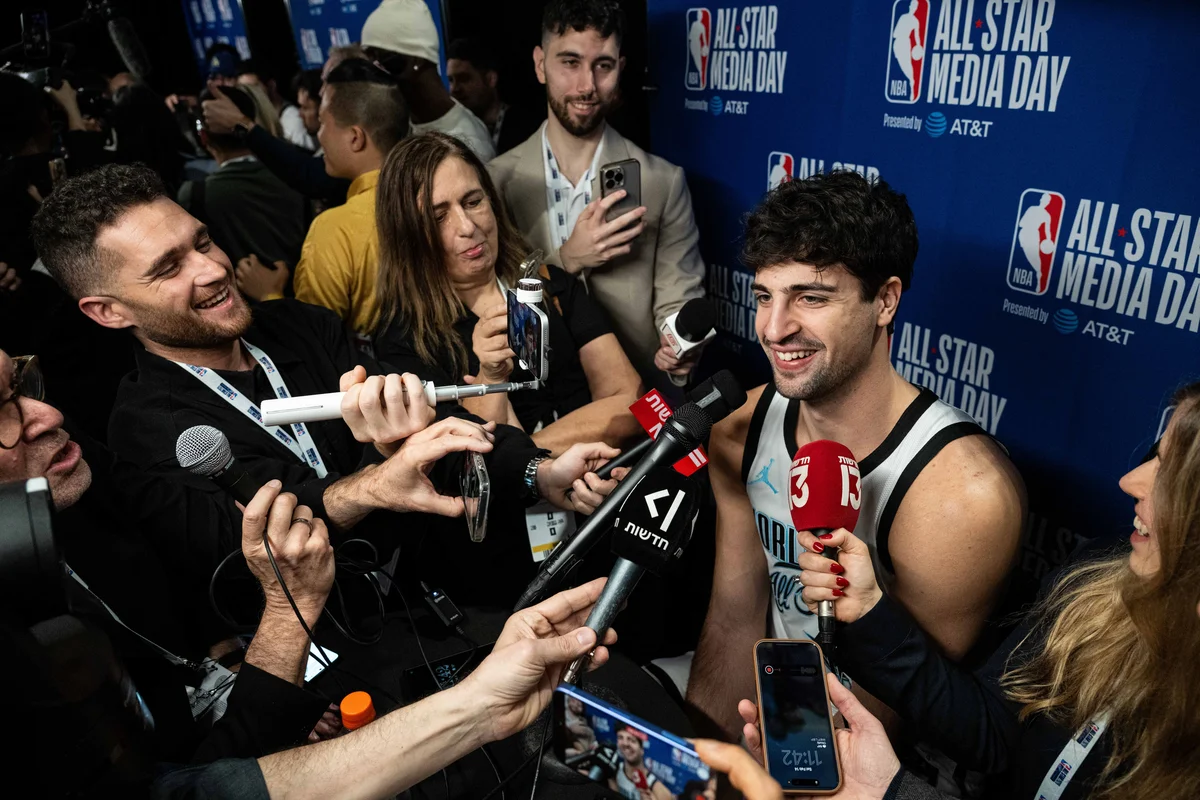
This year marked a significant milestone in the NBA’s history as Deni Avdija became the first Israeli player ever selected as an All-Star. This achievement, occurring amid a year rife with global conflict and division, was a moment of pride and inspiration for Israelis and Jewish communities worldwide. For one night, Avdija stood among the world’s basketball elite, symbolizing not just individual excellence but also the potential for unity and simple celebration in a turbulent time. However, the occasion was overshadowed by political commentary that detracted from what should have been a straightforward recognition of athletic accomplishment.
The Unifying Power of Sports and the Weight of Historical Legacy
Growing up in Chicago during the 1990s, many remember how sports figures like Michael Jordan captivated entire cities, fostering a collective energy that transcended diverse backgrounds and divisions. The shared experience of rooting for the Bulls was emblematic of how sports can unite communities. This unifying power, though challenged by today’s fragmented media landscape, endures, especially during major events that draw broad attention.
The recent death of Kobe Bryant further exemplified how athletes shape culture beyond their sport, defining eras and becoming ongoing presences for fans across cities and nations alike. In that spirit, Avdija’s All-Star appearance was more than a game; it was a cultural moment that celebrated inclusion and representation on an international stage.
Political Symbolism Clouds a Moment of Athletic Achievement
Despite the significance of Avdija’s selection, media focus quickly shifted away from his performance to the attire of filmmaker Spike Lee and NBA star Kyrie Irving, which was widely interpreted as showing pro-Palestinian support. Neither Lee nor Irving has any direct connection to the Israeli-Palestinian conflict, making their prominent presence and symbolic clothing seem noticeably discordant with the night’s central athletic celebration. Their apparel became a focal point, overshadowing the historic milestone and sparking debate about the timing and appropriateness of political expression in sports.
This incident emphasizes a persistent question: why is political activism so frequently injected into sports moments involving Israel? Athletes commonly represent nations that face complex political challenges, yet their nationality often exists as a straightforward presentation of identity rather than a point of controversy. Israeli representation, however, often triggers additional commentary, counter-narratives, and symbolic protests, complicating what should be purely sporting recognition.
Balancing Free Expression with Respect for Sports Milestones
There is no question that celebrities and public figures are entitled to express their beliefs freely—this freedom is integral to sports and entertainment culture. Still, the context and timing of such expressions are critical. Advocating for a cause is valid, but selecting moments that overshadow or reframe another individual’s achievement invites complex ethical considerations.
Criticism of governments, including that of Israel, remains legitimate and essential within democratic societies. Yet, when Israel becomes the persistent subject of symbolic protest during events dedicated to individual success, questions inevitably arise: why focus protests here, at this moment, and in this setting? Such actions risk conflating political issues with personal milestones, thereby altering the intention of these celebratory occasions.
Recognizing Deni Avdija’s Excellence Beyond Political Lenses
Deni Avdija’s All-Star recognition was a celebration of his outstanding talent and a source of pride in his heritage. It did not diminish or challenge other identities or causes. Instead, it represented a straightforward sporting achievement, worthy of respect on its own terms. Athletic representation should not automatically invite opposition or become a battleground for unrelated political conflicts.
The NBA espouses itself as a global league that honors diversity in nationality and background. True commitment to this ideal would allow players from all nations to be acknowledged primarily for their skills, free from political backlash. Such an approach fosters inclusivity and respects the spirit of international sportsmanship.
The Need to Separate Protest from Celebration in Sport
Not every significant moment in sports must serve as a platform for protest. Some occasions deserve to be reserved for celebration—recognizing exceptional feats, showcasing diversity, and inspiring communities. For one memorable night, the focus should have remained on Deni Avdija—a young player from Israel standing proudly among basketball’s best. This moment of achievement symbolized unity, hope, and the transcendent power of sport, all of which deserve to be honored without distraction.
In an era characterized by cultural fragmentation and political tension, sports can still carve out rare spaces where individuals and nations come together to share in triumph. Preserving these spaces benefits not only the athletes but the broader audiences who look to sports for moments of inspiration amid chaos.
