
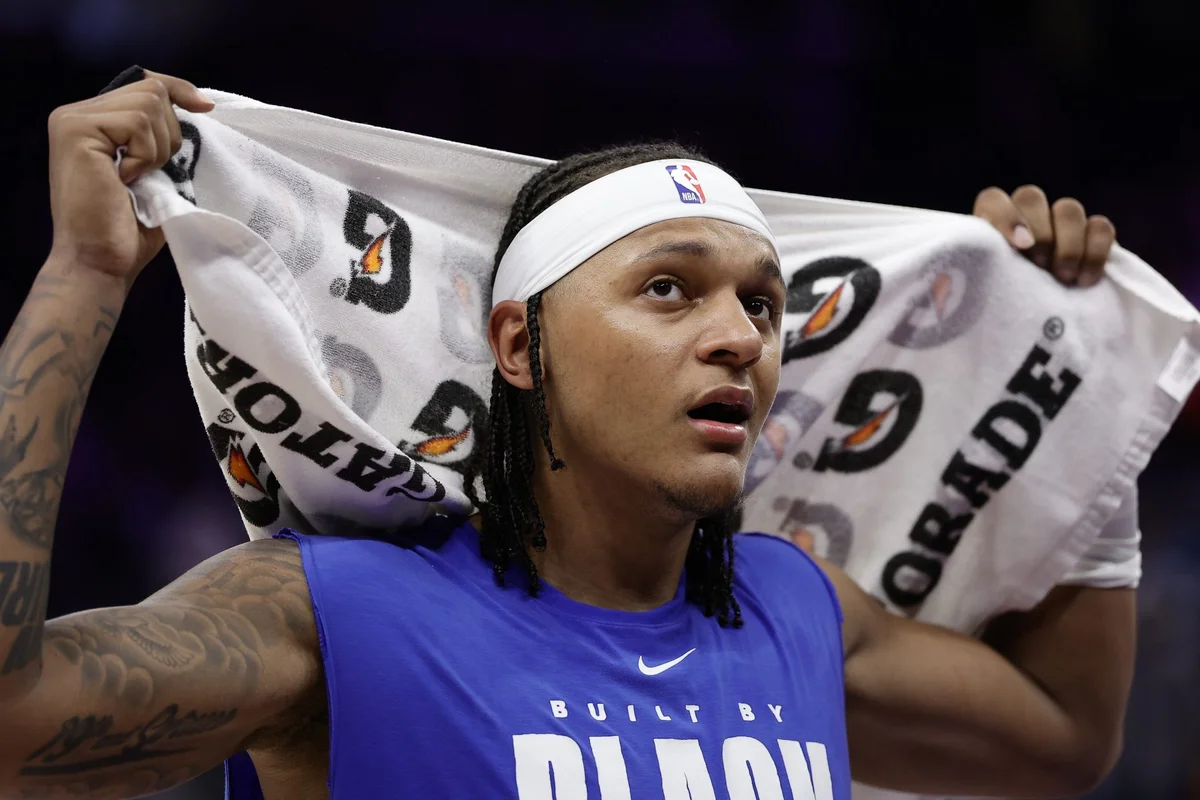
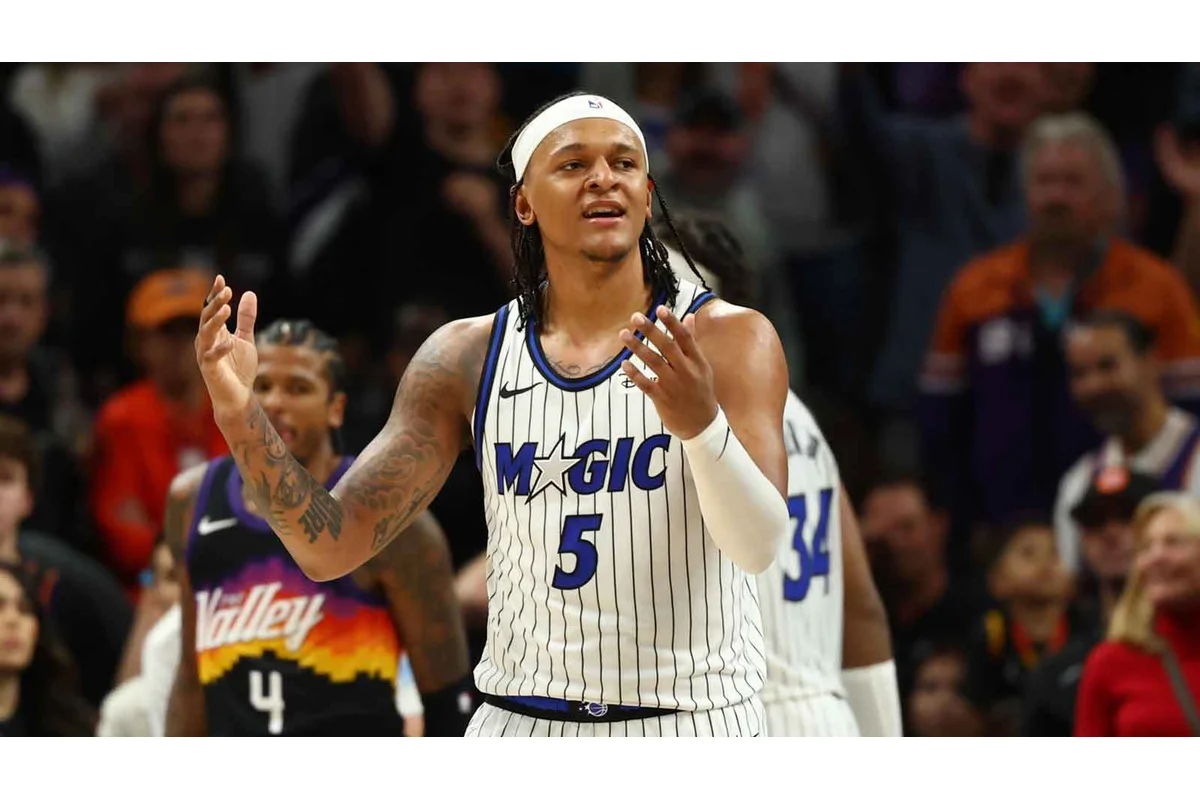
Paolo Banchero played a pivotal role in the Orlando Magic’s intense game against the Phoenix Suns on Saturday, shifting momentum in the final minutes. With the Magic trailing by six points in the last three minutes, Banchero’s assertive playstyle helped close the gap, notably scoring a crucial basket that energized his team and forced overtime.
Banchero showcased his power near mid-court, driving aggressively to the hoop and overpowering defenders such as Royce O’Neale despite heavy coverage. Beyond scoring, he contributed a block and an assist that proved critical in extending the game. In overtime, Banchero continued to impact the scoreline with a step-through move and a post spin, directly influencing the Magic’s efforts to stay competitive in an intense matchup.
Challenges Persist in Finishing at the Rim
Despite flashes of dominance, Banchero’s struggles around the basket remain evident. While known for his inside presence, he missed crucial follow-up shots late in regulation and overtime, including a layup with 12.5 seconds left and a go-ahead jumper with 24 seconds remaining. These misses underline the pressure on him to consistently convert opportunities when the ball is firmly in his hands, especially in high-stakes moments.
Banchero’s ongoing challenge lies in maintaining efficiency near the rim. While the Magic rely on his ability to drive and finish, inconsistencies suggest this is an area still in flux this season.
Banchero’s Shot Selection and Impact on Efficiency
Banchero’s struggles with mid-range jumpers are well noted, with critics often highlighting his poor pull-up shooting numbers. However, this season sees him reducing his mid-range attempts significantly, now taking just 2.7 such shots per game while shooting 34.2 percent, down from last year’s 4.7 attempts at 41.7 percent accuracy. This adjustment signals a strategic shift toward playing closer to the basket rather than relying on mid-range shooting to keep defenses honest.
In the restricted area, Banchero’s shooting remains fairly steady, converting 65.7 percent on 5.2 attempts per game, similar to previous seasons. He successfully made three shots at the rim during Saturday’s contest. Yet outside the restricted zone but within the paint, where many of his struggles have surfaced, he has made only eight out of 18 attempts.
This slight decrease in shooting accuracy from areas just outside the rim—39.1 percent on 4.3 attempts—compared to previous seasons has contributed to his overall shooting efficiency issues. Turning these contested attempts into higher percentage finishes could greatly enhance his impact.
The pattern suggests Banchero is sharply focused on attacking the rim; his success there still defines much of his game. According to Second Spectrum data, Banchero averages 12.8 drives per game, shooting 43.8 percent on those attempts, compared to last year’s 49.8 percent on 11.9 drives. While the volume of drives has increased, the drop in finishing efficiency off drives underscores an area needing improvement.
Incremental Gains and Glimmers of Progress
Despite some setbacks, Paolo Banchero has shown steady signs of progress this season. His overall scoring average is up to 21.6 points per game, with a consistent 45.2 percent field goal rate matching last season. Though his three-point shooting remains modest at 31.6 percent, he is attempting fewer shots from beyond the arc, indicating a more selective approach.
Banchero averages a career-best 7.8 free throw attempts per game, highlighting his aggressive play in drawing fouls, though he expressed frustration with the low number of attempts in recent games such as the one against Phoenix.
His true shooting percentage is 55.7 percent, an improvement that reflects better shot selection and scoring efficiency despite historical criticisms of inefficiency. For context, since the start of the year, Banchero is posting 23.1 points per game shooting splits of 46.2 percent from the field, 39.5 percent from three, and 78.3 percent from the free throw line.
These numbers place him ahead of notable peers like Cade Cunningham, Pascal Siakam, and Jaylen Brown in true shooting percentage among players with similar usage and playing time, signaling meaningful growth in his scoring profile.
Post-Up and Paint Shooting Remain Key Focus Areas
The spotlight remains on Banchero’s ability to finish efficiently near the rim and convert mid-range opportunities that frequently arise in the paint but outside the restricted area. Since January, his restricted area shooting has climbed to 61.6 percent on six attempts per game, yet his paint shooting beyond the rim continues to lag at 36.8 percent on 4.1 attempts per game.
This disparity highlights the importance of developing better finishing skills and shot selection inside the paint, especially during high-pressure moments where such baskets can swing game outcomes.
Banchero’s style revolves heavily around attacking the basket, but his declining paint shooting percentages compared to prior seasons have held back his overall efficiency. Improvement here would greatly enhance his ability to take control at critical junctures.
Implications for Banchero and the Magic’s Future
Paolo Banchero’s recent surge in assertive play and scoring near the basket indicates he is on the cusp of unlocking his full potential. However, the mix of late-game misses and inconsistent paint finishing illustrates the fine margins separating solid contributions from star-level performances. The Orlando Magic’s continued progress may hinge on Banchero’s ability to refine his shooting touch, especially in converting close-range shots under defenders’ pressure.
As the season progresses, Banchero’s development in decision-making and consistency when taking over games will be critical. Should he manage to elevate his efficiency in the paint and execute under pressure more reliably, it could signal a turning point not only in his own career but in the Magic’s competitiveness moving forward.
