
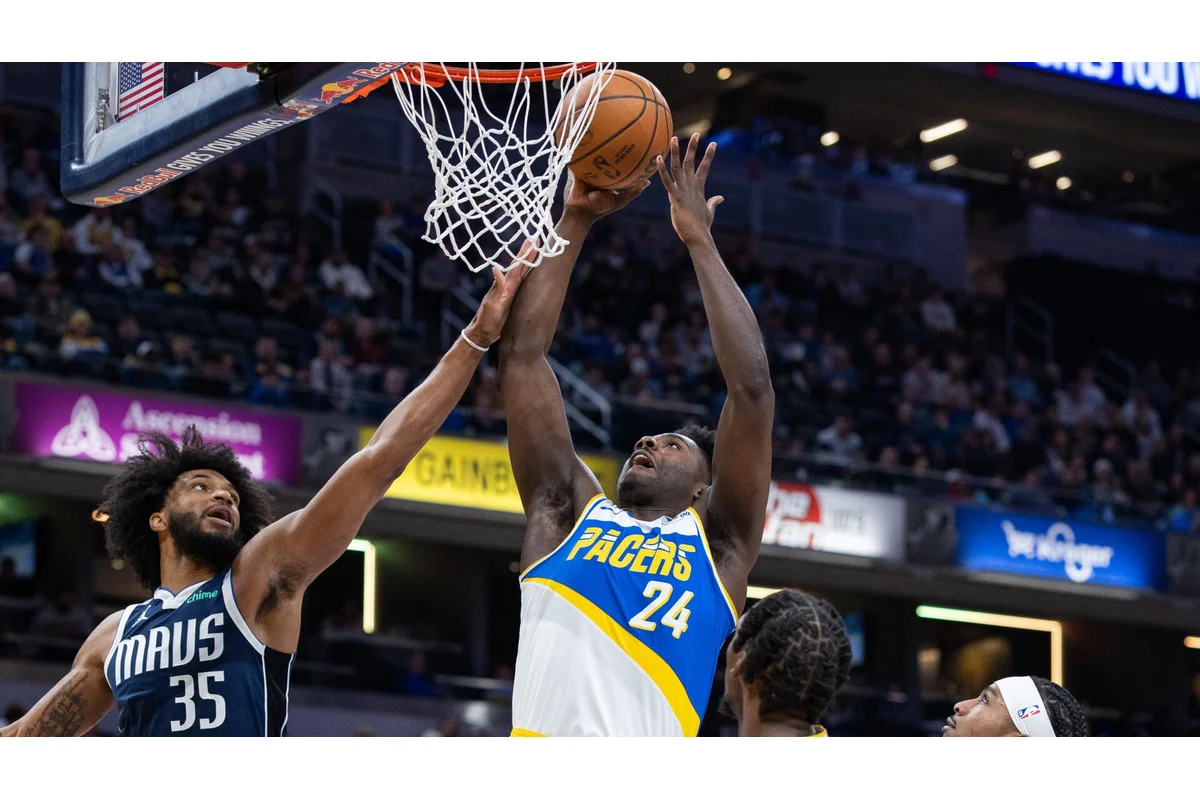
Kobe Brown has quickly become a key player for the Indiana Pacers, demonstrating the value the LA Clippers overlooked when they included him in the Ivica Zubac trade package. Since his move, Brown has averaged 9.4 points and 7.0 rebounds over seven games, showing consistent scoring and defensive ability while playing 27.1 minutes per game. This strong performance underlines why the Clippers’ decision to trade him was premature and costly.
Clippers Underestimated Brown’s Potential and Role
Throughout his time with the LA Clippers, Kobe Brown rarely received sustained playing time, which limited his ability to showcase his capabilities. Viewed mainly as a secondary piece in trades rather than an asset, Brown was traded without much consideration for his future impact. Standing six-foot-seven with a 250-pound frame and an 84+ inch wingspan, Brown possesses the physical attributes necessary to defend both inside and on the perimeter.
Moreover, Brown’s smooth, one-motion jump shot and his work ethic in the G League and summer sessions indicated he was ready to take on a more prominent role. These efforts were overlooked by the Clippers’ coaching staff and front office, including Tyronn Lue and Lawrence Frank, who failed to recognize Brown’s readiness for an expanded position on the roster.
Impact of Brown’s Departure on Clippers’ Depth
The timing of Brown’s trade came when the Clippers’ bench was already struggling with injuries and inconsistent contributions, particularly from players like Nicolas Batum, who has proven to be a liability at times. Brown’s absence has left a noticeable void for the Clippers, especially in their frontcourt rotation, where defensive versatility and reliable scoring are essential. His emergence as a productive player for Indiana only adds to the frustration felt by fans and analysts who question the Clippers’ roster management decisions.
Pacers Benefit from Clippers’ Oversight
Kobe Brown’s development with the Pacers illustrates how one team’s misjudgment can become another’s advantage. Indiana has gained a promising young forward who fits well within their system and fills a gap that the Clippers had yet to address adequately. Brown’s steady field goal percentage of 46.3% and impressive three-point shooting at 40% reflect his immediate contribution, confirming that the Pacers’ trust in him was well-placed.
Ultimately, the Clippers’ trade involving Kobe Brown reflects a missed opportunity to cultivate a valuable player who had shown signs of significant growth potential. As Brown continues to perform for Indiana, his success may cause the Clippers’ leadership to reassess their talent evaluation and player development strategies in future seasons.
