
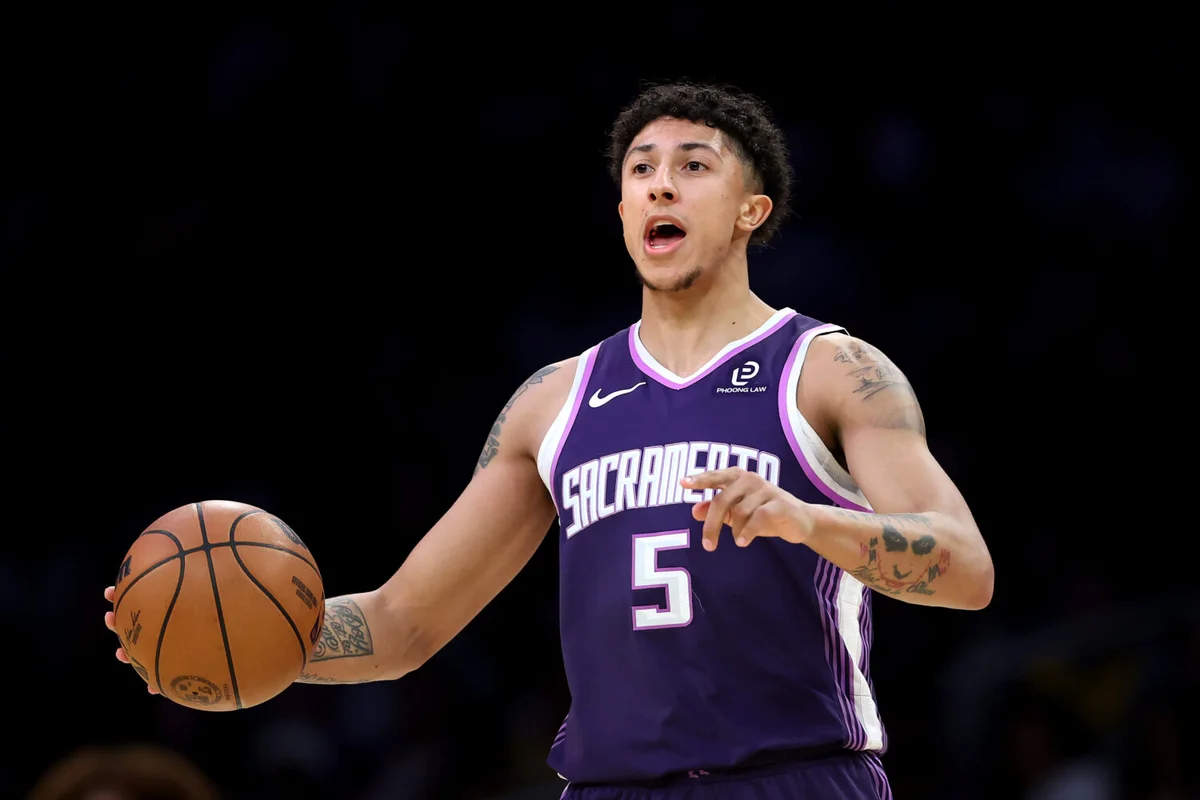
The Sacramento Kings ended what might be the worst season in their franchise history, leaving fans and management focused on the summer ahead. With the franchise’s position in the lottery and the upcoming draft as clear priorities, scrutiny is now shifting toward the front office’s decision-making, especially regarding player contracts like the De’Andre Hunter extension evaluation.
While the Kings showed promise in their 2025 draft selections, doubts linger about management’s handling of other roster decisions, particularly after last summer’s controversial moves involving Dennis Schroder and Keon Ellis. The Kings proclaimed Schroder as their key target and exercised Ellis’s team option, implying financial room for Schroder’s signing. However, contradicting those claims, Ellis was used as a trade asset in a move that seemed poorly executed.
Details and outcomes of De’Andre Hunter acquisition
Ultimately, the Kings acquired De’Andre Hunter in a trade that cost them two first-round pick swaps and three second-rounders from 2024-25. Hunter’s contract carries a hefty $24.9 million salary for the upcoming season, and this summer he becomes eligible for an extension. Hunter had a standout year in 2024-25, finishing fourth in the Sixth Man of the Year voting, but his production faltered in the following season.
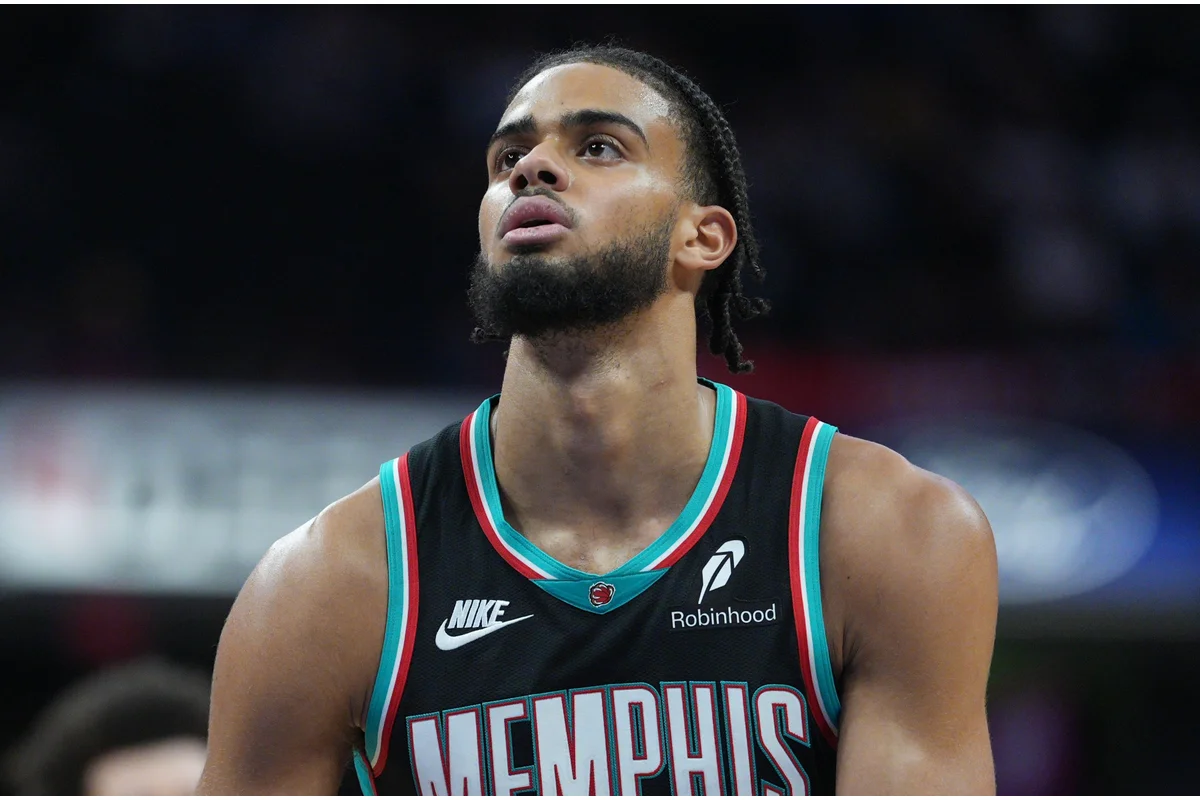
Hunter’s struggles contributed to the perception that he was a negative-value asset for many teams around the league, according to reporting by Jake Fischer. Sacramento’s decision to give up multiple future picks for him reflected this, especially considering that partway through last season, Hunter suffered a detached retina injury after playing only two games with the Kings, leaving little chance for the team to assess his fit and impact.
Comparing Hunter’s recent performance to similar players
Looking at Hunter’s 2025-26 season against recent wing players who secured significant contract extensions highlights the challenges ahead. Players like PJ Washington and Harrison Barnes serve as benchmarks, both known for solid platform seasons before extensions. However, Hunter’s multiple injuries and missed games—missing at least 25 contests in four seasons—put him at a disadvantage compared to these peers. Barnes’s extension, for example, happened under a different regime, with a more stable team context, contrasting with Hunter’s role during a frustrated rebuild phase.
Hunter’s agents face a difficult negotiation landscape. Despite his less impressive recent production, they are unlikely to start with a maximum contract offer. A realistic opening might mirror the average annual salaries (AAVs) earned by Washington or Barnes, representing contracts around $18 million per season, reflecting both Hunter’s potential contribution and his injury history.
Negotiation strategies and financial implications for the Kings
Sacramento is expected to make a starting offer near the 2027-28 midpoint of the Non-Taxpayer Mid-Level Exception (NTMLE), roughly a four-year deal worth $74.6 million with a $16.6 million starting salary. With this kind of offer, Hunter would be compensated fairly based on recent precedents and the team’s financial flexibility, but anything below that may be rejected by his camp.
Several recent NTMLE contracts help frame Hunter’s value. While Hunter leads in scoring volume compared to players like Dennis Schroder, Caris LeVert, and De’Anthony Melton, he falls behind in other statistical areas, and his injury history remains a concern.
The Kings’ front office, led by General Manager Scott Perry, has expressed wariness about signing players to long-term large contracts due to inherited payroll complexities and previous contract missteps like Schroder’s. Perry may offer the projected NTMLE deal without an intention to negotiate further, seeking to balance financial prudence with roster needs.
Options if the Kings decide against extending Hunter
If the Kings choose not to extend Hunter, they retain significant salary cap space entering free agency. This flexibility allows Sacramento to explore alternative roster strategies, such as absorbing salaries to acquire future assets, similar to Brooklyn’s trade involving Michael Porter Jr. and a future first-round pick for Cam Johnson, which effectively consumed 12% of Brooklyn’s cap.
Alternatively, Sacramento could pursue shorter, above-market contracts, akin to deals Tobias Harris signed with Detroit or Bruce Brown’s contract with Indiana—moves designed to bolster and develop the young core while maintaining cap space to maneuver. This approach would allow the Kings to accumulate assets and position themselves well during the rebuild.
Weighing the risks and future outlook for Sacramento
Given the limited opportunity to evaluate Hunter’s fit and health, Sacramento’s preferred approach may be to defer this decision to unrestricted free agency. This path preserves flexibility and the potential to pursue multiple roster-building opportunities in 2027 and beyond. It also shifts the risk assessment closer to the contract signing, informed by additional performance data or market reactions.
Going forward, Perry and the Kings front office face critical questions: what market value Hunter would command in free agency, how serious demand might be at that level, and how hard the team would pursue him if the price is high. These questions are especially pressing as the remainder of the season wraps up and preparations for the draft and offseason advance.
Fans and analysts alike will be closely watching for news regarding Hunter’s contract situation, as this decision will significantly influence Sacramento’s rebuild timeline and team composition moving forward.
“Ultimately, Sacramento had to attach the player they said they would not attach to a salary dump to their number one guy. Questionable market value, prioritization, understanding of leverage, and negotiation across the board.” – Jake Fischer, Reporter
“This feels like the preferred route for a team looking at a long-term rebuild that had next to no time to evaluate Hunter’s fit in Sacramento, or to assess whether he will recapture his 2024-25 form, or even get back to his career averages.” – Scott Perry, General Manager
