
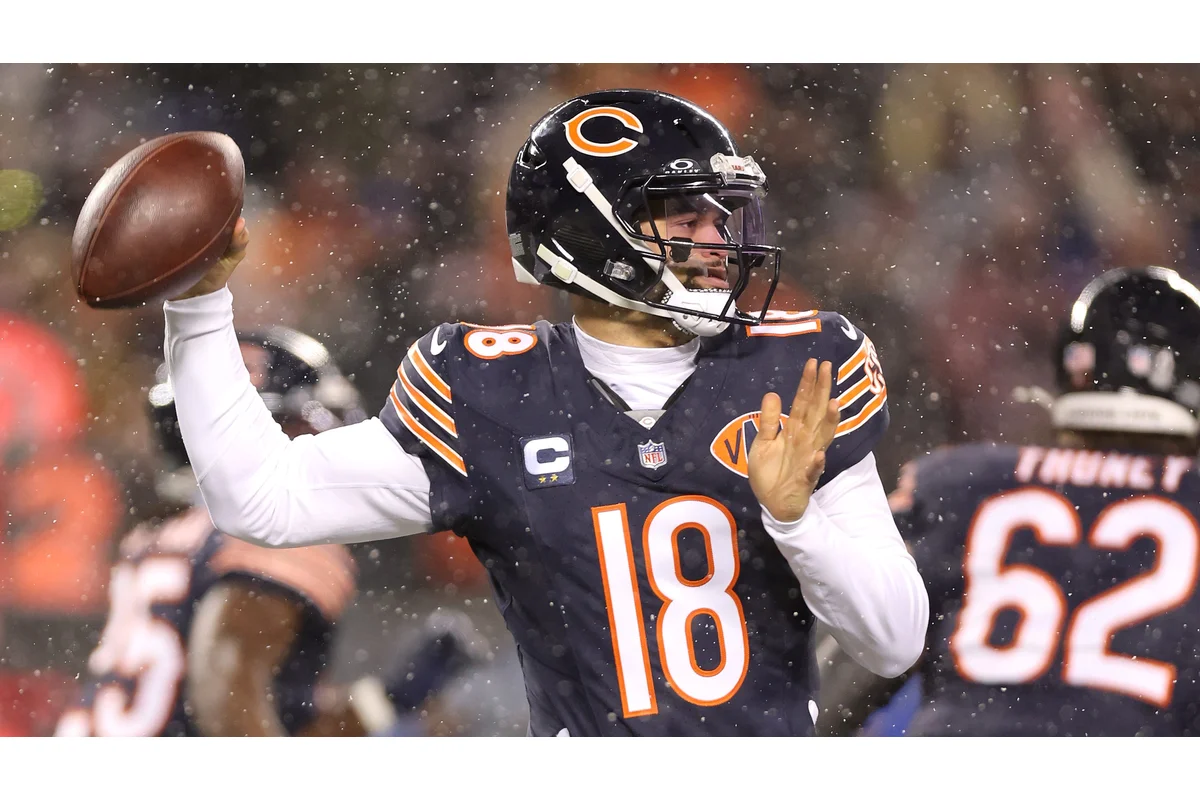
Caleb Williams’ dramatic improvement in his second year has sparked debate, especially among Chicago Bears fans eager to see his potential realized. His rise is largely credited to offensive coordinator Ben Johnson, whose influence has helped Williams emerge as a promising quarterback. Despite this progress, critics continue to focus heavily on Williams’ completion percentage, a statistic that many fans and analysts alike find insufficient to measure his true impact on the field. This ongoing discussion revolves around why the completion percentage figure has become a sticking point, though many believe it oversimplifies his contributions.
One prominent voice in the analytic community, Cynthia Frelund of NFL Media, known for her detailed statistical insights, expressed doubts during a discussion with NFL Network’s Adam Rank, a well-known Bears supporter. When asked about Williams, Frelund insisted,
“I need to see more. He had a 58% completion percentage.”
This comment exemplifies the perspective that many in the fan base have grown weary of, seeing it as an incomplete evaluation of Williams’ overall performance.
Why the Completion Percentage Argument Frustrates Bears Fans
Bears fans have grown increasingly frustrated with the fixation on Williams’ low completion percentage, particularly because it fails to capture his clutch performances. While he did rank near the bottom league-wide in that metric, numerous factors contribute to this number, many of which are often overlooked. Notably, Williams set a remarkable NFL record last season by leading the league in comeback wins, achieving six in the regular season alone, with a seventh victory coming in the postseason.

Williams excelled in the most critical moments, posting his highest passing yards and touchdowns during the fourth quarter in the 2025 season. This tendency to rise to the occasion makes a singular focus on completion percentage feel shortsighted. Fans and analysts acknowledge areas where Williams can improve, such as developing stronger chemistry with his receivers and completing easier throws more consistently. Still, the overriding narrative should emphasize his upward trajectory rather than fixate solely on completion stats.
Recognizing Williams’ Strengths Beyond the Numbers
The positives in Williams’ game are substantial, especially when considering the standard set by the franchise in recent years. He takes exceptional care of the football, demonstrating a disciplined approach by avoiding unnecessary risks and preferring to throw the ball away rather than force dangerous throws. In addition, Williams is highly effective at evading sacks, showing quick decision-making under pressure. When factoring in that he led the NFL in yards lost due to receiver drops, the argument against his completion percentage statistic gains even more context.
The data paints a fuller picture: Williams is not just a passer focused on raw numbers but a strategic player whose contributions are not yet fully captured by traditional metrics. His growing skill set and maturity on the field indicate he is well on his way to becoming a franchise cornerstone and potentially a superstar.
Looking Ahead: Why the Debate Should Shift
While it is reasonable to expect continued growth and refinement from Williams, the obsession with his completion percentage is increasingly viewed as misplaced. Observers agree that while improvement is needed in some technical aspects of his game, the overall direction is clear—the quarterback’s development is positive and rapid. The spotlight on a single statistic limits appreciation of his broader impact and the context in which those numbers are achieved.
Moving forward, the emphasis for the Chicago Bears and their fans should be to support Williams’ continuing evolution and recognize the multitude of factors that contribute to his success. As he gains experience and builds rapport with his receivers, many anticipate that his completion percentage will naturally improve, aligning closer with the elite quarterback performances of the league.
Until then, the debate surrounding Caleb Williams’ completion percentage might best be retired, allowing space for a more comprehensive and encouraging view of his accomplishments and future potential.
“I need to see more. He had a 58% completion percentage.”
– Cynthia Frelund, NFL Media analyst
“The arrow is pointing way up.”
– Adam Rank, NFL Network commentator
Cynthia Frelund is not convinced with Caleb Williams just yet…@cfrelund: "I need to see more. He had a 58% completion percentage"#thesickpodcast @adamrank pic.twitter.com/i6HJXUAF0X
— The Sick Podcast with Adam Rank (@sickpodadamrank) February 5, 2026
