

The New York Jets recently named Frank Reich as their new offensive coordinator, a move that has energized fans eager for a more experienced offensive leader. Reich’s arrival signals a shift toward a sophisticated approach, raising questions about how star wide receiver Garrett Wilson will adapt in this new system. As the team seeks to align player strengths with scheme demands, understanding the Garrett Wilson Jets fit is essential to evaluating the offense’s future potential.
Reich brings a track record of developing effective passing offenses, notably during his time as head coach of the Indianapolis Colts. However, Wilson’s style of play has evolved in systems tailored to his unique skills, which may not perfectly align with Reich’s preferences. The adjustment to this new dynamic will be closely watched.
Examining Receiver Profiles and How Wilson Compares to Reich’s Past Targets
Frank Reich’s history with receivers offers insight into the type of players who have flourished under his guidance. During his Colts tenure, Reich saw success with second-round picks Michael Pittman Jr. and Alec Pierce, both possessing notable size advantages. Pittman Jr., standing 6-foot-4 and weighing 223 pounds, served primarily as a possession receiver using his body to win contested catches in intermediate routes. Pierce, similar in height at 6-foot-3, was tasked with vertical threats, stretching defenses deep downfield.
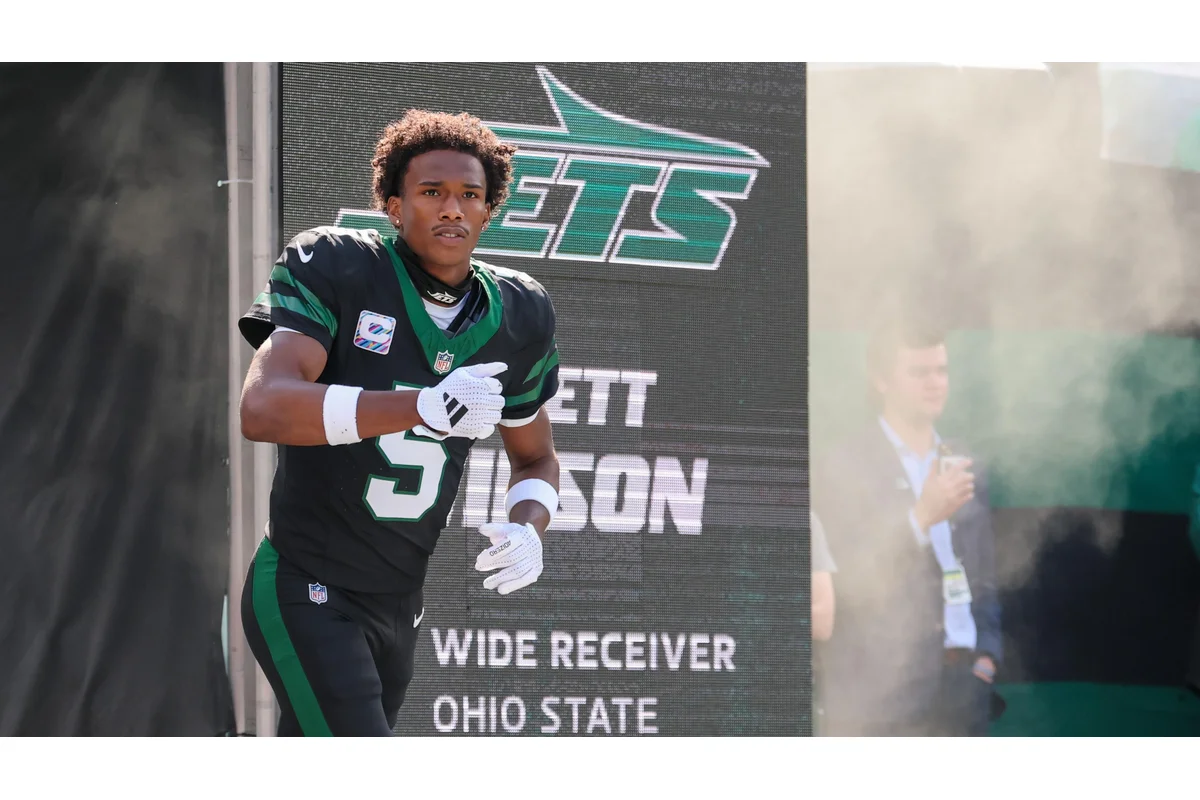
Additionally, Reich coached T.Y. Hilton, a smaller receiver known for his speed and deep-play ability. None of these players share the exact traits that define Garrett Wilson’s game. At 6-foot and 183 pounds, Wilson relies heavily on agility, separation creation, and yards gained after the catch rather than physical battles or deep-ball contests.
Statistical Evidence Points to Challenges in Contested Catches and Deep Targets
Wilson’s career statistics highlight areas where his skills differ from those of Reich’s prior wideouts. Contested catch percentage—a key measure of effectiveness in heavy traffic—places Wilson in the lower half compared to his peers. For example, in 2022 he ranked 67th out of 80 qualifying receivers with a 35.9% contested catch rate, and similar rankings persisted in subsequent seasons.
Average depth of target (aDOT) further illustrates Wilson’s role mostly in short-to-intermediate routes. His aDOT hovered around 9 to 11 yards from 2022 through 2025, which is modest compared to typical deep-ball specialists. This contrasts markedly with the deep-threat profiles Reich has frequently employed.
These metrics suggest while Wilson excels in quickness and agility, he may be less suited for physical win-the-ball moments or stretching the field vertically—areas fundamental to Reich’s offensive preferences.
Elements of Reich’s Scheme That Could Complement Wilson’s Strengths
Despite these apparent differences, certain principles in Reich’s offensive philosophy align well with Wilson’s abilities. Reich often incorporates the mesh concept—a staple in West Coast offense systems—where receivers run crossing routes designed to create traffic and openings. Wilson’s quickness and body control suit this style, enabling him to use space and timing effectively.
Another key aspect is Reich’s use of triangle reads, a strategy that isolates defenders against multiple receivers to generate confusion and exploit coverage mismatches. Reich’s flexibility with this approach has varied depending on the quarterback’s skill set, demonstrating his willingness to adapt rather than rigidly enforce a single style.
This adaptability reflects Reich’s experience and should provide reassurance that Wilson will not be forced into a role incompatible with his talents. Instead, the new system is likely to be adjusted to ensure Wilson remains a focal point in the passing game.
Adjusting to Change While Preserving Wilson’s Impact on Offense
While Garrett Wilson may not be the ideal prototype for the typical receiver in Frank Reich’s system, his exceptional skill level positions him well to overcome any transitional hurdles. Reich’s seasoned coaching style suggests he recognizes the value in tailoring schemes to maximize individual players’ strengths rather than applying a one-size-fits-all approach.
This hiring move marks an important step for the Jets’ offense, signaling a commitment to leadership that understands the balance of structure and player adaptability. Though adjustments will be necessary, Wilson’s role as a primary playmaker is unlikely to diminish. Instead, the partnership between Reich and Wilson could produce a dynamic offense capable of leveraging both innovative design and player versatility.
