
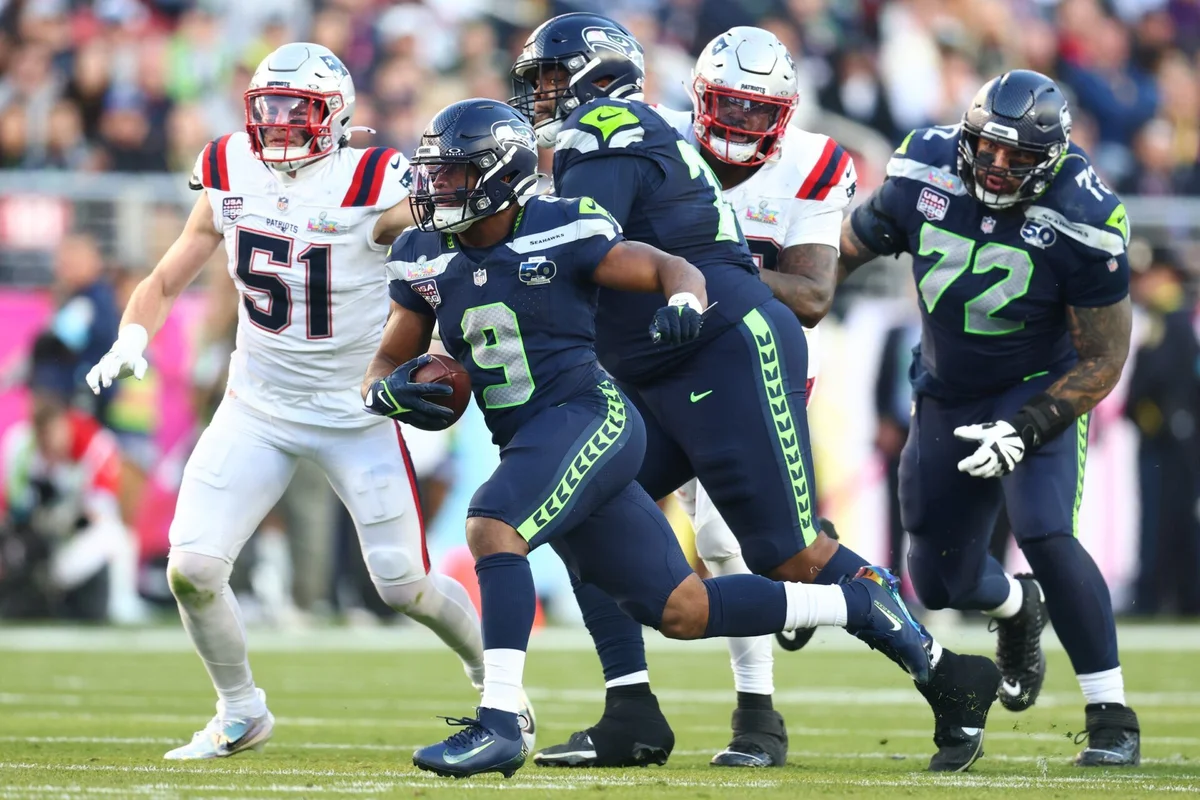
In Super Bowl 60, Seattle Seahawks running back Kenneth Walker III is defying all expectations by dominating the Patriots’ renowned postseason run defense. By halftime, Walker accounted for the majority of Seattle’s 89 rushing yards, efficiently breaking through a defense that typically allows only 71.3 rushing yards per game in the playoffs. With the Seahawks holding a 6-0 lead and their defense stifling New England’s offense, Walker is poised to receive an increased workload in the second half, putting Timmy Smith’s 37-year-old Super Bowl rushing record within reach.
Understanding the Longevity of the Super Bowl Rushing Record
Timmy Smith’s Super Bowl rushing record of 204 yards, set in Super Bowl 22, remains unbroken after nearly four decades. Smith achieved this feat on just 22 carries during Washington’s overwhelming 42-10 victory over Denver, averaging 9.3 yards per run. Close competitors for this mark include Marcus Allen with 191 yards in Super Bowl 18, John Riggins with 166 yards on 38 attempts in Super Bowl 17, and Terrell Davis with 157 yards in Super Bowl 32. Remarkably, only five players in Super Bowl history have exceeded 150 rushing yards in a single game.
These historic performances share a common theme: their teams established commanding leads early, allowing a focus on the running game. The record demands not only elite rushing talent but also a game script shaped by a blowout. In the modern NFL, fewer lopsided championship games and the prevalence of committee backfields have reduced individual rushing totals. Since 2000, only one player has surpassed 130 rushing yards in a Super Bowl.
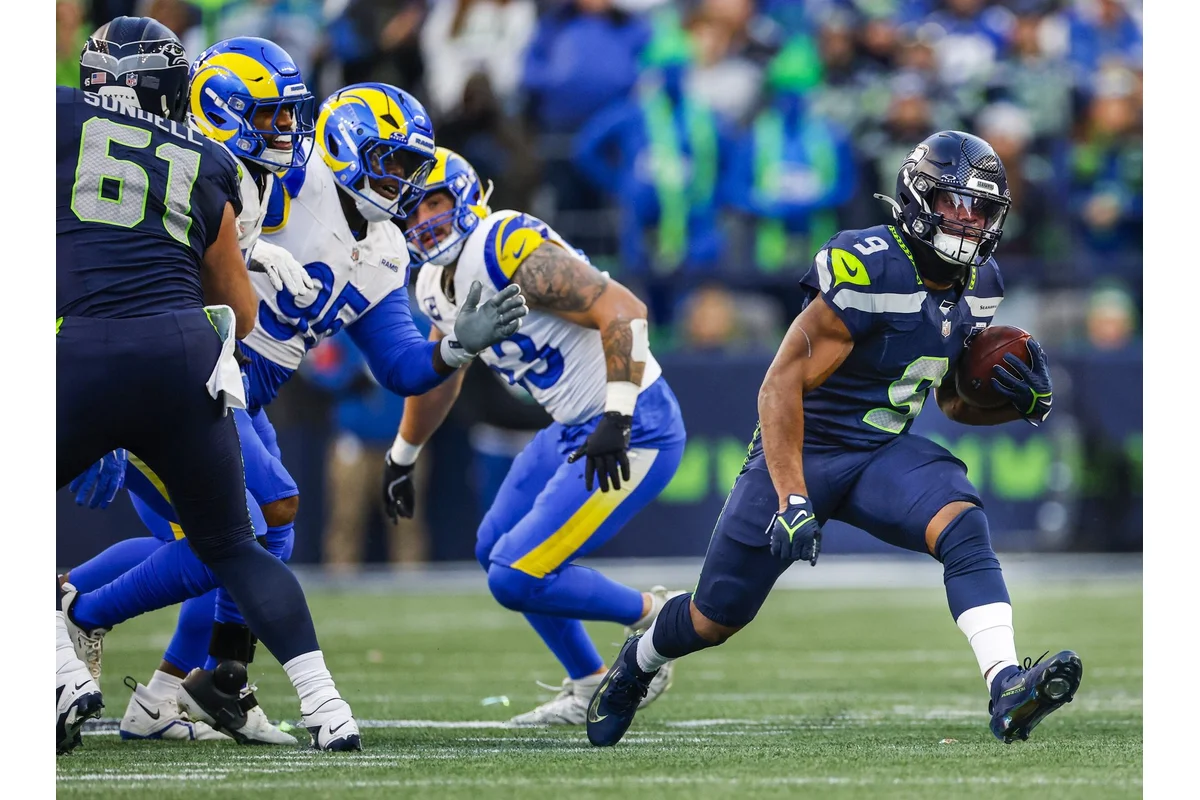
Against this backdrop, Walker’s first-half performance is particularly noteworthy. Averaging 5.9 yards per carry behind a strong Seattle offensive line, including a 30-yard run, he remains the sole ball carrier following Zach Charbonnet’s ACL injury, maximizing his opportunities to rack up yards.
“Think it’s fair to say Seahawks RB Kenneth Walker III was worth the 41st pick in the NFL Draft. His explosive playmaking ability to kick out when there’s nothing between the Tackles > pic.twitter.com/r4tIiAf4S8”
— Clint Goss, NFL Draft Analyst
Offensive coordinator Klint Kubiak acknowledged Walker’s peak form, saying,
“He’s just playing his best football at this time of the year,”
highlighting the running back’s momentum entering the game.
What Walker Must Accomplish in the Second Half to Break the Record
At halftime, Walker holds about 86 rushing yards, meaning he needs roughly 119 more to eclipse Smith’s 204-yard record. Accomplishing this in one half is an extraordinary challenge, matching or exceeding a full game’s production for many running backs. Fortunately, circumstances favor Walker. Seattle’s defense has been relentless, limiting New England to just 52 total offensive yards and forcing five punts while sacking quarterback Drake Maye three times. This dominance suggests the Seahawks will control possession in the second half, likely increasing ground attacks to protect the lead and reduce turnover risks in the passing game.
The situation mirrors historic performances where dominant defenses and commanding leads allowed running backs to accumulate impressive rushing totals. Washington’s blowout over Denver during Smith’s record-setting game and similar wide-margin wins for Marcus Allen established a formula Walker’s team is now following: a suffocating defense, a strong offensive lead, and a durable back capable of sustained success.
Seahawks legend Shaun Alexander recognized Walker’s natural fit for such high-stakes moments:
“He explodes through the holes, he’s shifty, he kind of makes the moves,”
Alexander detailed on NFL Network, continuing,
“He’s got great leg power and balance. Breaks way more tackles than he gets the credit for.”
Walker’s metrics further underscore his threat. He forced 64 missed tackles during the regular season, ranking second only to Bijan Robinson, and reached a top running speed of 13.2 mph—the second fastest among backs with over 100 attempts according to NFL Next Gen Stats. His impeccable ball security, with zero fumbles in 1,015 career touches since his NFL debut, ensures his presence on the field during crucial moments.
The Historical and Future Impact of Walker’s Potential Record-Breaking Run
Timmy Smith’s record has withstood challenges from postseason giants like Emmitt Smith, Terrell Davis, and Marshawn Lynch, all prolific backs whose playoff dominance was never enough to unseat the mark. Kenneth Walker III’s performance tonight defies earlier skepticism and could place a new name atop the Super Bowl rushing leaderboard. If he maintains his first-half pace and conditions persist favorably, Walker may etch his name alongside the NFL’s greatest playoff rushers, reshaping expectations for what a single back can achieve in the sport’s biggest game.
Think it’s fair to say Seahawks RB Kenneth Walker III was worth the 41st pick in the NFL Draft.
His explosive playmaking ability to kick out when there’s nothing between the Tackles >
— Clint Goss (@NFLDraftDome) February 9, 2026
