

The New York Jets are facing a critical situation concerning their running back Breece Hall, who could depart if allowed to reach unrestricted free agency this offseason. To prevent losing Hall, the Jets must decide whether to use the franchise tag before the free agency period begins, ensuring Hall remains with the team.
ESPN analyst Rich Cimini, speaking alongside former NFL general manager Mike Tannenbaum and radio host Jake Asman, emphasized the urgency. Without the franchise tag, Hall is likely to sign elsewhere once free agency opens.
To me, the next really interesting question as we get closer to free agency is what are they gonna do with Breece Hall? I think tagging is on the table. I could see them using one of the tags, either transition or franchise, on Breece Hall to try to keep him. Because I think if he gets to market, I think he will be gone,
Cimini said on New York GameDay.
Deadlines and Tag Options Loom for the Jets and Hall
The window to apply the franchise tag opens on Tuesday, February 17, and closes on Tuesday, March 3, as reported by ESPN’s Field Yates. If the Jets do not put a tag on Hall during this period, he will become an unrestricted free agent on March 11 at 4 p.m.
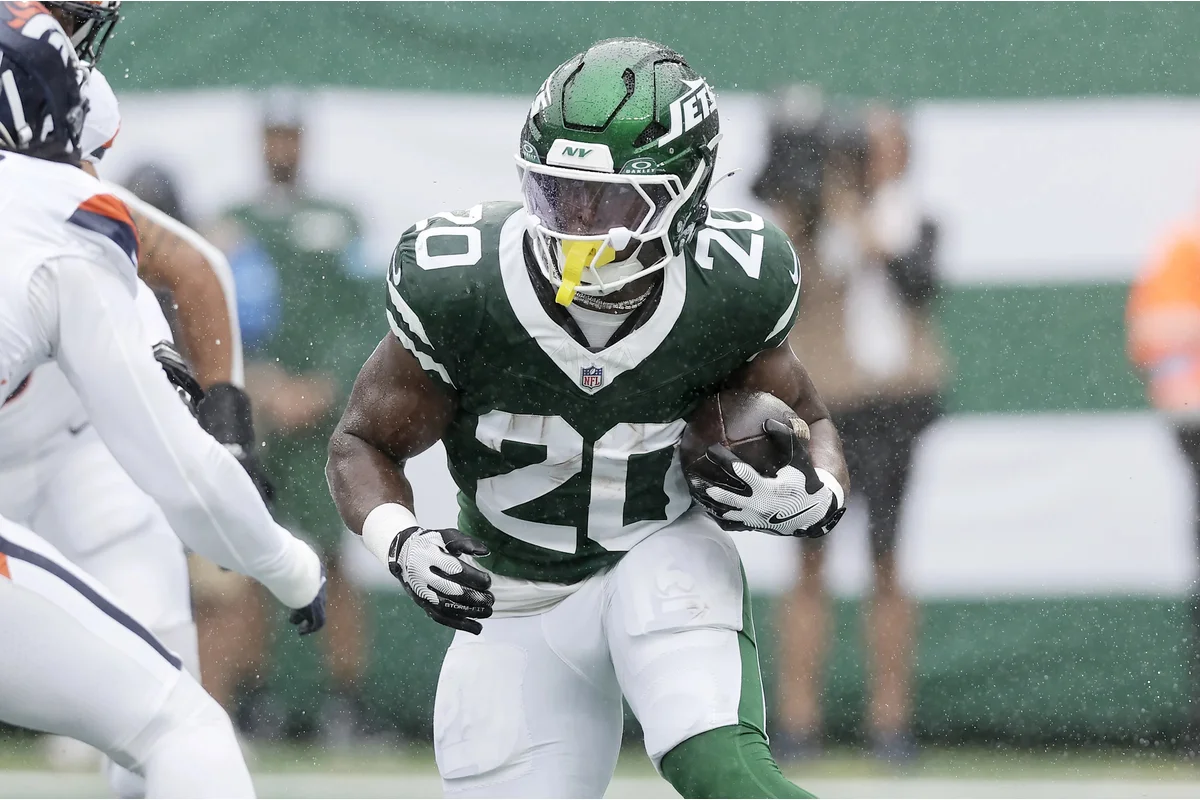
The Jets have three tag types available to consider for Hall this offseason: non-exclusive franchise, exclusive franchise, and transition.
The non-exclusive franchise tag allows the player to negotiate with other teams. If another team offers a contract, the Jets have the option to match that deal to keep Hall. If they decline to match, the Jets would receive two first-round draft picks as compensation. However, this option is considered unlikely since the cost makes teams hesitant to tender such valuable picks for a running back.
The value of the non-exclusive tag is the average of the top five salaries at the player’s position over the last five years or 120% of his previous salary (whichever is greater),
ESPN explained.
Alternatively, the exclusive franchise tag completely restricts the player from negotiating with other teams, binding him solely to the Jets for a one-year deal.
…the tag completely binds the player to his team. His agent is prohibited from seeking an offer sheet,
ESPN elaborated.
Lastly, the transition tag permits Hall to negotiate and receive offers from other teams, but the Jets would have no right to compensation if they decline to match an offer.
Once a player is tagged, the two sides have until July 15 to sign a long-term contract or, by NFL rule, the player will play on the one-year deal (or hold out),
ESPN reported.
Estimated Financial Impact of Tag Choices
According to Over The Cap, the franchise tag for Hall is projected to cost $14.53 million, which would rank him as the fourth highest-paid running back in the NFL. The transition tag is expected to cost $11.72 million, placing him seventh among his peers in salary.
What Industry Insiders Are Saying About Hall’s Market Value
Connor Hughes of SNY shared insights from a prominent NFL agent regarding the running back market before the upcoming Super Bowl.
He had Breece Hall and Kenneth Walker before the Super Bowl at the same APY [average per year], believing both would get around $10 million annually per year if they hit free agency,
Hughes relayed on Jets Final Drive.
That was fascinating to me because, from Breece Hall’s perspective, that is less than what the tags would be. That is less than the transition and less than the franchise. So if you’re the Jets, do you want to risk it? Let him go to free agency, and if that’s the value, try to sign him for something lower as opposed to tagging him and paying him more,
Hughes added.
A salary around $10 million annually would place Hall ninth among the top-paid running backs in the NFL, which is lower than the projected cost of the franchise and transition tags.
The Stakes and What Comes Next
The Jets face a difficult balancing act in deciding whether to use the franchise tag to secure Breece Hall for at least one more season or risk losing him when he enters unrestricted free agency in March. Using the franchise tag guarantees Hall’s presence but comes at a high salary cost, while allowing free agency provides a chance to negotiate a lower contract but risks losing the player altogether.
Hall’s future could significantly shape the Jets’ offensive plans and salary cap considerations for the upcoming season. As the franchise tag deadline approaches, all eyes will remain on the Jets’ management to see which path they choose to keep their young running back or let him explore the open market.
ESPN’s Rich Cimini told @JakeAsman & @RealTannenbaum that the #Jets placing a tag on RB Breece Hall ‘is on the table.’
‘I could see them using one of the tags, either transition or franchise on Breece Hall to try and keep him because I think if he gets to market, I think he will… pic.twitter.com/FkOBRLVQMy
— Paul Andrew Esden Jr (@BoyGreen25) February 9, 2026
Coming up in the NFL:
February 17th-March 3rd: Window to use franchise tags
February 23rd-March 2nd: NFL Combine
March 9th-11th: Free agency "legal tampering" window
March 11th at 4 PM: Free agency begins
April 23rd-25th: NFL Draft
— Field Yates (@FieldYates) February 9, 2026
