
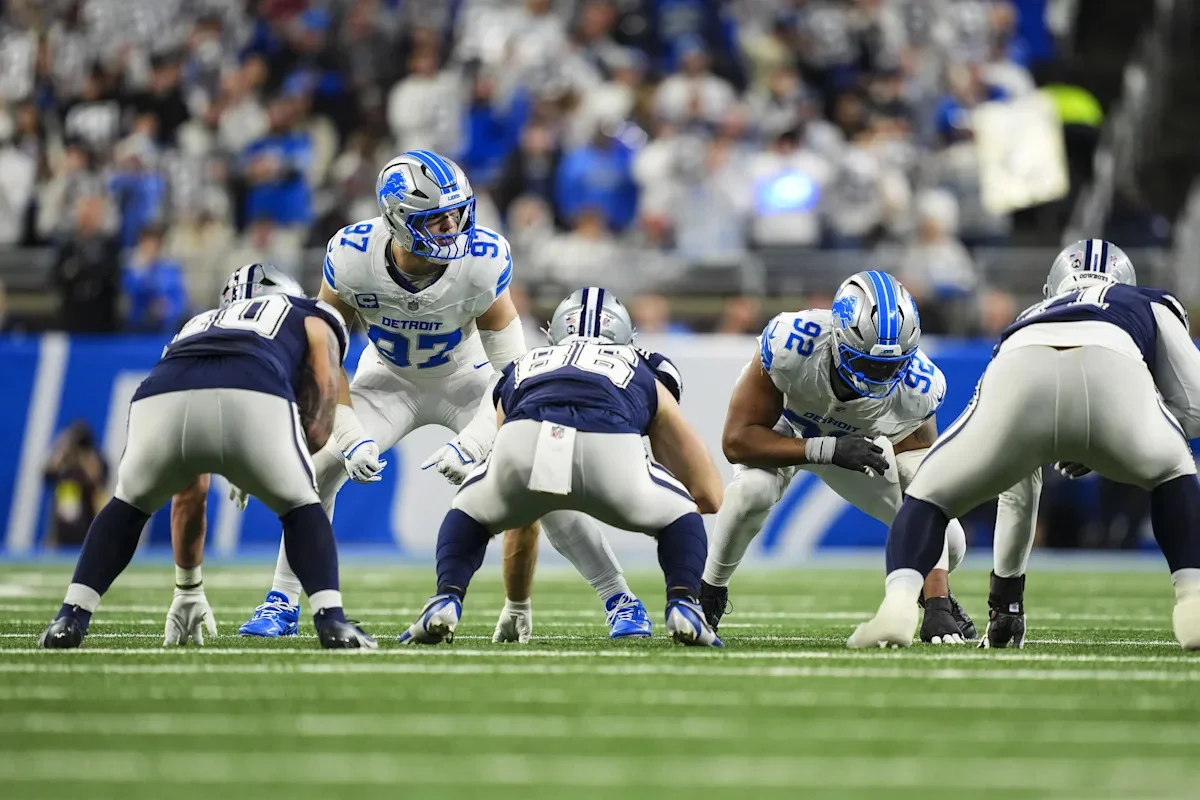
Tracy Scroggins, the former linebacker and defensive end who spent his entire 10-year NFL career with the Detroit Lions, has died at the age of 56. His passing was confirmed by his family and acknowledged by the Lions, who paid tribute to their longtime player on social media.
The Lions shared,
“We join the NFL community in mourning the loss of Lions Legend Tracy Scroggins, who played his entire 10-year career in Detroit (1992-2001).”
Family’s Tribute Highlights His Character Beyond Football
His family released a heartfelt statement expressing their deep sorrow and recalling the many sides of Tracy’s life beyond the football field. They described him as
“a devoted father, cherished family member, and loyal friend whose life was marked by remarkable strength and perseverance.”
While many knew him for his NFL career, those close to him remembered him as a generous and kind-hearted man who cared deeply about his loved ones.
They also noted the lasting impact his football career had on his health: though playing in the NFL helped him achieve his dreams and improve his life, it also contributed to health challenges he faced after retirement.
Early Life and Career Beginnings in Oklahoma and Tulsa
Born and raised in Checotah, Oklahoma, Tracy Scroggins attended the University of Tulsa, where he completed his college education before entering the professional football world. He was drafted by and played with the Detroit Lions for ten seasons, gaining widespread recognition for his contributions on defense.
Legal Battle Over Brain Injury Linked to Football
Later in life, Scroggins became involved in legal action against the NFL claiming that repeated head injuries sustained during his career caused chronic traumatic encephalopathy (CTE). He argued that the league permitted unsafe playing techniques that led to ongoing brain damage.
The NFL disputed the lawsuit’s progress, citing a previous settlement agreement that covered such claims. At the time, Brian McCarthy, an NFL representative, stated,
“He is eligible to pursue the benefits provided under the settlement agreement but may not pursue any action in court.”
Scroggins openly reflected on his experiences and the impact of brain injury on his career and life. He told The Detroit News,
“I don’t have any regrets. I think things happen, sometimes for a reason. But if I had the knowledge that players today have, I think that probably my career would’ve been five years shorter than it was.”
Memories from Friends Emphasize His Resilience and Faith
Greg Ervin, a nutrition coach and close friend, shared his remembrance of Tracy on social media, highlighting their shared struggles and spiritual connection after football:
“After football was over we fought to find our way to a beautiful life without football. We found marriage, fatherhood, divorce, crisis, but because we found each other all of those things were always better with the other in our corner. But most important, we found the GOD within us. The creator of all that was always with us and brought us together til death do us part. My brother, I know you are at peace.”
— Greg Ervin, Nutrition Coach
Legacy and Unanswered Questions Following His Death
Though the official cause of Tracy Scroggins’ death has not been publicly disclosed, his family indicated that complications related to brain disease contributed to his passing. His story sheds light on the ongoing health risks faced by NFL players and the complexities involved in addressing brain injuries linked to the sport.
As a respected figure in Detroit Lions history and the broader NFL community, Scroggins’ life and challenges underscore the importance of continued focus on player safety, medical research, and support for retired athletes. His passing marks a significant loss for those who knew him and the football world, emphasizing the human toll behind the game.
