
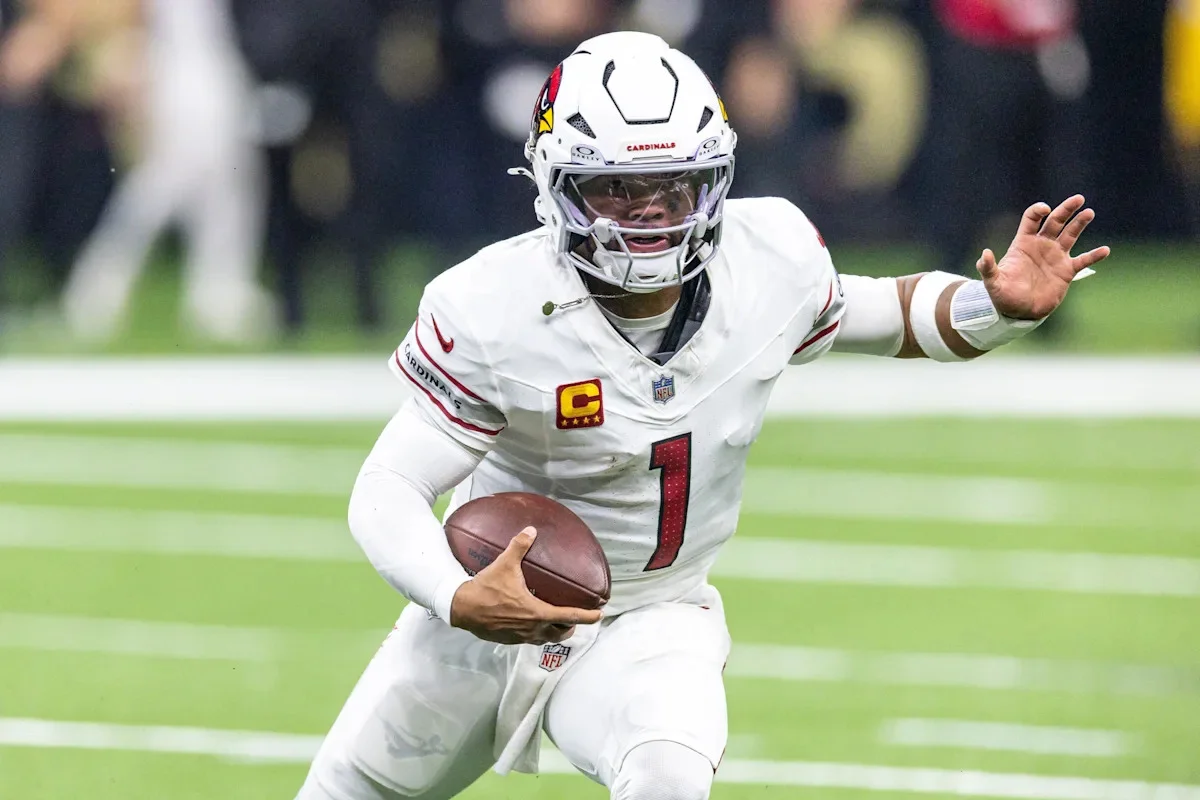
On Super Bowl Sunday, murmurs emerged about the Arizona Cardinals‘ plans for quarterback Kyler Murray, with reports indicating the team is open to exploring a trade. Despite his talent and being just 27 years old, Murray’s position with the Cardinals appears uncertain as the organization evaluates its direction moving forward. These developments have generated intense discussion among fans and within NFL circles regarding whether the team will rebuild or maintain its current core.
Kyler Murray’s capability as an NFL quarterback remains unquestioned, evidenced by his continued relevance in trade talks. The Cardinals face a complex decision influenced by timing, contract demands, and the team’s confidence in their long-term strategy. His partnership with tight end Trey McBride has been notably strong, contributing to on-field chemistry and raising expectations for Murray’s role in the next NFL season.
“[Kyler Murray] is our franchise quarterback.” ?Trey McBride, Arizona Cardinals Tight End
Financial Considerations Cloud Decision-Making Around Kyler Murray
Murray’s contract plays a decisive role in the Cardinals’ options. His 2026 salary cap hit is a staggering $52.7 million, with $36.8 million already guaranteed and an additional $20 million guaranteed after March 11. This financial burden complicates any decision to release him, as doing so would result in approximately $54.7 million in dead money, a costly move for the franchise.
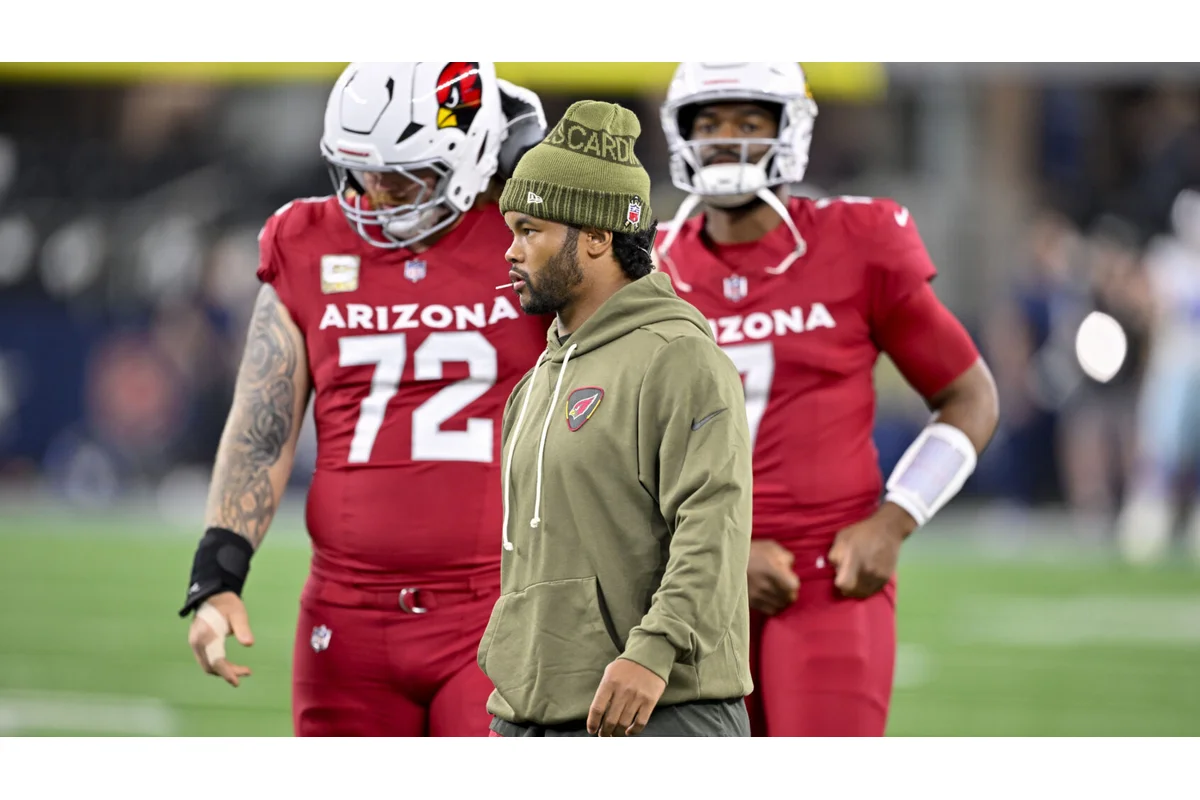
The Cardinals’ approach appears to be one of strategic patience: quietly gauging trade interest without rushing to a conclusion. If a team urgently seeking a quarterback offers appealing draft assets, Arizona might accelerate a rebuild. Conversely, if no compelling trade proposal emerges, the franchise may opt to keep Murray and focus on improving supporting talent through the draft, favoring stability and growth over upheaval.
Observers note the importance of this period for Cardinals fans, as maintaining a steady presence at quarterback influences fan confidence and overall team morale. Drafting a new quarterback would reset timelines and introduce more risk, while retaining Murray sustains continuity and a foundation for potential success.
Balancing Risk and Opportunity: The Cardinals’ Strategic Outlook
The Cardinals’ process hinges on maintaining leverage and flexibility. Pricing Murray for a potential trade and setting a decision deadline around March 11 allows the team to gather market feedback without committing prematurely. This measured stance reflects an understanding that smart franchises navigate offseason uncertainty by preserving options and only making moves that enhance future competitiveness.
With Murray’s contract and performance under scrutiny, Arizona’s plan involves pressing forward cautiously. They intend to explore possible trades but resist forcing deals that do not meet their valuation. At the same time, the franchise plans to reinforce its roster by drafting players with high upside to support Murray should they opt for continuity.
Meanwhile, key contributors such as Trey McBride continue to express confidence in Murray’s leadership, underscoring that there remains strong internal belief in his role as the team’s quarterback. This internal endorsement contrasts with the external speculation, adding layers to the conversation about the Cardinals’ direction.
Context and Immediate Concerns Within the Team and Community
The recent preseason games and regular-season performances highlighted Murray’s mixed results, including injury setbacks and offensive inconsistencies. These aspects add urgency to the Cardinals’ decision-making while emphasizing the need for deliberate planning rather than reactive moves.
Additionally, related team updates such as the Phoenix Suns’ key players emerging off the injury report ahead of a Mavericks matchup have drawn local sports attention, indicating a broader sports ecosystem engaged with Arizona’s professional teams.
Implications and Next Steps for the Cardinals and Kyler Murray
The outcome of this turbulent offseason period will significantly affect the Cardinals’ competitive trajectory. If a trade occurs, it could signify the start of a major rebuild centered around accruing draft capital and reshaping the roster. Alternatively, recommitting to Murray reinforces a belief in his ability to lead and improve, emphasizing development over replacement.
In either scenario, the Cardinals intend to act deliberately, making informed decisions based on market conditions and internal assessments. The March 11 deadline represents a critical juncture for clarifying future plans, and until then, Arizona’s strategy will rely on exploring options without haste.
This careful uncertainty illustrates the challenges NFL franchises face balancing player potential, financial constraints, and competitive ambitions, highlighting the complex dynamics influencing Kyler Murray’s future with the Arizona Cardinals.
The #AZCardinals would like to "explore trading" QB Kyler Murray, per @AdamSchefter pic.twitter.com/P0GMBgkLxO
— SleeperCardinals (@SleeperAZCards) February 8, 2026
"[Kyler Murray] is our franchise quarterback."
Cardinals star @mcbtrey says he expects Kyler Murray back and leading the team in Arizona. pic.twitter.com/E0YCtWReGx
— Front Office Sports (@FOS) February 5, 2026
