
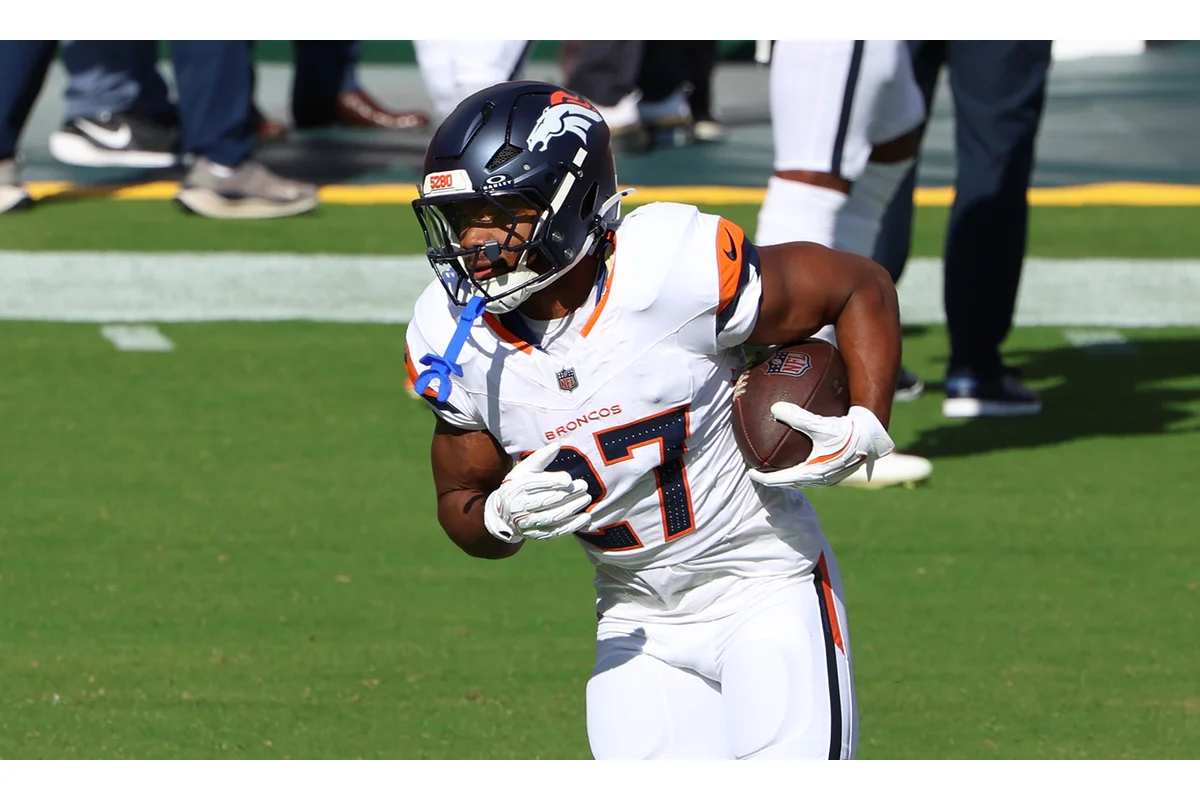
J.K. Dobbins, the Broncos’ running back, showed elite-level performance before his season was cut short, raising questions about whether he should be brought back. At 27 years old and with six seasons under his belt, Dobbins is currently signed to a one-year deal worth $2.065 million, while projections suggest his value could rise to $2.55 million annually.
Since 2020, Dobbins ranks third among NFL running backs in yards per carry with an impressive 5.2 average, based on a minimum of 300 attempts. Last year, he averaged 77.2 rushing yards per game and was fifth in the league in total rushing yards before his season-ending injury. Throughout his career, whenever given more than 10 rush attempts in a season, he has consistently averaged over 4.5 yards per carry.
Factors Supporting the Broncos’ Decision to Retain Dobbins
Dobbins’ conditioning remains a crucial factor. When healthy, he delivers top-tier production and could offer the Broncos a highly efficient backfield asset. His recent setback—a Lisfranc injury—ended his season after 10 games, but if he recovers as successfully as he did from earlier injuries, his impact could be significant.
The frequency of his injuries has kept his salary reasonable, and the Broncos could benefit from a similar financial arrangement moving forward. With a solid backup plan in place, the team could take a calculated risk on Dobbins, banking on his yield of top-five efficiency in rushing. Such consistency at a low cost is rare, though the expectation would be a potentially shorter career span if his injury pattern persists.
Notably, the injury that sidelined Dobbins resulted from what many viewed as a questionable hip-drop tackle. While the NFL declined to impose a fine, the incident’s nature is widely debated. Still, despite Dobbins’ objections to being labeled “injury-prone,” he has appeared in only 51 of 109 possible games, including postseason matchups, over his career.
Alternative Options That Could Influence the Broncos’ Choice
The free-agent market offers several alternatives, including Seattle’s Kenneth Walker III, New York Jets’ Breece Hall, Jacksonville’s Travis Etienne, Pittsburgh’s Kenneth Gainwell, Carolina’s Rico Dowdle, and Atlanta’s Tyler Allgeier. Additionally, the draft presents candidates like Notre Dame’s Jadarian Price, who doubles as an exceptional kickoff returner—a valuable skill given the new dynamic kickoff rules requiring depth at that position.
Other prospects such as Arkansas’ Mike Washington Jr. and Penn State’s Kaytron Allen, who performed well at the Senior Bowl, may be considered in the third round. These players could complement second-year back RJ Harvey. Unlike Dobbins, these younger options carry less history of missing games due to injury, which could influence the Broncos’ long-term strategy.
Assessing the Future Outlook for Dobbins and the Broncos
Despite Dobbins’ efficiency when available, his 2025 season did not alter his reputation as a player with durability concerns. While he remains one of the NFL’s most productive runners during his time on the field, his injury record casts uncertainty over his overall value to the Broncos moving forward. This risk creates a complex decision landscape for the team as they weigh potential rewards against the possibility of more missed time.

