
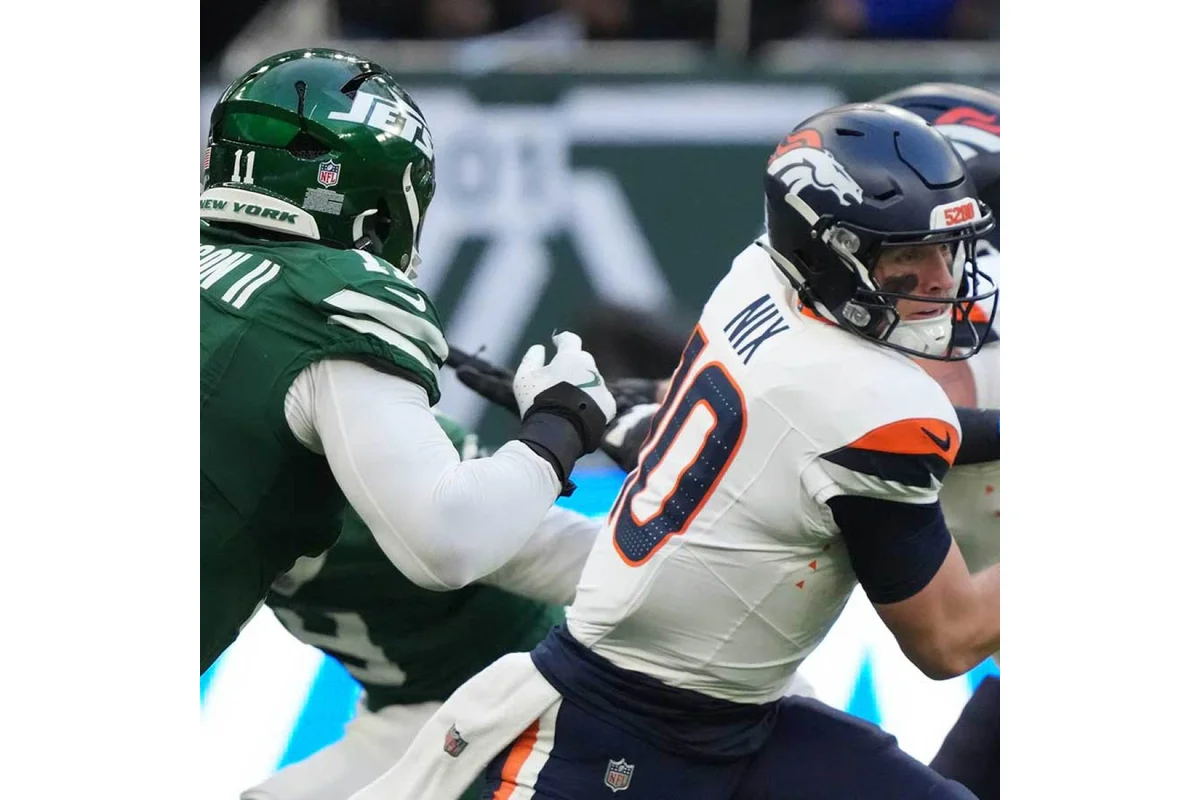
The New York Jets surprised many early this offseason by trading edge rusher Jermaine Johnson to the Tennessee Titans in exchange for defensive tackle T’Vondre Sweat. While sudden, this move aligns well with the Jets’ evolving defensive strategy, suggesting a positive impact on their future performance.
This transaction is closely tied to the Jets’ decision to shift their defensive scheme. They plan to move from a 4-3 defense to a 3-4 setup, a system that demands different player skillsets and roles, especially along the defensive front.
How Scheme Changes Influenced the Decision
Jets insider Rich Cimini explained that the team’s new defensive approach under head coach Aaron Glenn involves more versatile fronts but predominantly a 3-4 base defense. Johnson, known primarily as a 4-3 defensive end, was not the ideal fit for Glenn’s system.
“Glenn is planning to switch to a 3-4 front, according to two people familiar with his thinking. They won’t live in a 3-4 — there will be multiple fronts — but this represents a notable shift in philosophy,”
Cimini wrote.
“It’s a big reason that Johnson, viewed as a 4-3 defensive end, was shipped to Tennessee, where he will play in a 4-3 under former Jets coach Robert Saleh.”
Jermaine Johnson’s strengths lie in a 4-3 edge rusher role, which does not perfectly translate to the outside linebacker position required in the Jets’ new 3-4 scheme. Meanwhile, T’Vondre Sweat is a formidable inside presence, ideal for the middle of this defense.
Why T’Vondre Sweat Fits the Jets’ Defensive Plans
In exchange for Johnson, the Jets acquired Sweat, who is notably large at 6-foot-4 and weighs 366 pounds. His ability to clog running lanes and disrupt plays up the middle makes him well suited for the 3-4 nose tackle role.

“In return, the Jets received nose tackle T’Vondre Sweat, a 6-foot-4, 366-pound run stuffer/space eater who should be ideal in the middle of a 3-4 front,”
Cimini noted.
Sweat’s capacity to absorb blockers allows linebackers more freedom to make plays, strengthening the Jets’ run defense and adding pressure on opposing quarterbacks through the interior line.
Replacing Johnson with Upcoming Draft Talent
This trade also ties into the Jets’ anticipated strategy for the 2026 NFL Draft, where they hold the No. 2 overall pick and plan to select a premier edge rusher. This outlook reduces reliance on Johnson and supports building the defense anew.
“The decision earlier this week to trade defensive end Jermaine Johnson to the Tennessee Titans reinforces the belief that the Jets will take an edge player with the second pick in April’s draft,”
Cimini wrote.
“The top candidates are Ohio State’s Arvell Reese and Texas Tech’s David Bailey.”
By trading Johnson now, the Jets free up space to pursue either Reese or Bailey, both highly rated edge players who fit the 3-4 style Glenn is establishing. This strategic return on investment offers the Jets more flexibility and potential defensive improvement.
Implications for the Jets’ Defense Moving Forward
Overall, the Jermaine Johnson Jets Trade reflects a calculated move to align personnel with scheme needs. It leverages current strengths by acquiring a dominant interior lineman while preparing to infuse fresh talent at the edge position through a high draft pick.
Fans should remain optimistic, as this realignment addresses both immediate tactical fit and long-term roster planning. The acquisition of Sweat bolsters the run defense, and the looming draft selection could introduce a young star edge rusher, contributing to a more balanced and flexible Jets defense in the upcoming seasons.
